




















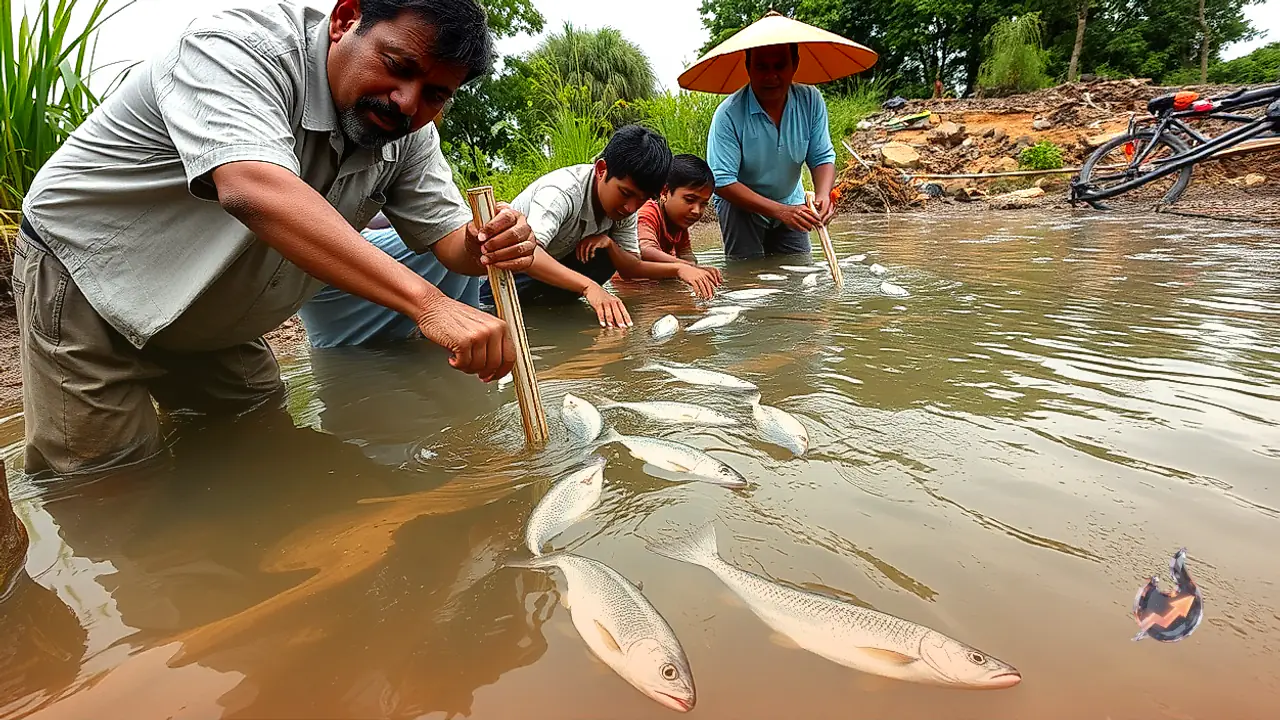

Aquaculture has developed into a major commercial enterprise across rural India, serving as a dependable source of income for countless farming households. However, seasonal shifts between severe summer heat and heavy rainfall present severe management challenges for pond keepers. During these transitions, pond water heats up rapidly and turns stale, deteriorating aquatic habitats and exposing fish stocks to sudden diseases. When biological parameters degrade, farmers are often forced to spend substantial amounts of money on corrective medicines. By taking structured precautionary steps, pond operators can preserve water purity, protect fish well-being, and significantly reduce unnecessary medical expenses.
Monitoring Water Temperature and Dissolved Oxygen
Ganesh Prasad, Chief Executive Officer in Barabanki district, pointed out that pond-reared fish frequently fall sick whenever seasonal temperatures fluctuate. As the external climate changes, constant monitoring of pond water temperature becomes essential, because warmth directly dictates the generation of dissolved oxygen. When oxygen production drops, fish experience acute physiological stress. Implementing preventive maintenance during intense heat and rainy spells keeps aquatic stock insulated from diseases while steadily accelerating their natural growth rate.
Maintaining Pond Water Depth Between 5 and 5.5 Feet
Both torrential downpours and unrelenting heat accelerate contamination in pond water, striking at fish health immediately. Cultivators must inspect water conditions systematically and carry out periodic water exchanges to flush out impurities. Particular attention must be paid to pond depth, ensuring the water level consistently remains between 5 and 5.5 feet. If the depth falls below this threshold, shallow water warms up too quickly, driving up stress levels, encouraging infections, and triggering fatal outcomes. Maintaining proper depth acts as a solid defence against catastrophic financial losses.
Regulating pH and Oxygen with Periodic Lime Application
During the peak of summer, pond water warms up drastically, causing dissolved oxygen levels to plummet. The fallout on fish is instantaneous: they turn sluggish, stop moving freely, and succumb to illnesses. To prevent such downturns, farmers should regularly introduce an appropriate quantity of agricultural lime into the water. Lime stabilises the pH balance of the pond and supports adequate dissolved oxygen concentrations. This step keeps fish robust and drastically brings down mortality rates.
Disinfecting Water with Potassium Permanganate Against Skin Infections
Rain and summer conditions often bring unwanted organic waste and murky runoff into ponds, sharply elevating the risk of skin lesions and microbial diseases. To counteract this hazard, farmers can spray light quantities of potassium permanganate across the pond surface. Functioning as a potent disinfectant, it cleanses the aquatic medium and prevents the spread of dangerous pathogens. This proactive hygiene measure keeps the stock healthy without disrupting final production yields.
Managing Stock Density and Providing Fortified Summer Feed
When fish population exceeds a pond's sustainable capacity, oxygen depletion accelerates, and contagious diseases spread uncontrollably. In such crowded situations, relocating a portion of the stock to a separate pond provides immediate relief. Ample space and unobstructed oxygen access lower physical stress, allowing fish to gain weight properly while containing potential outbreaks. Furthermore, farmers should avoid feeding dry feed during summer, as it causes digestive complications. Instead, prepare feed by dissolving sweet elements such as jaggery or glucose in fresh water, blending it with vitamin C, and offering it to the stock. This nourishing diet fortifies immune defenses and keeps fish active throughout harsh weather.