























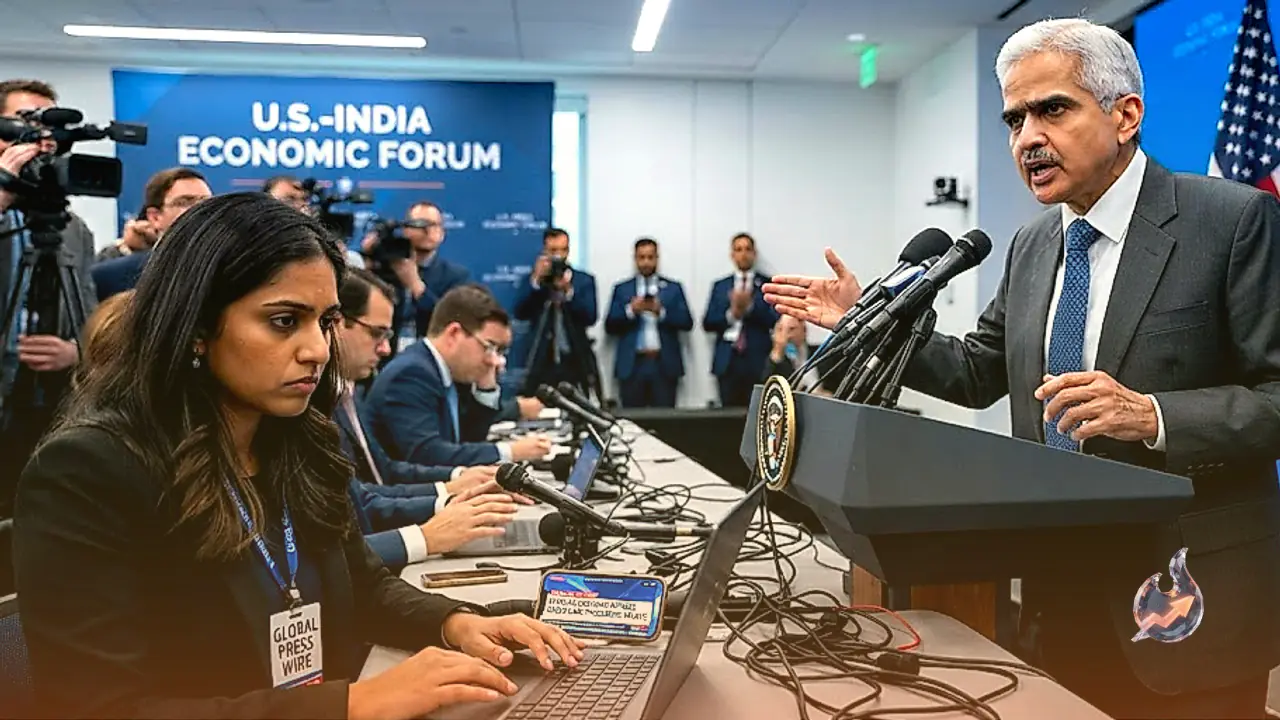

A convergence of friction across multiple commercial arenas is testing the resilience of the economic relationship between New Delhi and Washington. Bilateral trade negotiations have grounded to a halt with little appetite for fresh compromises, while high-profile corporate friction has erupted over market entry for satellite internet services. Compounding these strains, regulatory interventions by American authorities have abruptly halted Green Card labour filings for major technology consultancies, leaving thousands of skilled Indian expatriates facing heightened immigration uncertainty. While these three developments stem from distinct policy domains and lack evidence of a coordinated pressure strategy, their simultaneous arrival underscores deepening complications in a pivotal global partnership.
Tariff Gridlock and Bilateral Trade Hurdles
The most immediate commercial strain lies in the stalled bilateral trade agreement. On October 5, Indian Finance Minister Nirmala Sitharaman observed that discussions had hit a plateau, indicating that both sides possessed extremely narrow room for further concessions. Her assessment was mirrored by US Trade Representative Jamieson Greer, who signaled that an overarching settlement remained distant. Although an interim framework established in February 2026 managed to reduce punitive American duties on a majority of Indian products from 50% down to 18%, negotiating teams have been unable to bridge existing divides to produce an exhaustive final compact.
The divide extends well past numeric tariff levels into complex geopolitical and domestic priorities. Washington has pressed New Delhi to curb imports of Russian crude and rectify lingering trade imbalances. In counterpoint, Indian negotiators remain steadfast in protecting domestic farming and dairy communities from overseas competition, while simultaneously pushing for more advantageous duty structures on Indian manufacturing exports entering the United States.
Fresh American legislative measures have injected further volatility into the calculus. Recently enacted legislation provides statutory authority to levy tariffs as high as 100% on goods originating from countries that purchase substantial quantities of Russian petroleum. Simultaneously, a separate inquiry into surplus manufacturing capacity could expose Indian exporters to protective trade penalties. The economic exposure is substantial: Indian shipments to the American market reached $42.79 billion between April and August 2026, advancing from $40.39 billion during the corresponding timeframe the preceding year. Furthermore, India generated a trade surplus approaching $34 billion with the US during the 2025-26 fiscal year. Lacking an enduring agreement, manufacturers and exporters face erratic cost forecasts and the prospect of eroded price competitiveness.
The Satellite Spectrum Dispute and Regulatory Scrutiny
Alongside diplomatic trade hurdles, an aggressive confrontation over domestic telecommunications access has attracted global attention. Elon Musk has publicly alleged that domestic corporate interests are maneuvering to impede Starlink from launching satellite broadband operations in India to defend entrenched market positions. On October 8, Musk escalated his criticism on social media by specifically questioning the influence of Reliance Industries chairman Mukesh Ambani.
Musk challenged the licensing delay by asking on X
"Is Ambani the real boss of India?"
Operated through SpaceX, Starlink aims to roll out high-speed satellite connectivity across underserved rural areas throughout the subcontinent. While the venture secured initial licensing clearance, it continues to wait on mandatory operational approvals, involving national security protocols and spectrum allocation mechanisms. India's telecommunications ministry firmly dismissed claims of unequal treatment, asserting that Starlink stands at a comparable regulatory junction alongside domestic satellite initiatives led by Reliance Jio and Bharti Airtel, with each entity required to satisfy stringent statutory security baselines. While the controversy does not substantiate claims of corporate interference, it thrusts the nation's regulatory environment into international focus at a time when attracting global tech investment must be balanced against domestic sovereign safeguards.
Immigration Suspension Hits Tech Workforces
The third major dispute bears directly on the extensive information technology sector and Indian professionals residing in the United States. On October 8, the US Department of Labor confirmed administrative suspensions barring several prominent technology corporations from submitting applications under the Permanent Labor Certification Programme, widely termed PERM. Enterprises impacted by the enforcement actions include Tata Consultancy Services, Infosys, Wipro, HCL, Cognizant, and Capgemini, alongside separate operational suspensions involving Microsoft and Adobe. Authorities cited administrative probes surrounding allegations that overseas talent was hired at the expense of American jobseekers.
PERM serves as the indispensable preliminary gate for employer-backed permanent residency petitions, requiring companies to certify that employing a foreign national will not displace qualified domestic job candidates or depress prevailing wage levels. While these administrative suspensions do not establish formal culpability against every firm, they freeze the intake of prospective filings while investigations proceed.
For Indian technology professionals, this administrative halt threatens severe setbacks. Due to per-country statutory ceilings on employment visas, Indian nationals already navigate backlog queues stretching across decades. A prolonged freeze on PERM processing poses acute complications for individuals nearing the statutory six-year limit on standard H-1B visas who depend on active residency filings to secure extensions. Although existing work visas remain operative, the obstacle complicates corporate career roadmaps and introduces sharp operational vulnerabilities for technology firms managing overseas deployment models.
Pillars of Partnership Under Examination
Each of these three flashpoints touches an indispensable pillar of bilateral engagement. The tariff dispute governs the price dynamics of physical commerce across borders; the satellite internet clash tests how transparently foreign tech capital can navigate sovereign regulatory frameworks; and the labour certification restrictions disrupt the cross-border movement of technological talent that underpins corporate innovation.
For both capitals, reconciling these frictions will demand delicate diplomatic balancing. Commercial exporters require tariff stability to finalize capital investments, international corporations seek consistent regulatory mechanisms, and transnational software enterprises need predictable migration policies. Although strategic cooperation and defense collaboration between the two democracies remain strong, unaddressed commercial grievances risk dampening investor sentiment. The central challenge in the months ahead is whether policy leaders can untangle these parallel disputes before uncertainty erodes the broader commercial foundation.