























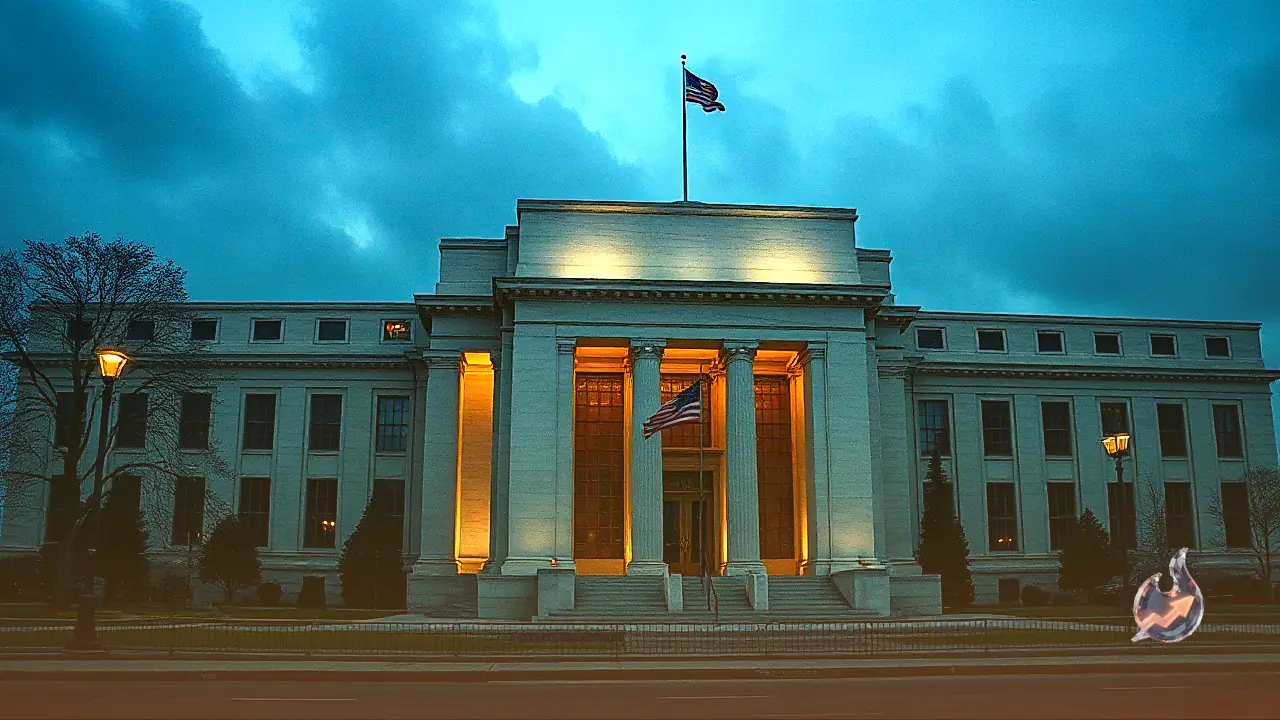

The US central bank has executed its first interest rate hike since 2023, signaling a decisive shift toward prolonged monetary restraint that complicates the outlook for digital asset markets. The Federal Open Market Committee lifted the federal funds target range by 25 basis points to between 3.75% and 4% during its September 2026 meeting. While financial markets had widely anticipated a quarter-point upward adjustment ahead of the announcement, investors were caught off guard by Federal Reserve Chair Kevin Warsh's firm commitment to combating inflation and his openness to additional borrowing cost increases before the year concludes.
Tighter Monetary Backdrop and the Pressure on Digital Assets
This monetary recalibration fundamentally alters the investment landscape for Bitcoin and the broader cryptocurrency complex. Digital tokens previously flourished under extended regimes of cheap liquidity and minimal financing costs. With interest rates now set to remain elevated for a protracted duration, maintaining speculative market momentum becomes far more challenging. Following the decision, trading across major tokens reflected cautious hesitation. Bitcoin fluctuated between roughly $75,000 and $76,500 before stabilizing near $76,000. Similarly, Ether traded within an intraday channel of approximately $2,370 to $2,430, eventually settling below the $2,400 mark.
The relatively subdued immediate price reaction does not imply that digital assets have absorbed the Fed's policy shift without consequence. While the quarter-point hike had already been largely factored into asset valuations, the primary concern among market participants centers on how long borrowing costs will remain prohibitive. Sixteen of the central bank's 18 policymakers signaled that an additional rate increase could be warranted before the end of the year. This aggressive consensus has forced institutional and retail market participants to fundamentally reassess their exposure to risk-sensitive assets.
Institutional Outflows from Spot ETFs Mount Ahead of Policy Pivot
Clear evidence of risk aversion surfaced directly in the institutional market through spot exchange-traded funds. US spot Bitcoin ETFs experienced net redemptions of roughly $450.3 million on the eve of the Federal Reserve's formal announcement. Ether ETFs simultaneously logged approximately $141 million in net capital outflows, reflecting synchronized defensive positioning across major cryptocurrency products.
The scale of capital withdrawal becomes even more pronounced when examining recent trading cycles. Between September 8 and September 15, US spot Bitcoin ETFs registered cumulative net outflows of around $753.2 million. This substantial retreat effectively unwound the vast majority of the $770 million in fresh capital that had entered these funds from September 1 through September 4. The chronological sequence of these redemptions highlights proactive de-risking, as sophisticated investors reduced their digital asset holdings well before the FOMC formally codified its rate decision.
Surging Treasury Yields and Sticky Inflation Restrict Policy Relief
Beyond the headline federal funds benchmark, macroeconomic indicators are exerting severe headwinds on non-yielding holdings. The yield on 10-year US Treasury notes spiked to 5.04% in the lead-up to the central bank's policy gathering, marking its steepest level since 2007. Higher sovereign bond yields directly elevate the opportunity cost of holding assets like Bitcoin, which do not generate traditional yields, dividends, or contractual cash streams.
When market participants can secure guaranteed returns hovering near 5% from sovereign debt instruments, purely speculative assets must project exceptional growth trajectories to justify continued capital allocation. This dynamic exerts downward pressure across Bitcoin, Ethereum, and secondary altcoins in an environment where overall market liquidity is contracting. The central bank's hawkish stance is grounded in stubborn price pressures. US consumer prices expanded at an annual rate of 3.4% in August, driven in part by escalating energy and fuel expenses. The committee faces the dilemma that higher energy overhead could permeate into core components, thereby cementing broad-based inflation.
Critical Technical Boundaries and Structural Capital Flows
The core challenge confronting cryptocurrency investors remains straightforward. If inflation figures remain resilient, the Federal Reserve will lack the policy flexibility to implement rapid interest rate reductions. Persistent borrowing costs and sustained Treasury yields will preserve a restrictive climate for high-beta investments. Although Bitcoin has managed to defend the $75,000 threshold for now, technical analysts are monitoring critical resistance and support thresholds alongside aggregate market liquidity metrics.
The price corridor between $76,500 and $78,000 represents a formidable overhead barrier, while $75,000 serves as the primary floor defending against deeper retracements. A confirmed breakdown beneath $75,000 could expose the lower support territory situated between $71,300 and $72,000. Nevertheless, isolated price levels provide only partial visibility into the broader trend. The crucial determinant remains whether sustained capital inflows can return to digital asset investment vehicles. Trends across ETF redemptions, stablecoin capitalization, sovereign yields, dollar strength, and shifting interest rate projections will dictate how digital assets navigate an environment defined by restrictive monetary policy.