


















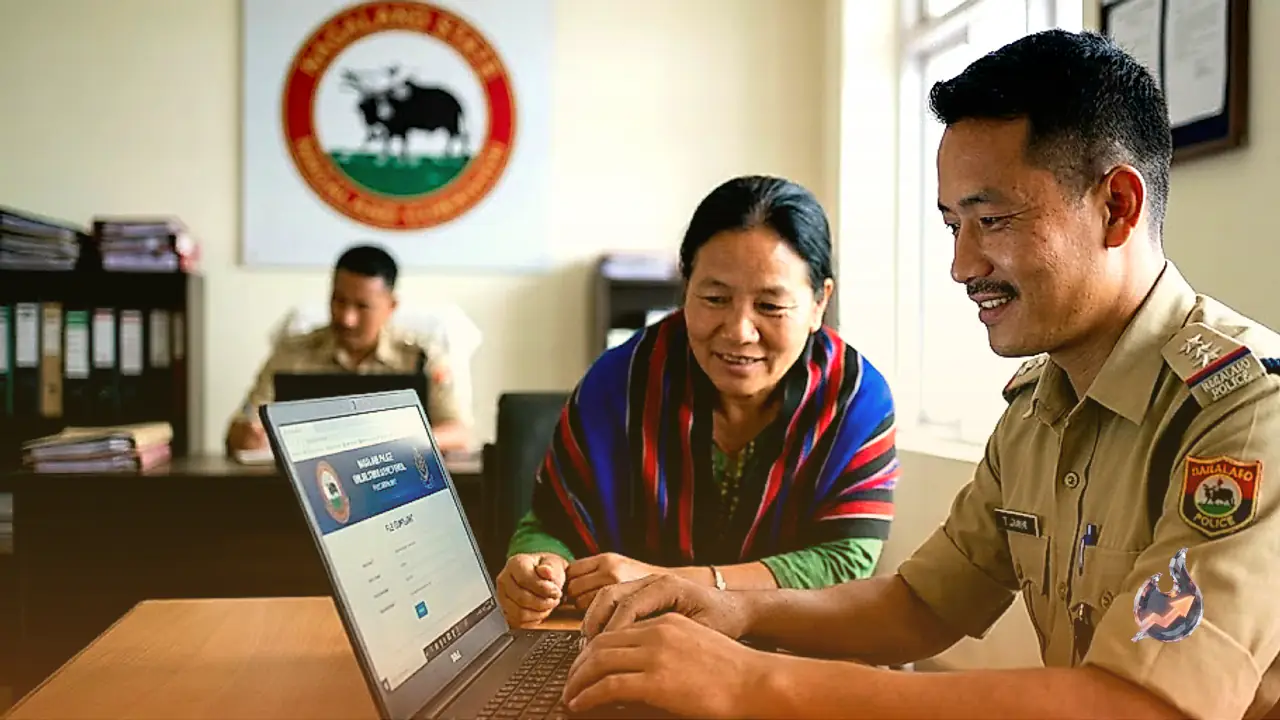

Residents of Nagaland will soon gain a streamlined digital mechanism to seek police assistance and register grievances as the Nagaland Police prepares to launch a dedicated single-window online portal. Speaking at the State Level Convergence Meeting to Address Violence Against Women and Children held in Kohima, Director General of Police Rupin Sharma announced on Tuesday that the upcoming platform will become operational within the next 10 to 12 days. The new infrastructure is designed to empower citizens to submit complaints from anywhere, monitor the real-time status of their cases, and access police inquiry reports electronically.
Structured Inquiry and Complaint Classification
Detailing the workflow of the proposed digital system, the DGP explained that individuals will be able to submit grievances even if preliminary assessments eventually determine the underlying dispute to be civil rather than criminal. Under the established procedure, once a complaint arrives at a local police station, the officer-in-charge will assign it to a designated investigating officer to carry out a preliminary inquiry. This official will evaluate whether the matter constitutes a cognisable offence, a non-cognisable offence, or purely a civil dispute outside the jurisdiction of law enforcement.
Transparent Monitoring Under New Criminal Laws
If a preliminary inquiry establishes a cognisable offence, the police station must register a formal FIR. In non-cognisable situations, complainants may be directed to approach a magistrate, whereas strictly civil disputes will remain excluded from police intervention. In alignment with the provisions introduced by the new criminal laws, the portal will grant complainants the ability to monitor case progress and download official copies of police inquiry reports. Furthermore, senior law enforcement officials spanning from station-level commanders up to the DGP will maintain oversight regarding complaint volumes and their final disposal.
Targeting Repeated Offenses and Intervention
Sharma pointed out that the centralised tracking capabilities of the portal will assist police in identifying recurring patterns linked to child abuse, domestic violence, stalking, and related violations. Recognizing these trends early can facilitate timely interventions before abusive behavior escalates into graver harm. He underscored that victims facing violence require unhindered avenues to seek help, actively encouraging affected individuals to report incidents rather than remaining silent.
Addressing Implementation Gaps and Under-Reporting
Addressing systemic shortcomings, the DGP acknowledged that while various government agencies maintain grievance mechanisms, they frequently lack the operational capacity required for effective ground-level responses. He cautioned that widespread under-reporting severely hampers the authorities' ability to gauge the true scale of societal issues and adequately plan vital resources such as manpower, emergency vehicles, shelters, and helplines. Reiterating jurisdictional boundaries, he noted that police intervention requires a criminal element, explicitly warning NGOs, civil society organizations, and members of the public against taking the law into their own hands during cognisable incidents. This digital initiative follows prior structural shifts, including the transition where Nagaland Police discontinues 100, makes 112 sole emergency helpline number to streamline emergency response across the state.