
















The morning of 14 August 1947 marked one of the most turbulent hours in the history of the Indian subcontinent. While India stood just hours away from gaining its independence, Pakistan was formally being birthed as a separate nation under the Partition plan. Amidst these monumental political shifts, severe communal violence and the trauma of Partition continued to engulf several cities across the country. In Kolkata, Mahatma Gandhi had set up base in the Beliaghata neighborhood, tirelessly working to restore peace and communal harmony between Hindus and Muslims. As Gandhi stepped out for his morning walk with volunteers on 14 August, the sight before him deeply shook his inner core.
The Burnt Streets of Beliaghata and Gandhi's Silent Grief
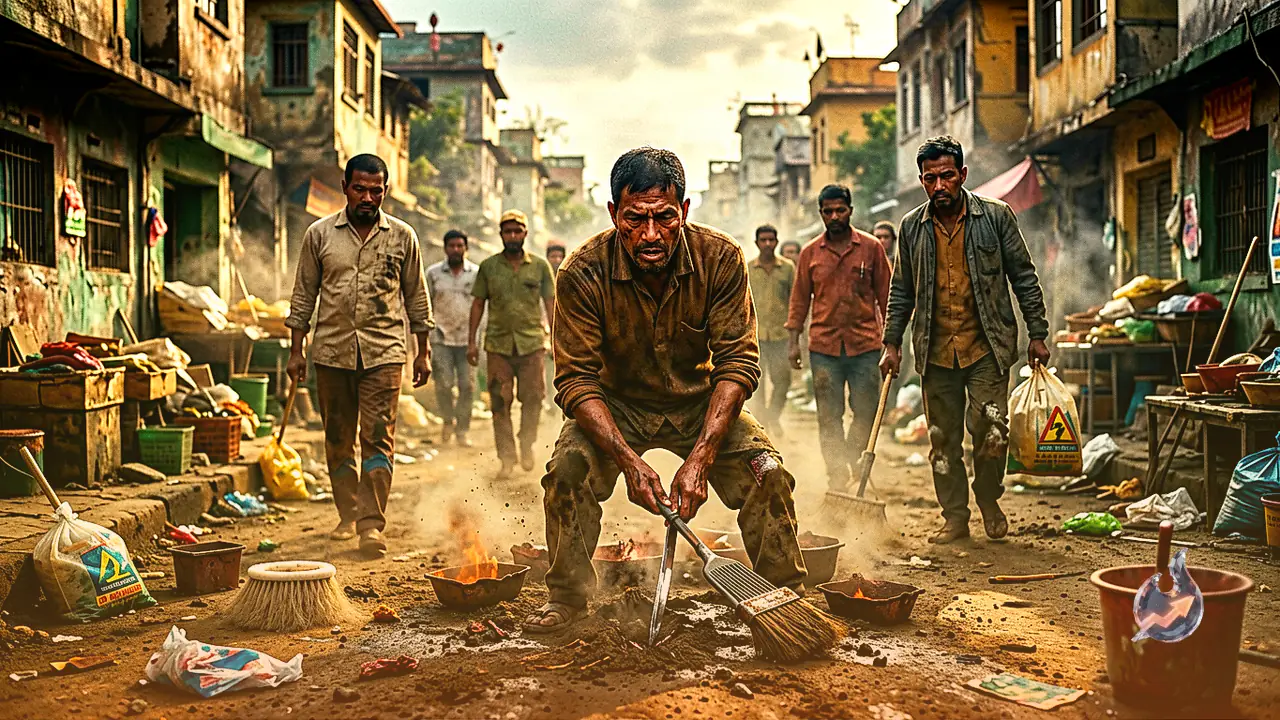
According to accounts detailed by author Prashant Poll in his book 'Ye Pandrah Din', Mahatma Gandhi was confronted with rows of gutted shops and destroyed homes as he walked through Beliaghata. The devastation left him motionless for several moments. With a heavy heart and deep sorrow, he quietly gazed at the charred remains of Hindu properties. The accompanying workers informed Gandhi that rioters affiliated with the Muslim League had set fire to these commercial and residential establishments during the preceding days of unrest.
After standing in solemn reflection, Gandhi resumed his walk. During the same stroll, workers offered a ray of hope by reporting that following his personal appeal for peace, no fresh incidents of violence had been reported from anywhere in Kolkata over the past 24 hours.
Inside Karachi's Assembly Hall and Jinnah's Historic Moment
Around 9:00 AM on that very morning of 14 August, a starkly different atmosphere prevailed inside the Assembly Hall in Karachi. Preparations were underway for the official handover marking the creation of Pakistan. Dressed in his formal royal naval uniform, Lord Mountbatten was present in the Assembly Hall to deliver the opening address of the historic occasion. Moments before he spoke, John Christie handed him the official copy of the speech transcript.
Mountbatten then addressed the gathering, characterizing the emergence of Pakistan as a historic event. He remarked that history sometimes moves slowly and at other times with great speed, urging the newly formed nation to turn its focus toward the future.
The Rolls-Royce Procession and 21-Gun Salute
Following the conclusion of the address, Lord Mountbatten and Muhammad Ali Jinnah boarded an open-top Rolls-Royce car. A grand ceremonial procession was arranged from the Assembly Hall to the Governor House, which was designated as Jinnah's official residence. Crowds of spectators lined both sides of the three-mile route to witness the procession.
With Jinnah and Mountbatten seated side-by-side in the rear of the vehicle, the procession commenced amidst a ceremonial 21-gun salute. The three-mile journey took approximately 45 minutes to complete. As Jinnah observed the green and white national flag of Pakistan, known as the 'Parcham-e-Sitara-o-Hilal', fluttering atop government buildings along the way, his decades-long ambition stood realized.
The Flag Controversy at Srinagar's Main Post Office
Simultaneously, around 10:00 AM on 14 August, a unusual incident unfolded in Srinagar. As cited by author Prashant Poll, an official at the city's main post office hoisted the Pakistani flag on the building's roof. The sight of a foreign flag atop a central post office sparked immediate protest among local residents gathering nearby.
When questioned by the public, the postmaster defended the action, arguing that the Srinagar main post office administratively fell under the jurisdiction of the Sialkot postal circle. Since Sialkot had now been assigned to Pakistan, the postmaster claimed that hoisting the flag was administratively justified. Prem Nath Dogra swiftly conveyed information about this incident to the office of Maharaja Hari Singh. Promptly alerted, officials dispatched from the Maharaja's administration arrived at the post office, reasoned with the postal staff, and successfully ensured the removal of the Pakistani flag from the building.