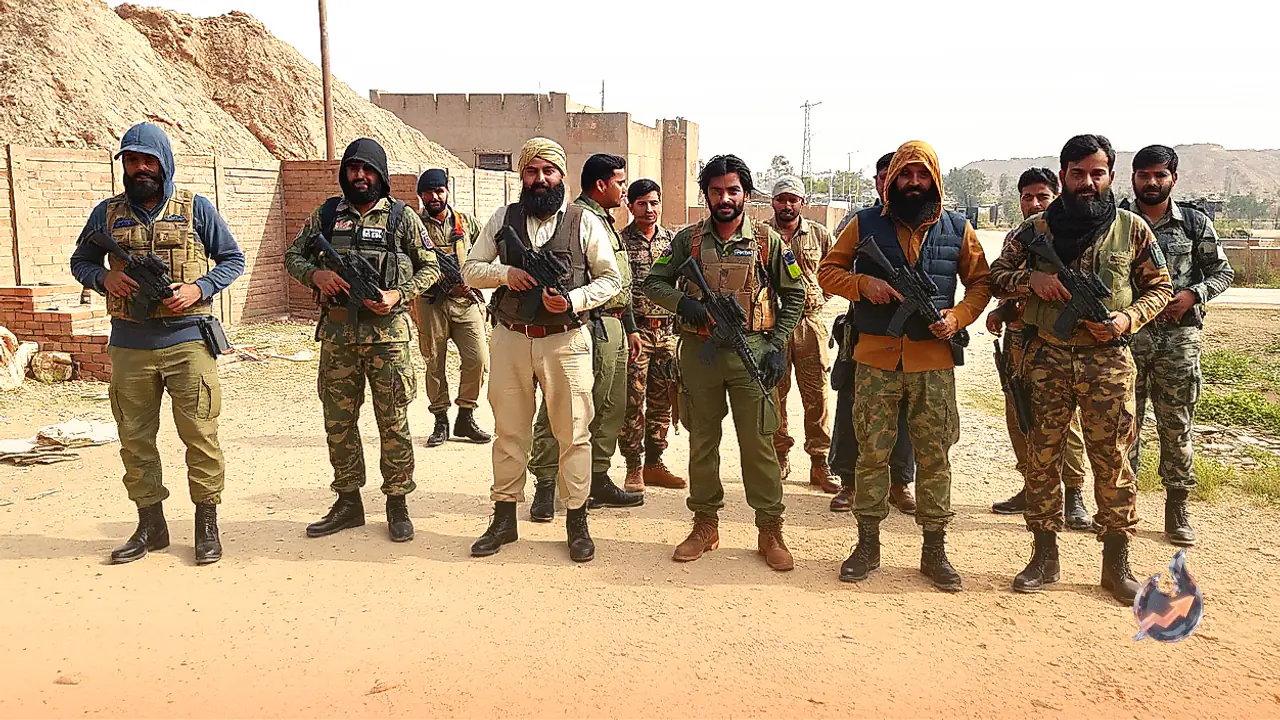

























Indian security and intelligence agencies have mounted a massive nationwide crackdown against the banned terrorist network associated with Shahzad Bhatti, leading to the apprehension of nearly 700 individuals so far. This extensive operation has successfully neutralized several major conspiracies aimed at executing terror strikes across the country. The intercepted modules were involved in diverse illicit operations, including installing closed-circuit television cameras for unauthorized surveillance in densely populated and sensitive zones, executing targeted killings, managing cross-border narcotics trafficking, and circulating counterfeit currency notes. However, security agencies have cautioned that despite the systematic dismantling of a substantial portion of this criminal network, the remaining cohorts of Bhatti are making desperate attempts to resurface and regroup. Their updated strategy now heavily relies on manipulating religious sentiments as a primary recruitment tool.
Challenging Operations and Social Media Crackdown
According to senior security officials, dismantling the Bhatti network has proven to be one of the most formidable and complex counter-terrorism operations undertaken by Indian investigative agencies in recent years. While the core infrastructure of the syndicate has been significantly crippled, relentless operations continue to track down its remaining sleeper cells and active members. Numerous Instagram profiles directly linked to this clandestine network continue to emerge across cyberspace. A senior official revealed that formal requests have already been dispatched to Meta, seeking the removal of over 100 such active Instagram profiles. Paradoxically, whenever one such account is taken down, more than 50 fresh alternative accounts instantly surface online, presenting an ongoing and daunting challenge for cyber and intelligence cells.
According to an official from the Intelligence Bureau, the recruitment blueprint adopted by the Bhatti network has undergone a strategic transformation over time. During the nascent stages of this syndicate's operations, religion was deliberately kept out of the recruitment equation to cast a wider net. Vulnerable young individuals hailing from diverse religious backgrounds were lured into the fold purely through substantial financial incentives. Recruits were often handed meager sums of up to five thousand rupees to execute petty assignment tasks. To cement their loyalty and paint an illusion of rapid upward mobility, these gullible youngsters were shown flashy photographs of Bhatti and his close associates posing alongside ultra-luxury vehicles and sprawling mansions, selling them a fraudulent dream of an opulent and carefree lifestyle funded by a life of crime.
Investigators established that this elaborate recruitment pitch was nothing more than an elaborate digital trap. The syndicate handlers never harbored any genuine intention of fulfilling their grandiose promises of luxury to these impressionable recruits. Following the initial wave of hundreds of arrests, Shahzad Bhatti was deported back to Pakistan. The Government of India officially designated him as a terrorist under the stringent Unlawful Activities Prevention Act. Nevertheless, intelligence inputs indicate that over recent months, he has covertly traveled to Dubai and Portugal. Operating safely from foreign soil, he continues to remote-control the residual operations and orchestrate fresh conspiracies targeting India.
Religion, Money, and the Allure of a Foreign Lifestyle
Security authorities noted that Bhatti is now attempting a dangerous convergence of religion, financial rewards, and promises of a lavish foreign lifestyle in his revamped recruitment drives. Greater emphasis is currently being laid on manipulating impressionable youth under the deceptive guise of safeguarding religious identity and community pride. An official disclosed that by weaponizing religious sentiments, the syndicate plans to recruit vulnerable individuals at an even cheaper rate, offering them meager payouts ranging from three to five thousand rupees to execute subversive tasks. In exchange, the handlers dangle false promises of securing a comfortable future or migration to glamorous destinations like Dubai, Pakistan, or Nepal. Ongoing investigations have further uncovered that the network has managed to arrange forged passports for several recruits to facilitate their smooth escape out of India immediately after executing a high-impact terror operation.
Security analysts pointed out that Bhatti's ultimate objective extends far beyond merely establishing a localized militant network inside India. Instead, he intends to build a vast radicalized cadre under the false pretext of religious duty, which can be readily deployed to orchestrate widespread violent unrest and subversive acts across the nation.
Conspiracies Targeting Police Establishments and Security Headquarters
According to findings compiled by investigative agencies, the illicit activities orchestrated by the Bhatti network have expanded well beyond covert surveillance, drug smuggling, and counterfeit currency distribution. Law enforcement authorities have successfully established direct operational links between this syndicate and a series of targeted attacks directed at police personnel stationed across Punjab, a mysterious explosion reported right outside the Border Security Force headquarters situated in Jalandhar, and a petrol bomb attack launched against the Rashtriya Swayamsevak Sangh headquarters located in Jharkhand.
Intelligence officials harbor serious apprehensions that the syndicate is actively laying the groundwork to execute larger, more synchronized violent operations in the near future. To operationalize these plans, perpetrators are heavily relying on a combination of mainstream social media applications and end-to-end encrypted messaging platforms. While networks like Instagram will continue to serve as virtual breeding grounds for radicalization and the dissemination of anti-India propaganda, heavily encrypted platforms such as Telegram are projected to be extensively utilized for operational planning and tactical execution of targeted strikes.