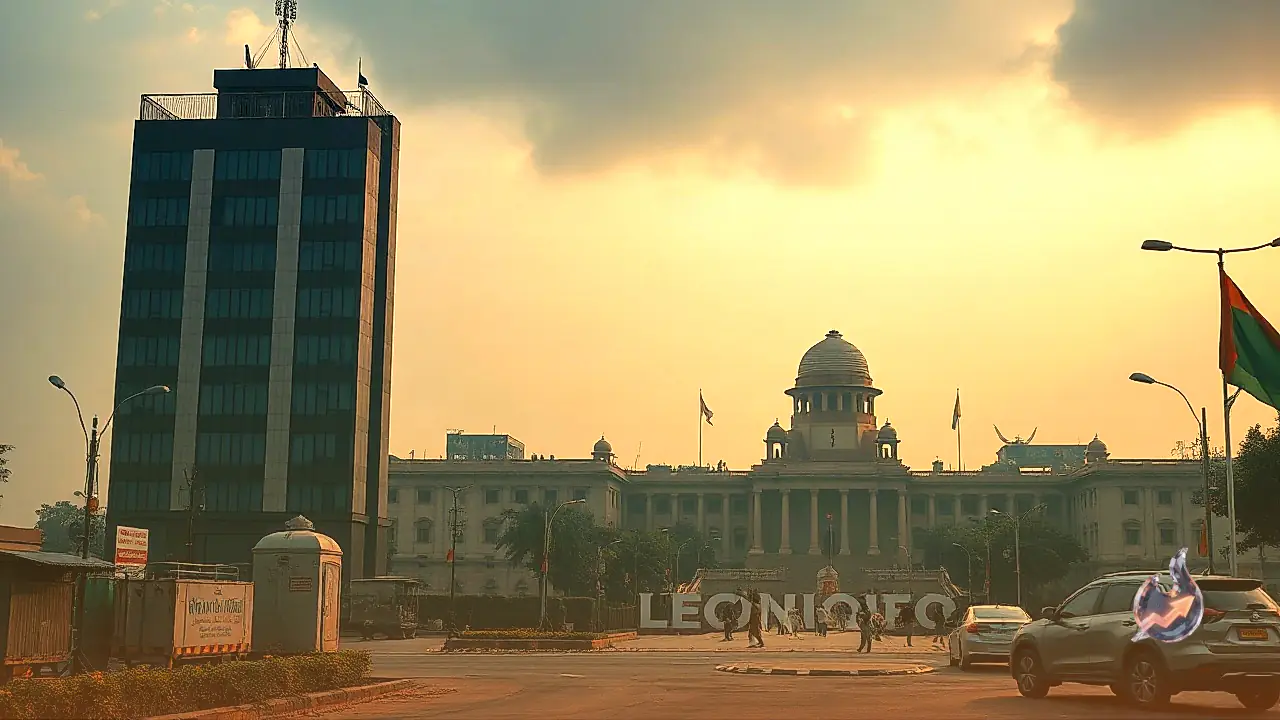



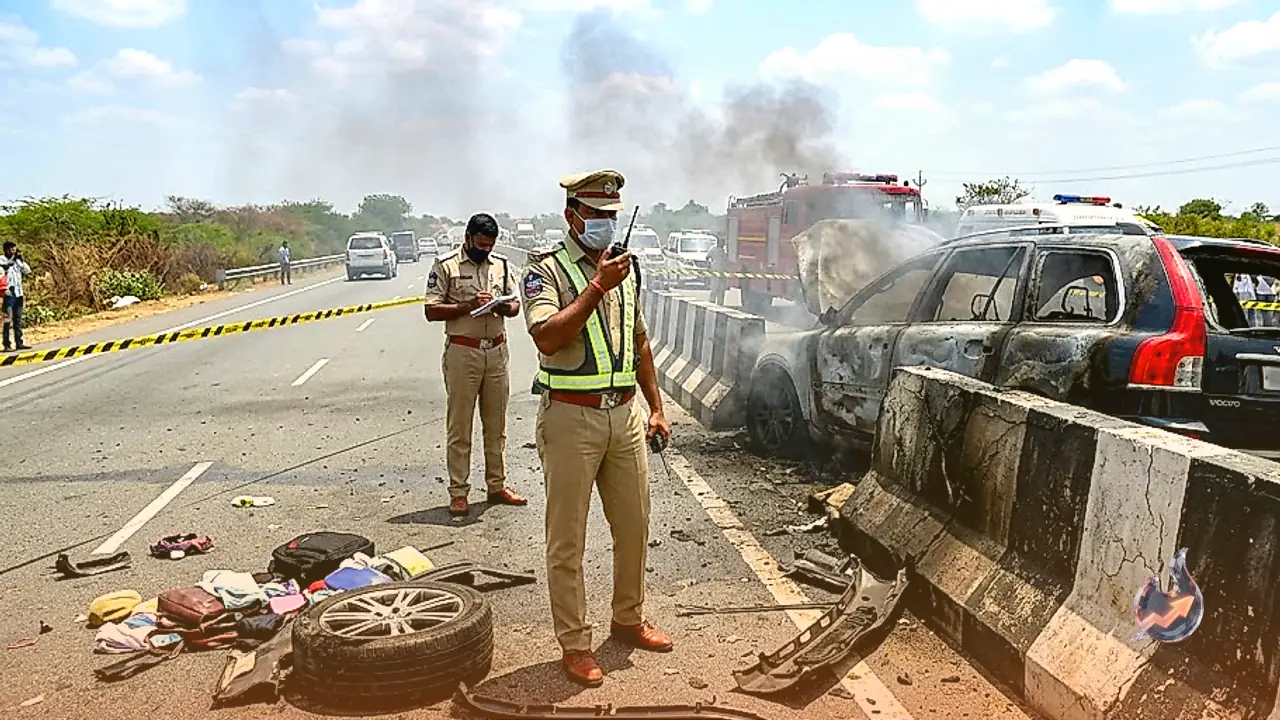

















Bright signboards detailing government development schemes and multi-story structures at the entrance of the Kanshiram Urban Housing Complex in Chandauli district headquarters project an impression of urban progress from afar. However, the reality for hundreds of families residing inside tells a starkly different story. Despite official claims of comprehensive infrastructure development, residents have been grappling with a severe lack of basic civic amenities for over ten years. While public money has been deployed and foundation plaques bear the names of elected representatives, ground-level access to fundamental necessities such as piped drinking water remains entirely absent.
Cracked Walls and a Decadelong Dry Water Tank
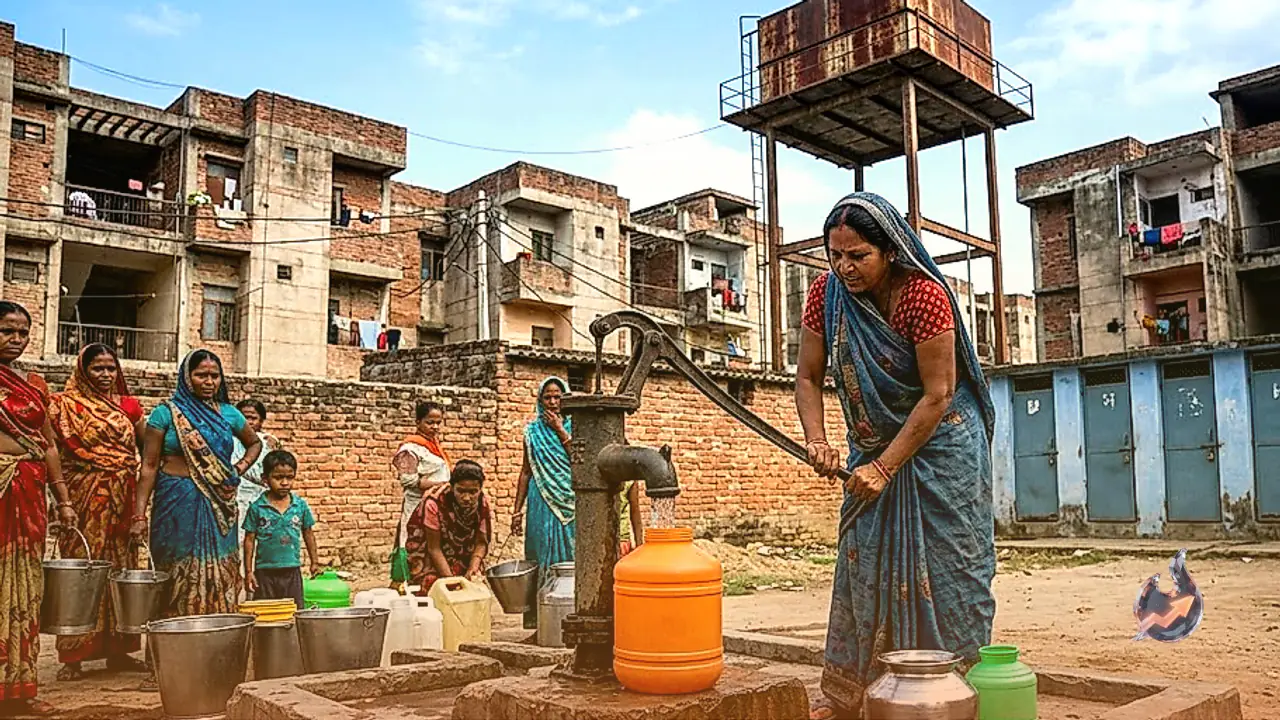
A massive overhead water tank was constructed adjacent to the Kanshiram Urban Housing Complex with the explicit aim of supplying clean drinking water to all households. From a distance, the structure appears relatively modern, but a closer examination reveals visible structural cracks running along its outer walls. Local residents state that water supply has never been operationalized through this tank since the day its construction concluded. Rather than serving its intended purpose, the multi-lakh structure remains completely non-functional. Although local authorities periodically repaint its exterior to maintain an appearance of upkeep, not a single drop of water has reached household taps. Right next to the dry tank stands a public toilet complex constructed under civic sanitation schemes. This facility also remains locked, rendering it entirely inaccessible to nearby families and visitors.
Surviving 50-Degree Summer Heat on Handpump Water
Neelam Devi, who has resided in the housing complex for nearly ten years, explains that while families received concrete apartments, the absence of running water has severely disrupted daily life. Her apartment includes designated rooms, a kitchen, and an indoor bathroom, yet none of the plumbing functions due to the lack of central supply. Consequently, her entire family relies exclusively on ground-level handpumps to collect water for drinking, cooking, and sanitation. While monsoon rains in August provide slight relief, conditions deteriorate drastically during April, May, and June. Summer temperatures in Chandauli frequently surge between 45 and 50 degrees Celsius. Hauling heavy water buckets upstairs under such extreme heat presents an exhausting daily ordeal, taking a heavy physical toll on women, young children, and elderly residents.
Political Promises Versus Ground Realities
Local resident Madhavendra Murti Ojha notes that while the government successfully constructed housing units for urban families, essential infrastructure development was left unfinished. He points out that political leaders make grandiose promises during election campaigns, only to abandon public concerns once voting ends. Had the water tank been connected and operated continuously, residents would not be subjected to the physical strain of carrying water buckets every day. Former Pradhan Sanjay Singh also expressed deep dissatisfaction over the unutilized public infrastructure. He emphasized that keeping the public toilet operational would have provided essential privacy and hygiene facilities, particularly for women and young girls. True civic development, he remarked, is measured by delivering functional public services rather than merely erecting buildings, urging local administration and public representatives to take immediate corrective action.
Dismal Drainage and Stagnant Waste Accumulation
The lack of running water is compounded by severe deficiencies in drainage and sanitation across the complex. The housing estate lacks an integrated sewage and stormwater drainage network. Wastewater flowing from household drains collects in an open nearby pit and canal-like depression, leading to stagnant water, foul odors, and widespread mosquito breeding. This standing sewage poses serious public health risks for all inhabitants. Furthermore, while separate dustbins were installed throughout the premises for wet and dry waste management, a complete absence of regular collection and maintenance has left the waste management system entirely ineffective.
Demands for Accountability and Permanent Infrastructure
Residents of the Kanshiram Urban Housing Complex are urging municipal authorities to repair and activate the long-dormant water tank, unlock and maintain the public sanitation facility, and construct a structured drainage outlet. Community members maintain that public infrastructure projects cannot be deemed successful as long as residents are denied access to basic necessities like clean water and proper sanitation. Facing high summer temperatures and daily manual labor, local families continue to call upon responsible officials and elected representatives to address these long-standing civic failures promptly.