























Public discontent and widespread protests have intensified across Pakistan Occupied Kashmir as local residents openly reject the administrative policies and military posture of Islamabad. Frustrated by the conduct of Pakistani Military Chief Asim Munir and the central governance structure, citizens in the region are highlighting their historical, geographical, and cultural links with India. Against the backdrop of these ongoing developments, analyzing the administrative status of this territory prior to 1947 provides vital historical context. Official records confirm that before the 1947 partition, this entire region formed an organized and prosperous component of the undivided princely state of Jammu and Kashmir under a unified governance framework.
Administrative Setup of Undivided Jammu and Kashmir Prior to 1947
When Maharaja Hari Singh executed the Instrument of Accession on October 26, 1947, integrating the princely state with India, the terminology or political entity known as Pakistan Occupied Kashmir did not exist. The entire territory operated as an integral part of the undivided princely state of Jammu and Kashmir under the Dogra dynasty. For administrative efficiency, governance, and regional security, the Maharaja's administration had categorized the state into distinct provinces, districts, and frontier agencies. Before the events of 1947, the region was broadly structured into two main administrative divisions: the Western Districts and the Northern Areas.
Historical and Economic Importance of the Western Districts
The western boundary districts were directly linked to the administrative divisions of Jammu Province and the Kashmir Valley. This belt comprised three major territories: Mirpur, Muzaffarabad, and Poonch.
- Mirpur: Mirpur served as a prominent and economically vibrant district within Jammu province. Recognized as a key commercial hub, its trade networks contributed substantially to the economic activities and revenues of the princely state.
- Muzaffarabad: Situated at the strategic confluence of the Jhelum and Neelum rivers, Muzaffarabad functioned as an essential administrative headquarters for the Kashmir Valley division, serving as a primary transit corridor.
- Poonch: Prior to 1947, Poonch held the status of an autonomous Jagir. However, its overall administrative framework and governance operated under the direct authority and supervision of the Maharaja's central administration.
Strategic Value and Cultural Links of the Northern Areas
The northern frontier expanse of the princely state held immense geopolitical and military significance due to its proximity to international borders and mountain passes. This zone principally encompassed the Gilgit Agency and Baltistan.
- Gilgit Agency: Given its strategic location near Central Asia, the British administration recognized the vital military importance of Gilgit. In 1935, the British leased the Gilgit Agency from the Maharaja for a period of 60 years. However, shortly before Indian independence in 1947, the British terminated the lease agreement and formally returned full administrative control of Gilgit to Maharaja Hari Singh.
- Baltistan: Baltistan operated as part of the Ladakh Wazarat administrative zone. Culturally, linguistically, and socially, the region shared deep-rooted historical ties with the Ladakh region.
Operation Gulmarg and the Origins of Illegal Occupation
Following independence and partition on August 15, 1947, Maharaja Hari Singh proposed a Standstill Agreement to maintain status quo while deciding on final accession. However, Pakistan violated this arrangement on October 22, 1947, by launching Operation Gulmarg, sending regular army personnel alongside armed tribal raiders disguised as tribesmen into Jammu and Kashmir.
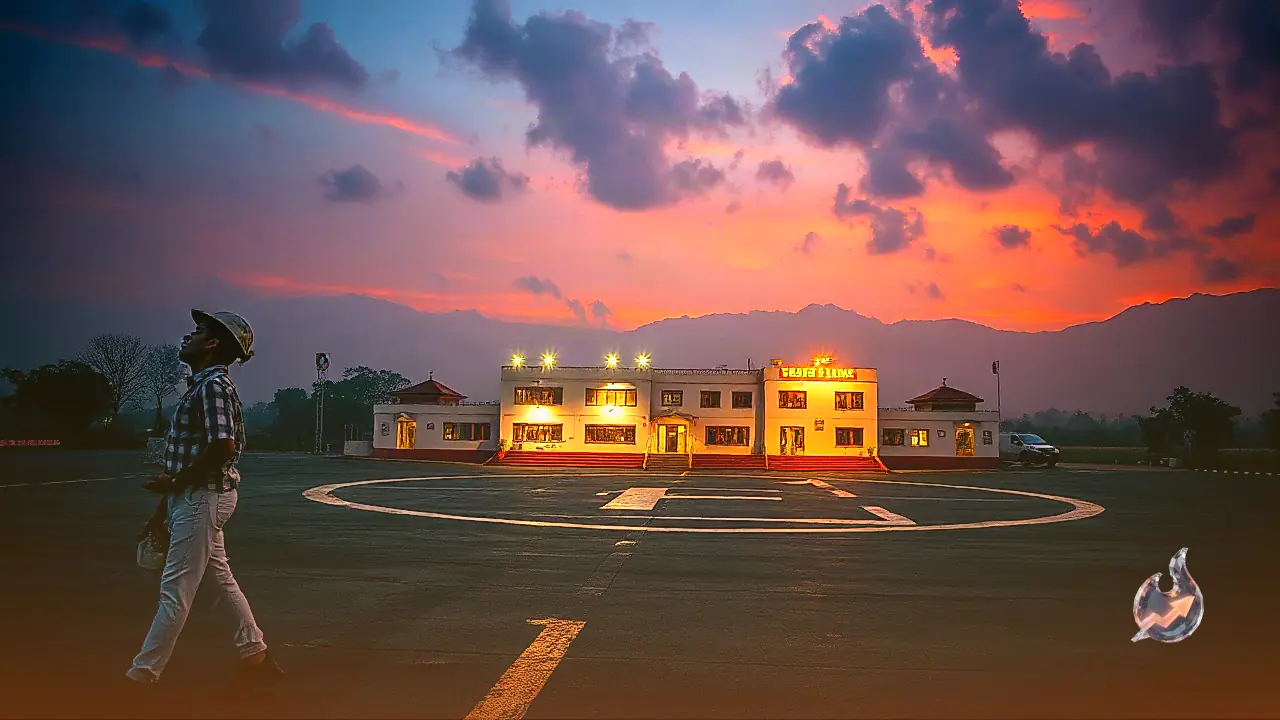
As the military invasion progressed toward key urban centers, Maharaja Hari Singh signed the Instrument of Accession with India on October 26, 1947. Responding immediately, the Indian Armed Forces landed at Srinagar airport on October 27, 1947, launching a swift counter-offensive that successfully repelled the invading forces across several sectors.
The conflict was subsequently referred to the United Nations in 1948, leading to a formal ceasefire taking effect on January 1, 1949. The enforcement of the ceasefire halted military operations before the entire state territory could be cleared, leaving approximately one-third of Jammu and Kashmir under Pakistani military control, a region subsequently designated as PoK.
Reorganization and Alteration of Regional Identity
Following the occupation, Pakistan dismantled the historical governance framework of the territory, dividing it into two separate administrative zones. One portion was established as a localized entity termed Azad Jammu and Kashmir under a puppet administration, while the vast northern frontier was detached, renamed Northern Areas, and placed under direct control from Islamabad. In 2009, Pakistan renamed the Northern Areas as Gilgit-Baltistan.
Resource Exploitation and India's Constitutional Position
Residents in the occupied region continue to express deep dissatisfaction over administrative neglect and resource allocation. Protesters maintain that local water, forest, and land resources are routinely exploited by federal authorities, while basic necessities such as reliable electricity, potable water, and subsidized rations remain severely restricted.
In contrast, India's constitutional stance regarding the territory has remained firm and unambiguous. On February 22, 1994, the Parliament of India unanimously adopted a historic resolution declaring that the entire state of Jammu and Kashmir, including the areas under illegal Pakistani occupation and Gilgit-Baltistan, is an integral part of India. Furthermore, following the abrogation of Article 370 on August 5, 2019, India's updated official political map explicitly incorporates Muzaffarabad and Mirpur within the Union Territory of Jammu and Kashmir, and Gilgit-Baltistan within the Union Territory of Ladakh.
The sustained agitation within the territory underscores that the local populace retains strong awareness of its historical roots and territorial legacy. Names such as Mirpur, Muzaffarabad, Poonch, Gilgit, and Baltistan are not merely historical designations; they represent integral geographic components recognized under India's constitutional framework.