






















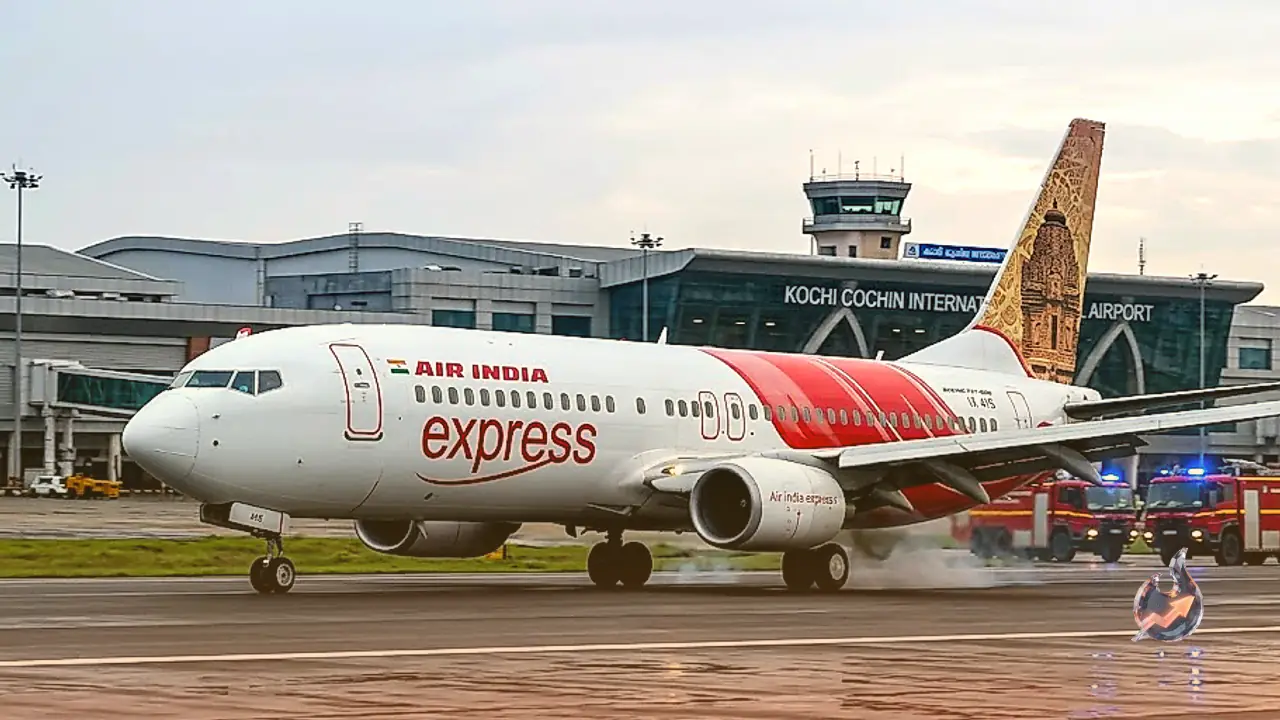

Fifty minutes after leaving the ground in Kochi, an alarm inside the cockpit of an Air India Express Boeing 737 signalled trouble that pilots could not ignore. Flying at roughly 36,000 to 37,000 feet on its way to Abu Dhabi, flight IX 415 saw oil pressure in Engine 1 plunge into dangerous territory within moments. The crew shut the engine down mid-flight, turned the aircraft around and brought it back for an emergency landing at Kochi airport. Everyone on board landed safely, but the episode has reignited a familiar question about whether things are truly improving at Air India.
A routine flight turned into a scramble within the hour
For the passengers aboard, what began as an ordinary hop toward Abu Dhabi turned tense in well under an hour. A rapid drop in engine oil is never a minor glitch, it is treated as a serious mechanical red flag. Following standard emergency procedure, the pilots assessed the situation and shut down the affected engine rather than risk further damage. Because a Boeing 737 can fly safely on a single engine, the crew was able to divert back to Kochi and land without incident. The aircraft and everyone inside made it down safely, but the bigger question is why a fault this serious was not caught during the pre-flight inspection.
This is not the first scare for the Tata-owned carrier
The IX 415 incident is far from an isolated case. Not long ago, a major crash in Ahmedabad shook the entire country, with a technical fault pointed to behind the tragedy. Then, on August 4, an Air India flight AI2379 travelling from Phuket to Delhi ran into serious trouble of its own. Cruising at around 36,000 feet, all three of its hydraulic systems failed within a matter of seconds. The autopilot disengaged on its own and the aircraft suddenly dropped by close to 300 feet. The violent jolt tore apart the cabin ceiling and damaged overhead bins. Twenty-four people, including crew, were injured in the incident, four of them seriously.
Not turbulence, the captain's blood test told a different story
That episode was initially put down to bad weather and clear air turbulence. But a preliminary probe by the Aircraft Accident Investigation Bureau uncovered something far more troubling. Post-landing medical and dope tests on the crew showed that the flight's 34-year-old captain had returned a positive confirmatory blood test for a psychoactive substance, marijuana. The AAIB described it as an extremely serious breach of passenger safety. The person responsible for hundreds of lives in the air had been sitting in the cockpit under the influence, a finding that raises hard questions about how crew fitness and screening are actually enforced.
Big promises, but maintenance still trailing behind
When the Tata Group took charge of Air India, there was real optimism that the airline would reclaim its old standing. Large new aircraft orders were placed, the branding was overhauled, and ambitious plans were announced for the future. Yet on the ground and in the air, basic maintenance and safety inspections have not kept pace with that ambition. An engine abruptly losing oil at 37,000 feet points squarely to lapses somewhere in the pre-flight checks that are supposed to catch exactly this kind of fault before a plane ever leaves the tarmac. From routine maintenance to crew fitness screening, the pattern suggests tighter discipline is overdue at every level.
Should passengers simply trust their luck now
Safety in air travel is not meant to be a variable, it is supposed to be the baseline. The repeated string of incidents has left ordinary flyers uneasy. Many booking a ticket on Air India today find themselves hoping for a safe landing rather than looking forward to the journey. Unless the airline moves quickly to put its entire fleet through a rigorous structural and mechanical audit, this pattern of near-misses risks eventually turning into a disaster that no compensation or apology could ever make right.
Aviation analysts note that an airline's real asset is its safety record, not the size of its fleet or how sleek its rebrand looks. The recurring technical faults and crew-related lapses suggest that safety systems are not scaling at the same pace as expansion. For regulators and Air India's own management, these incidents amount to a warning that passenger trust could collapse entirely if firm corrective steps are not taken soon.