






















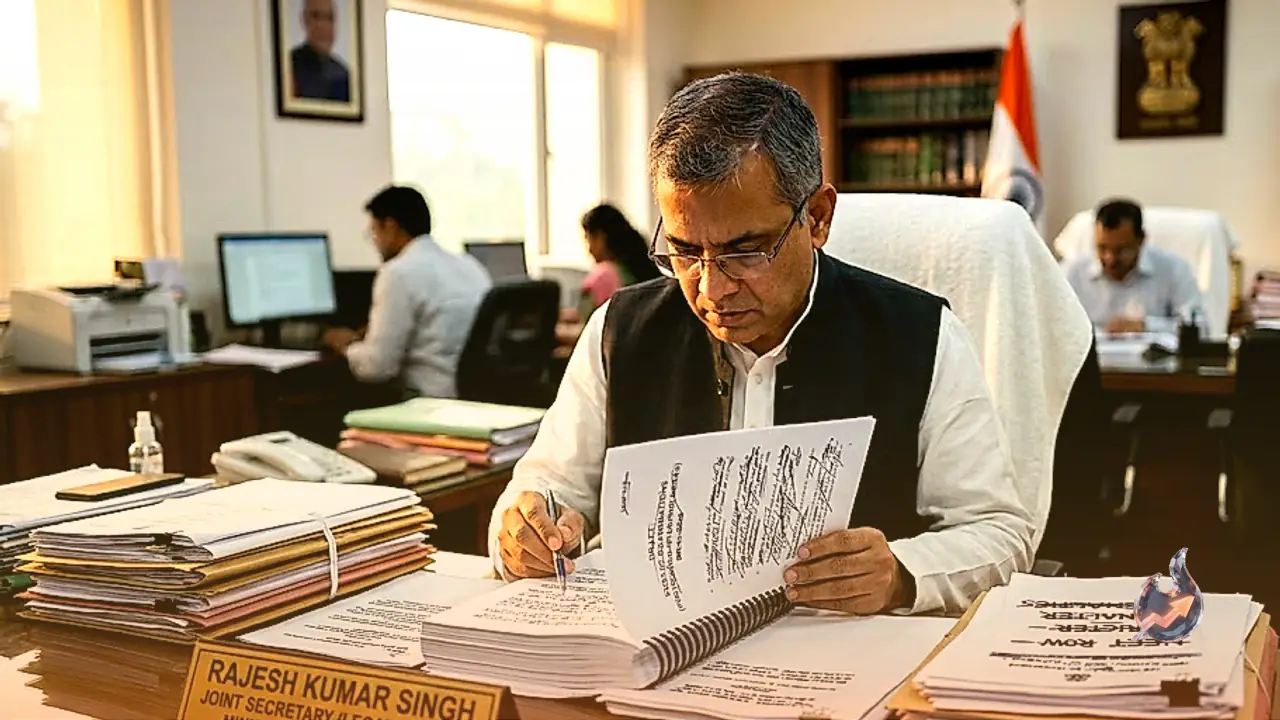

The national capital has been witnessing intense demonstrations over the NEET examination paper leak controversy. In response to the growing public anger and student protests, the central government is preparing to introduce a highly stringent legislative framework aimed at curbing such malpractices. This upcoming legislation proposes a robust mechanism to deal with offenders swiftly, ensuring that justice is delivered within a strict timeframe and acting as a powerful deterrent against future academic fraud. Through this decisive action, the administration hopes to restore the confidence of millions of students across the country in the national testing process.
Severe Punishment and Accelerated Justice Under the New Law
Under the provisions of this proposed draft, the government aims to establish specialized fast-track courts that will be legally mandated to conclude trials and deliver verdicts within a maximum period of three months. This means that anyone accused of compromising the integrity of public examinations will face a rapid judicial process. Furthermore, the draft law outlines exceptionally harsh penalties for those found guilty. Convicted individuals could face a prison sentence of up to ten years. In addition to jail time, a staggering financial penalty of up to ten crore rupees is also being proposed. These measures are currently being debated in an ongoing cabinet meeting, where ministers are finalizing the operational details of the legislative draft to ensure it withstands legal scrutiny and serves as an absolute deterrent.
Midnight Intervention and the End of Sonam Wangchuk's Hunger Strike
The urgency of the situation was highlighted by sudden midnight developments following an announcement by the Prime Minister. The ongoing protests at Jantar Mantar in Delhi had gained significant momentum, especially with activist Sonam Wangchuk undergoing a hunger strike. Recognizing the gravity of the protest, the government initiated direct contact with the demonstrators. In a late-night diplomatic effort, two senior Union Ministers, JP Nadda and Jitendra Singh, visited the Medanta Hospital in Gurugram, where Wangchuk was admitted. The ministers met with him post-midnight to offer formal government assurances regarding the safety of the students and a serious consideration of their grievances. Following this high-level meeting and the solid assurances from the ministerial delegation, Sonam Wangchuk, who had been on a hunger strike since June 28, officially ended his fast. The government explicitly assured him that peaceful student protesters would not face any punitive action and that all of his primary concerns would be evaluated with the utmost seriousness.
A Direct Message of Assurance from the Prime Minister
This legislative move follows a video address released by Prime Minister Narendra Modi last night. In his broadcast, the Prime Minister conveyed a clear and unwavering message to the nation's student community, emphasizing that the central government is treating the issue of paper leaks with extreme seriousness. He indicated that the administration is committed to implementing a specialized and highly rigid law specifically designed to tackle examination fraud. In his video statement, the Prime Minister explained that the government would present the draft of this severe law during today's cabinet meeting for formal approval. Once the cabinet gives its green light, the administration intends to table the bill in Parliament next week, pushing for its swift passage. This proactive stance underscores the government's resolve to restore faith in the national examination system.