





















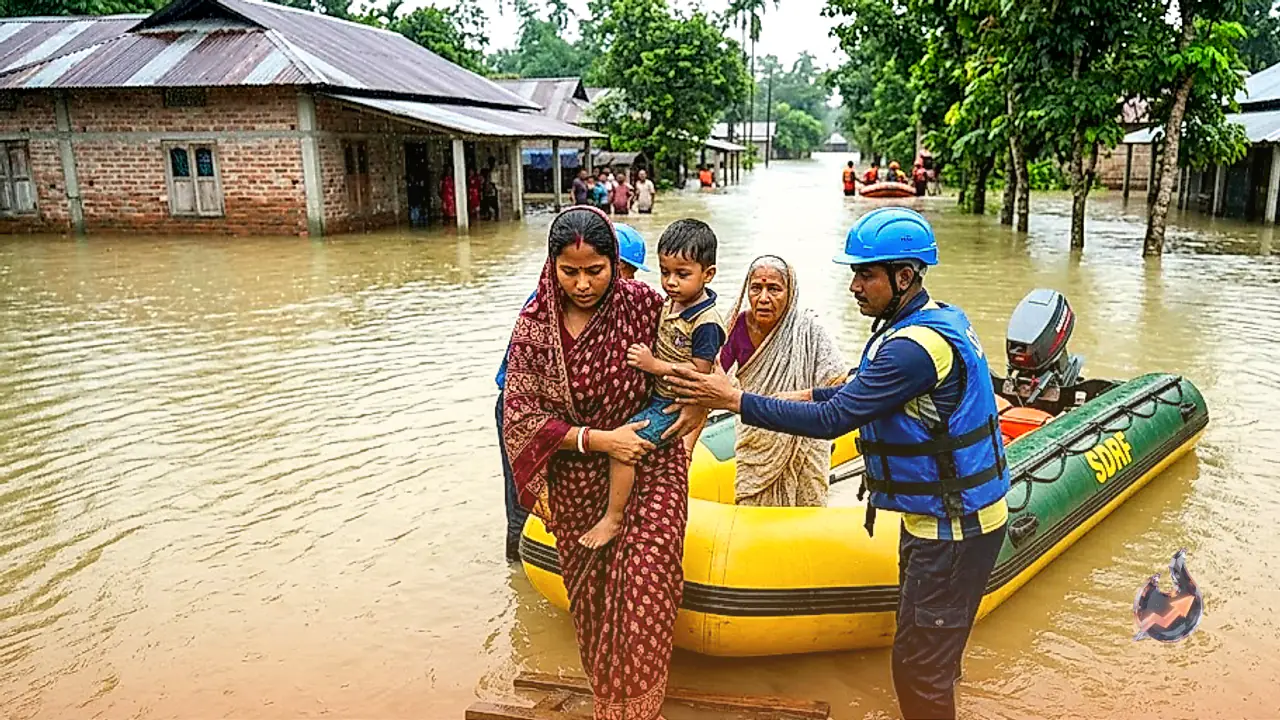

Widespread devastation caused by severe flooding in Assam has disrupted normal life, pushing the death toll in the state to 100. Current figures indicate that seven districts are bearing the brunt of this disaster, affecting approximately 1.4 million residents. Given the gravity of the situation, rescue and relief operations are being conducted continuously in the affected regions.
Severe Impact Across Seven Districts
The seven districts experiencing the most severe flood impacts include Darrang, Charaideo, Jorhat, Golaghat, Nagaon, Karbi Anglong, and Sivasagar. More than 137,000 people are struggling against the floodwaters in these areas. Among them, Golaghat is the hardest-hit district, where nearly 70,000 individuals are facing immense distress. Sivasagar and Jorhat are also in critical condition, with 40,000 and 16,000 people affected respectively.
Expanding Threats and Agricultural Damage
According to an official from the Assam State Disaster Management Authority (ASDMA), rivers continue to flow above danger marks, creating a persistent threat of new areas being submerged by the floods. A total of 456 villages have sustained damage. Farmers have also suffered heavy agricultural losses, with 11,933.46 hectares of crop land ruined by the inundation. Over the preceding 24 hours, two additional fatalities occurred in the Golaghat and Karbi Anglong districts, lifting the total death toll to 100 following two deaths recorded on Monday.
Relief Operations and Humanitarian Aid
To shelter and support affected residents, 125 relief camps and distribution centers are operating across six districts under the administration and ASDMA. These facilities are providing care for 49,061 people. Numerous social workers and philanthropic individuals have also stepped forward to assist flood victims, though complete recovery will take time, and Assam will require a significant period to overcome the disaster. Earlier reports noted that Bollywood star Salman Khan would provide homes for Assam flood victims. Additionally, the government of Jharkhand extended major assistance, with Chief Minister Hemant Soren allocating 3 crores rupees.
Natural and Human Factors Behind the Floods
The primary catalysts for the ongoing floods in Assam are heavy monsoon rainfall combined with the overflowing Brahmaputra River and its tributaries, driven by a mix of natural and human factors. Flood incidents began emerging in July 2026, expanding across multiple districts including Sivasagar, Charaideo, Jorhat, and Golaghat by August. In mid-July, hilly areas of Arunachal Pradesh, Nagaland including Mon district, and Assam experienced rainfall that was 400% to 490% above normal levels. This caused southern-tributaries such as Dikhow, Disang, Janji, and Dhansiri to surge rapidly past danger marks. These tributaries brought floods even before the Brahmaputra reached its peak. Meanwhile, an active monsoon system over the Bay of Bengal maintained high moisture levels across the Northeast. Human activities have also exacerbated the crisis. Deforestation, shifting cultivation, coal and stone mining, and illegal mining in hilly regions like Nagaland and Arunachal Pradesh accelerate soil erosion, worsening flood impacts. Encroachments on natural wetlands, unplanned urbanization, and sand mining from riverbeds further intensify the flooding, while aging and weak embankments failing under pressure have allowed water to breach containment.