




















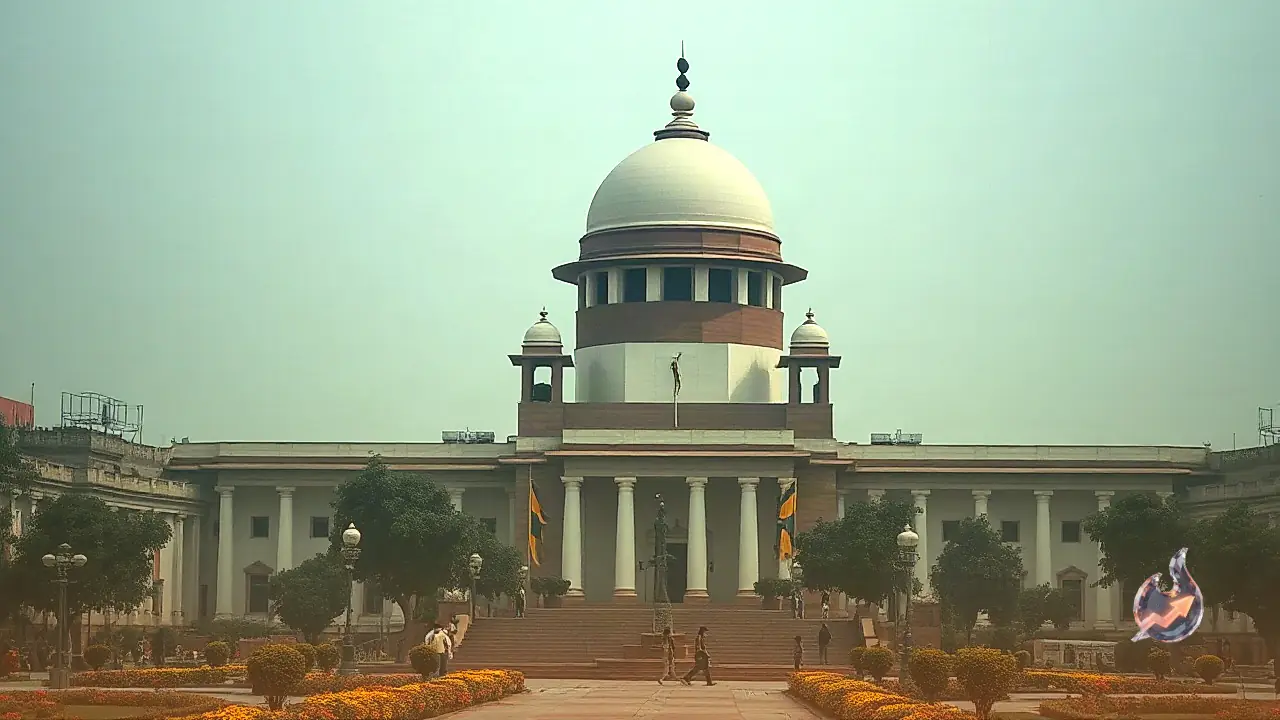

The Supreme Court has delivered a significant judgment regarding the jurisdictional boundaries over legal education and student administration in India. The apex court explicitly ruled that neither the Bar Council of India (BCI) nor any State Bar Council holds statutory power to initiate disciplinary proceedings or impose penalties against law students. The bench clarified that institutional discipline among undergraduate legal scholars rests exclusively within the jurisdiction of their respective law schools and universities.
Statutory Limits of BCI Jurisdiction Defined
A three-judge bench comprising Chief Justice of India (CJI) Surya Kant, Justice Joymalya Bagchi, and Justice V. Mohana deliberated on the legal framework governing law students. The court observed that the regulatory oversight of the BCI begins only after a candidate successfully completes their degree program and formally registers as an advocate with a state bar roll. As long as an individual remains an enrolled student, disciplinary authority stays bound to the charter, statutory rules, and administrative bodies of the law university concerned.
Background of the NALSAR Law University Controversy
The judicial determination arose from an event involving students at the NALSAR University of Law in Hyderabad. On August 13, BCI Chairman Manan Kumar Mishra issued a directive ordering a embargo on the future bar enrollment of the entire 2026 graduating class of NALSAR. The directive also ordered a formal inquiry against students and faculty members following a campus campaign regarding the presence of CJI Surya Kant at a university convocation. Facing intense scrutiny, the BCI Chairman withdrew the order within approximately an hour. The Supreme Court formally concluded that such directives exceeded statutory authority and were legally unsustainable.
Permanent Protection Granted to Students and Faculty
Earlier on August 14, the Supreme Court had expressed strong displeasure over the unilateral actions taken by the BCI leadership. In an interim order, the court had shielded the NALSAR law students and faculty members from any punitive measures by the BCI or State Bar Councils. During the final hearing on Thursday, the bench made this interim protection permanent while officially disposing of the writ petition.
Arguments on Campus Freedom and Institutional Accountability
Appearing for the petitioners, Senior Advocate K. Parameshwar argued that despite the withdrawal of the directive, the court must examine the legal basis and authorization behind the initial order. He emphasized that the matter concerned fundamental principles of freedom of speech and expression within academic institutions. The counsel asserted that as a statutory entity, the BCI must remain accountable for decisions that threaten the professional prospects of an entire academic batch. In response, BCI Chairman Manan Kumar Mishra informed the bench that the directive was promptly recalled and the matter stood closed following an internal BCI meeting.