




















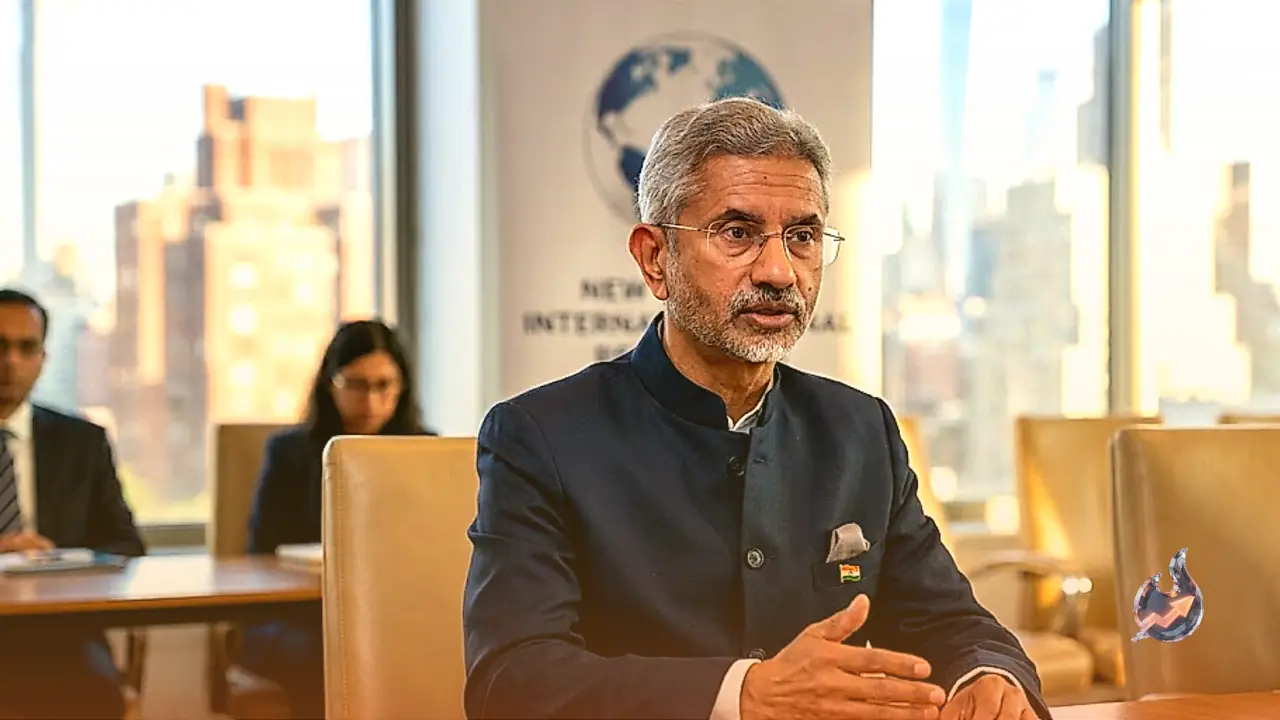

Speaking at an engagement in New York, India's External Affairs Minister S Jaishankar offered a pragmatic assessment of bilateral ties with China, observing that relations have steadily recovered from the most critical phase of military confrontation along the border. He made it clear, however, that the eventual depth and pace of complete normalisation remain inextricably tied to ground conditions across the Line of Actual Control. While interaction levels have improved compared to 2025 and marked a clearer progression beyond 2024, this upward movement should not be misconstrued as a fundamental structural transformation in their broader strategic equation.
Fallout of the 2020 Standoff on Bilateral Engagements
The lethal confrontation in the Galwan Valley in 2020, followed by prolonged friction along extensive stretches of the disputed frontier, had severely crippled regular channels of communication between the two Asian giants. Although bilateral commercial exchanges managed to continue across the period, high-level administrative engagements, reciprocal visits by official delegations, standard visa issuances, and direct commercial flights suffered extensive disruptions. It was only after initial disengagement milestones lowered temperatures at friction points that some of these suspended operational channels gradually began to function once more.
The minister explained that resuming these basic contacts reflects the natural mechanics of stabilizing a volatile relationship rather than conclusive proof that core bilateral differences have disappeared. India has consistently maintained over several years that prolonged confrontation serves the fundamental interests of neither nation. Persistent acrimony merely drains diplomatic focus and introduces avoidable friction between two rising neighbors sharing an extensive land boundary.
Risks of Third-Party Exploitation and Strategic Autonomy
Deliberating on the broader consequences of lingering friction, Jaishankar cautioned that protracted hostility between New Delhi and Beijing carries no genuine advantage for either side. Instead, an extended dispute creates vacuums that external third parties could readily exploit for their own strategic gain. India's guiding posture has been to avoid remaining locked in enduring friction where the strategic dividend flows elsewhere. Adapting to that perspective, he pointed out, required considerable time on the part of the Chinese leadership as well.
Furthermore, easing friction with China reinforces India's broader diplomatic maneuverability on the world stage. Stable border dynamics enable New Delhi to approach interactions with Beijing from a position of relative confidence while simultaneously enhancing its standing among global partners across multiple continents. In managing these sensitive engagements, the government remains focused on pursuing functional and workable outcomes, adopting pragmatic alternatives that best serve national security and economic priorities without compromising strategic core interests.
Border Stability as the Inflexible Foundation of Diplomacy
Reinforcing New Delhi's foundational principle, the external affairs minister reiterated that the state of the border inevitably defines the state of the entire bilateral relationship. Normal diplomatic and economic engagement cannot coexist alongside heightened border friction, severe troop deployments, or volatile frontlines. For the rest of the relationship to regain full normalcy, peace and complete stability must first take firm root across the frontier.
While closer and more regular ties would undoubtedly yield practical dividends for both Beijing and New Delhi, current developments do not imply that lingering geopolitical rivalries and territorial disputes have vanished. Restoring severed operational links such as flights and bureaucratic meetings represents a direct response to de-escalation on the ground, yet achieving an enduring, historic shift in bilateral relations demands a far stronger, deeper, and more resilient foundation between the two capitals.
Navigating Multipolar Alignments and Economic Realities
These remarks form an integral component of India's overarching diplomatic strategy, wherein modern states actively seek balance across multiple global partnerships while consciously mitigating excessive dependence on any single power center. For Indian diplomacy, this entails continuously harmonizing its ties with Beijing alongside robust, evolving partnerships with the United States, Europe, Japan, Russia, and other influential nations across the international system.
The extensive and contested frontier between India and China has experienced repeated friction, culminating in the 2020 clashes that fundamentally altered bilateral dynamics and caught global attention. Despite persistent friction on political and territorial fronts, two-way trade continued to cross significant volumes between the two economies. Nevertheless, India's core diplomatic position remains resolute: complete normalisation across business, diplomacy, and people-to-people exchanges cannot be decoupled from lasting tranquillity along the border.