




















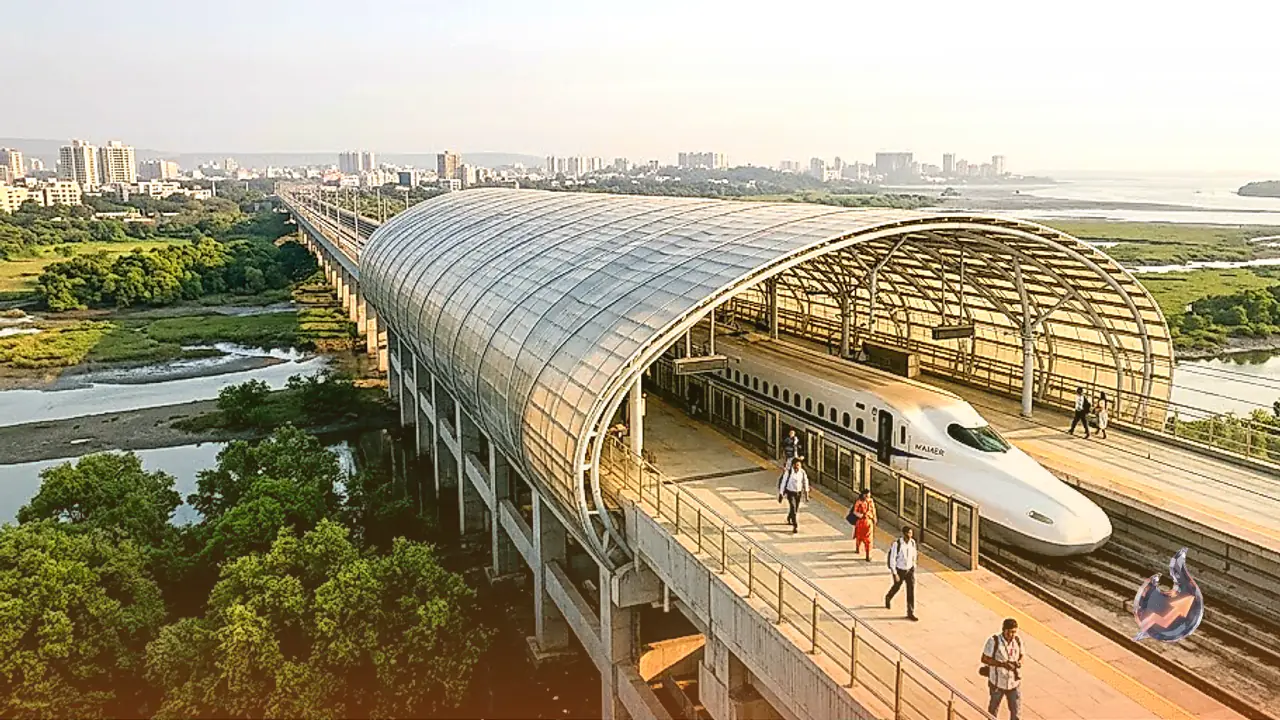

India's ambitious 508 km Mumbai-Ahmedabad High-Speed Rail corridor is setting a new precedent by blending advanced engineering with ecological conservation. A standout highlight of this mega infrastructure project is the upcoming station at Thane in Maharashtra. Departing from traditional ground-level station layouts, engineers have designed the Thane bullet train station to be completely elevated, suspended nearly 12 meters above the natural ground level. This elevated architecture is specifically planned to safeguard the dense mangrove ecosystem surrounding the coastal belt of Thane. Passengers traveling on the bullet train will not only experience swift transit times between major urban hubs but will also enjoy panoramic views of lush green covers along the corridor.
Elevated Structure at 12 Meters Built to Protect Mangrove Forests
The geography surrounding Thane is ecologically sensitive, dominated by dense mangrove forests thriving along the sea coastline and riverbanks. Mangroves play a vital role in environmental protection by acting as natural barriers against coastal flooding, mitigating soil erosion, and providing shelter to diverse wildlife species. When plans for the bullet train corridor were unveiled, concerns were raised regarding the potential impact on these delicate trees. In response, National High Speed Rail Corporation Limited structured the station design specifically around ecological preservation. The station's concourse level, which houses ticketing counters, waiting lounges, and platform access, will float 12 meters above the terrain. This design ensures that the underlying mangrove vegetation remains untouched and natural water movements continue without obstruction.
Station Roof Architecture Inspired by the Waves of Ulhas River
Situated adjacent to the Ulhas River, the entrance and architectural envelope of the Thane station draw direct inspiration from the river's dynamic water currents. Architects designed the roof canopy with a undulating profile that mirrors the movement of flowing river waves. This structural styling creates an aesthetic connection with the surrounding geography while offering passengers an immersive visual experience. By weaving natural topographies into modern architectural frameworks, the station demonstrates how large-scale transportation projects can harmoniously coexist with local environments without causing ecological destruction.
135.45 Km Elevated Section Spanning Across Maharashtra
The overall 508 km bullet train corridor traverses through the states of Maharashtra and Gujarat, alongside the Union Territory of Dadra and Nagar Haveli. Within the Maharashtra section, a continuous 135.45 km stretch is designed as an elevated section. This segment originates at Shilphata and extends up to Zharoli village located near the Maharashtra-Gujarat border. Three major elevated stations are being constructed along this section, situated at Thane, Virar, and Boisar. Over 124 km of this route consists strictly of elevated viaducts and river bridges, elevating the tracks well above terrain and existing urban infrastructure.
Construction Progress Across Mountain Tunnels, River Bridges, and Piers
Navigating the complex terrain of Western India requires extensive engineering interventions including tunnels and massive river crossings. The Maharashtra alignment includes 7 mountain tunnels, 3 of which have already achieved structural breakthrough. Crews are currently advancing internal drainage setup, waterproofing treatments, and concrete lining work inside these completed tunnels. Additionally, several major river bridges are being raised along the corridor, including a 460 meter bridge over the Ulhas River, a 2.32 km long bridge spanning the Vaitarna River, and a 510 meter bridge across the Jagani River. The entire route incorporates 36 bridges and crossings, featuring 12 major steel structure bridges spanning busy railway tracks, national highways, and rivers. Pier construction is active across more than 100 km in Maharashtra, with piers completed along roughly 74 km and prepped for viaduct girder placement.
Harmonizing Sustainable Development with Modern Transit Infrastructure
The Mumbai-Ahmedabad bullet train project represents more than a fast rail connection that cuts travel time between two major economic hubs to just a few hours. It serves as a benchmark for green engineering in India's national infrastructure pipeline. Thane station showcases how modern transit development can proceed without compromising environmental sustainability. Once operational, passengers will travel through a modern station elevated high above the mangroves, offering panoramic views of the Ulhas River and surrounding greenery while establishing a template for future eco-friendly transit hubs.