




















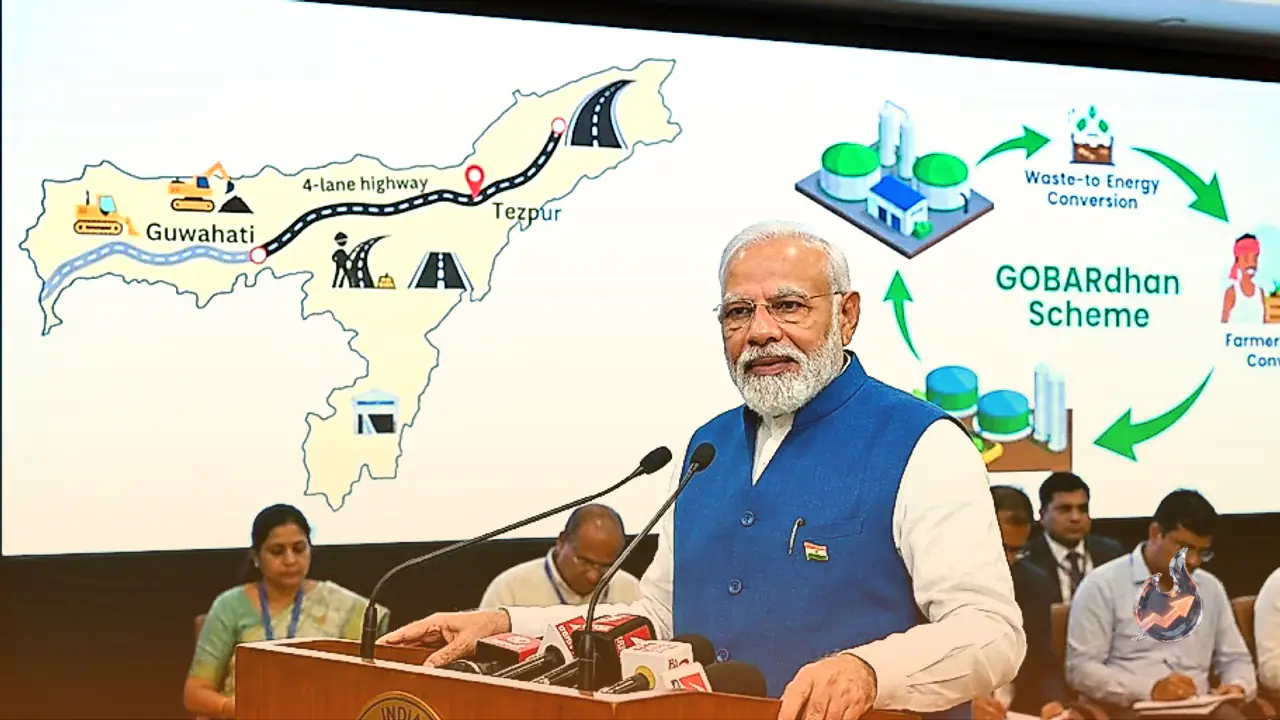

The Union Cabinet, chaired by Prime Minister Narendra Modi, approved two major infrastructure and green energy initiatives aimed at boosting regional connectivity and sustainable development. The Cabinet sanctioned the construction of a 135.871 km 4-lane access-controlled highway corridor on NH-15 in Assam, stretching from Baihata Chariali near Guwahati to Tezpur. Alongside this, the government approved the national integrated scheme 'GOBARdhan' with a total outlay of Rs 23,731 crore to accelerate compressed biogas (CBG) production across India.
Guwahati-Tezpur Highway Corridor: Investment and Execution
The newly approved 4-lane access-controlled corridor will connect Baihata Chariali, located close to Guwahati, with Tezpur along NH-15. Developed under the National Highways (Original) or NH(O) framework, the project carries a total estimated outlay of Rs 8,970.20 crore. It will be built on a Build-Operate-Transfer (BOT) toll mode. Once operational, the expressway will halve the travel time between Guwahati and Tezpur, enhance overall road safety, lower fuel consumption, and substantially cut vehicle operating costs for commuters and freight operators.
Strategic Emergency Landing Facility for the Air Force
A key feature of the infrastructure project is a 4.9 km Emergency Landing Facility (ELF) planned along the Tezpur bypass. Designed in coordination with the Indian Air Force (IAF), this landing strip will serve strategic defense and emergency relief operations. Additionally, the new corridor is structured to divert heavy traffic away from NH-27 (East-West Corridor), which currently runs along the southern bank of the Brahmaputra River, easing chronic congestion on the regional highway network.
Bypasses, Bridges, and Elephant Underpass Details
To prevent traffic snarls in densely populated urban settlements, the project incorporates 5 major bypasses spanning a combined length of 58.7 km. These bypasses will route long-distance traffic around Baihata Chariali, Sipajhar, Kharupetia, Dhekiajuli, and Tezpur. The corridor will also feature 15 major bridges, 30 minor bridges, 19 flyovers, 46 vehicular underpasses, and 210 km of dedicated service roads. To safeguard local wildlife, the plan includes 1 dedicated elephant underpass within the Tezpur bypass section.
Rs 23,731 Crore Allocation for National GOBARdhan Scheme
Briefing the media following the Cabinet meeting, Union Minister of Information and Broadcasting Ashwini Vaishnaw highlighted the approval of the national integrated 'GOBARdhan' scheme. Supported by a financial provision of Rs 23,731 crore, the scheme will be implemented over a ten-year timeframe from 2026-27 to 2035-36. The initiative is designed to position Compressed Biogas (CBG) as a core pillar of India's long-term clean energy transition.
Transforming Waste into Clean Energy and Rural Income
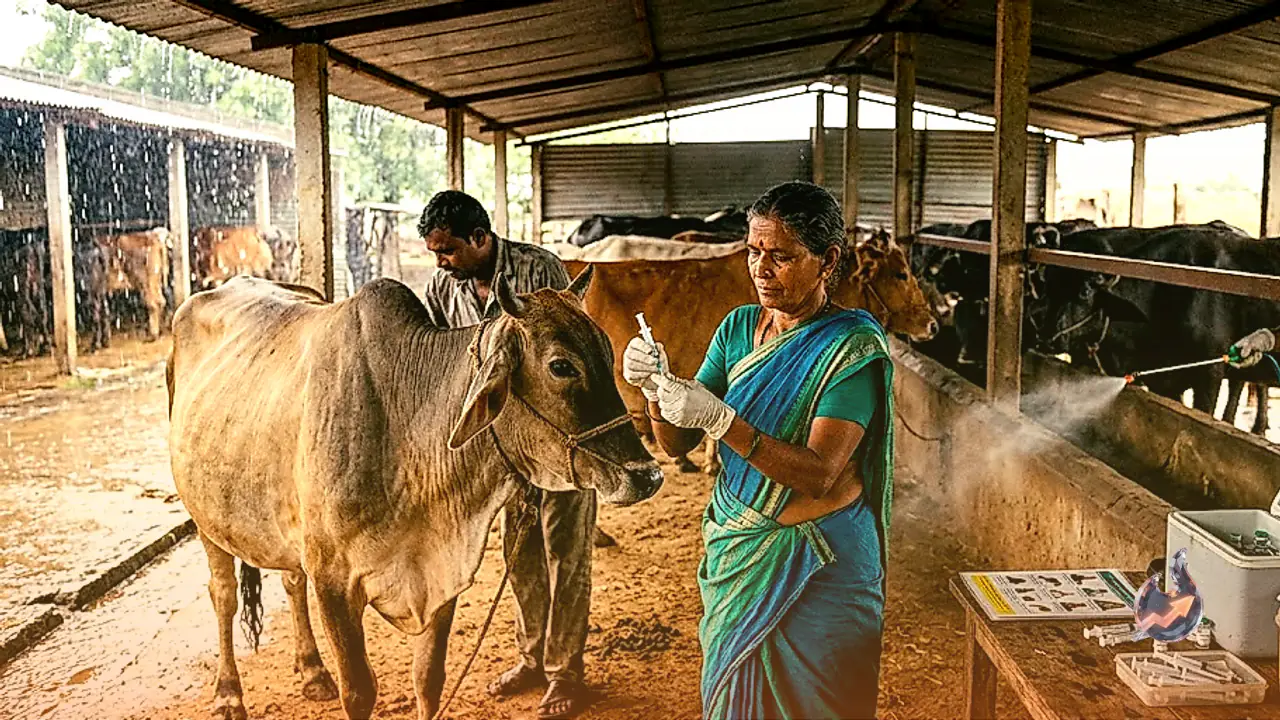
According to the official statement, the GOBARdhan scheme aims to process agricultural residue, cattle dung, sugarcane bagasse, urban organic waste, and other biomass into clean energy and high-value organic fertilizers. By converting waste into wealth, the policy will strengthen rural economies, boost farm incomes, and add national economic value. The framework provides financial and structural incentives, including guaranteed off-take demand, stable pricing models, capital support, pipeline infrastructure, credit access, and technological development to scale up the CBG ecosystem across the country.