


















The 18th BRICS Summit, hosted under the chairmanship of India, became the center of global attention not just for its official declarations and policy agreements, but for the highly intriguing informal chemistry displayed by its key leaders. Beyond the structured discussions and formal diplomatic protocols, the visual dynamics between Indian Prime Minister Narendra Modi, Russian President Vladimir Putin, and Chinese President Xi Jinping caught the eye of international analysts and media. A series of candid moments and shared laughter among these three leaders has sparked intense speculation about the evolving geopolitical alignments, suggesting that personal rapport and strategic interests might be paving the way for a more collaborative future despite underlying bilateral friction.
Decoding the Body Language: A Viral Moment of Laughter and Glances
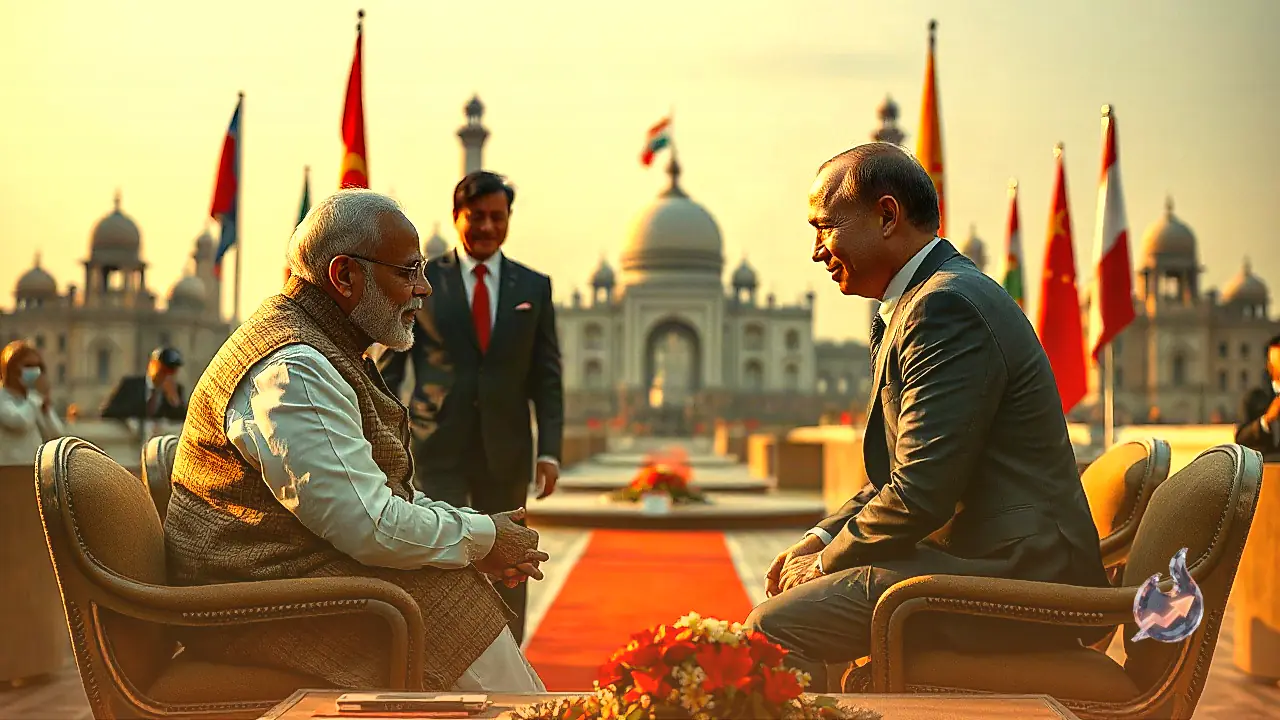
The most talked-about highlight of the summit emerged from the informal gatherings and group photo sessions, where the interaction between the three leaders was captured in vivid detail. Just before stepping onto the stage for the official group photograph, Prime Minister Narendra Modi, President Vladimir Putin, and President Xi Jinping were observed standing closely in a small circle, engaged in what appeared to be an light-hearted conversation. A particular moment from this interaction quickly went viral across various social media platforms. In this widely shared image, Russian President Vladimir Putin and Prime Minister Narendra Modi are seen laughing heartily, showcasing a high level of comfort and warmth. Conversely, Chinese President Xi Jinping is seen standing with his hands behind his back, looking towards Putin with a somewhat mysterious and contemplative expression. While Putin's attention is primarily directed toward Modi, his gaze occasionally shifts subtly toward the Chinese leader, creating a fascinating visual narrative that observers have analyzed from multiple angles.
Informal Chemistry Amid Geopolitical Pressures
This relaxed interaction was not an isolated incident. Throughout the summit, the warmth between the Russian and Indian leaders was highly visible. During an informal corridor walk, President Putin was seen in deep conversation with Prime Minister Modi, warmly placing his hand on Modi's shoulder as they shared a laugh. Such gestures highlight the enduring strategic partnership and mutual comfort that exists between Moscow and New Delhi, even in a highly complex global environment. Furthermore, despite the ongoing border tensions and historical issues between India and China, the body language between Prime Minister Modi and President Xi Jinping during the summit appeared mature and pragmatic. Free from rigid formalities, the two leaders engaged in brief, direct discussions on various sidelines, signaling a mutual willingness to maintain open channels of communication and manage bilateral disputes with diplomatic maturity.
The Resurgence of the RIC Triad on the Global Stage
The warm chemistry exhibited by these leaders has revived discussions surrounding the strategic importance of the Russia-India-China (RIC) triad. At a time when Russia faces significant economic pressures and sanctions from Western nations, and China continues its strategic rivalry with the United States, the sight of these three leaders sharing light-hearted moments on a single platform sends a powerful message to the global community. It highlights that the global order is increasingly multi-polar and cannot be dictated by unilateral decisions. Collectively representing more than 40% of the global GDP, these three economic powerhouses possess the potential to redefine global trade dynamics. By cooperating on critical issues such as supply chain resilience, energy security, and the transition toward trading in local currencies, the RIC nations can significantly reduce their dependence on Western-led financial systems and establish a more balanced global economic architecture.
India’s Role as a Strategic Balancing Power
From a diplomatic standpoint, one of the most compelling aspects of the widely shared summit photographs is the positioning of Prime Minister Narendra Modi, who frequently appears at the center of the frame. This visual representation aligns perfectly with India's foreign policy approach of multi-alignment and strategic autonomy. While India has cultivated exceptionally strong strategic, technological, and economic ties with the United States and other Western nations, it simultaneously maintains a robust and time-tested relationship with Russia, alongside a functional working relationship with China. By effectively navigating these diverse partnerships within the BRICS framework, India establishes itself not as a partisan player, but as a vital balancing force and a credible mediator on the world stage. The positive interactions during the summit demonstrate that India is uniquely positioned to act as a diplomatic bridge between the East and the West, helping to resolve global conflicts and foster international stability.
Strategic Implications for BRICS 2026 and Beyond
The significance of these warm visual exchanges extends far beyond symbolic gestures or social media trends; they carry deep long-term diplomatic implications. The cooperative spirit demonstrated by Prime Minister Modi, President Putin, and President Xi Jinping during the BRICS 2026 discussions indicates that despite unresolved bilateral differences, all three nations recognize the necessity of working together to address pressing global challenges, stimulate economic growth, and ensure regional peace. The summit has effectively proven that the BRICS platform remains a powerful vehicle for emerging economies to assert their collective voice, challenge traditional power monopolies, and shape a more equitable international order. As these three leaders continue to engage with mutual respect and pragmatic cooperation, the potential for the RIC triad to drive the future of global governance becomes increasingly significant.


