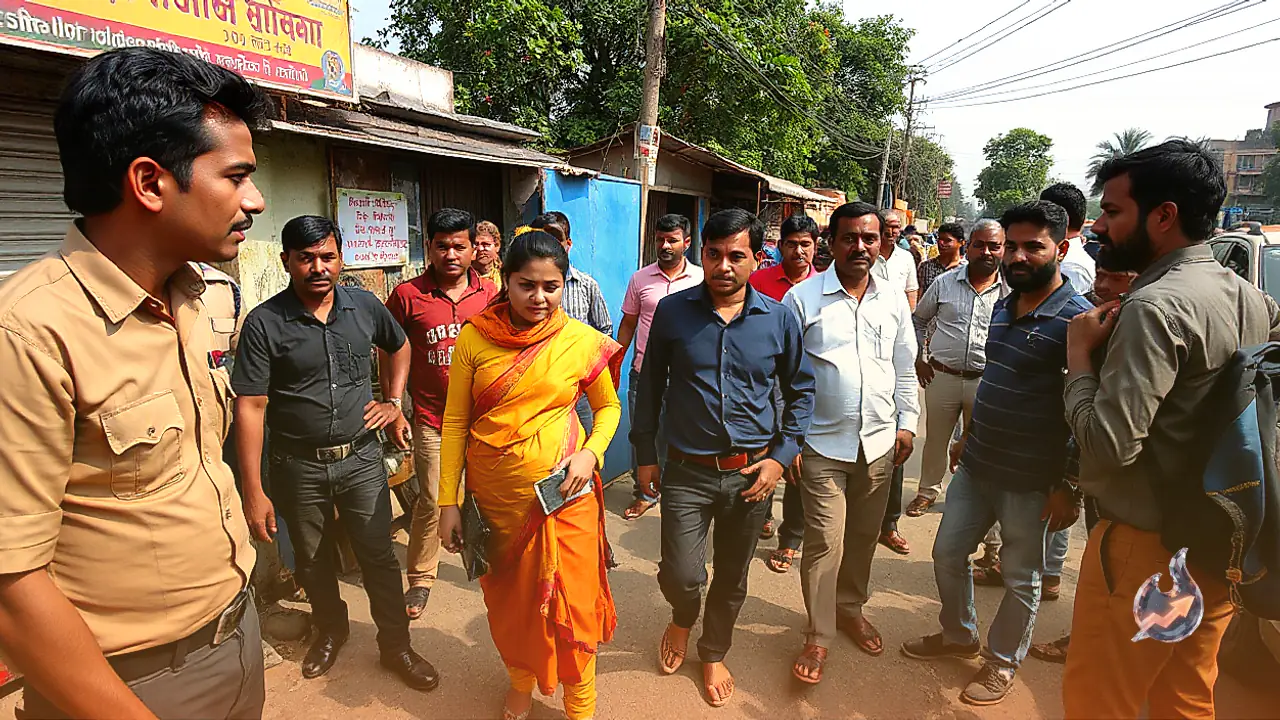

























In an ongoing crackdown on widespread cyber fraud across the country, the Central Bureau of Investigation has taken five more individuals into custody in connection with a high-profile digital arrest case. The investigation centers around a massive financial fraud committed against Srizata Dey, a female professor at BITS Pilani in Jhunjhunu. Perpetrators posing as law enforcement officials kept the educator under virtual surveillance for roughly three months, using continuous intimidation to extort a staggering 7.67 crore rupees.
Victim Kept Under Constant Virtual Surveillance
According to the investigating agency, the fraudsters used elaborate ruses involving legal threats and imminent arrest to break the professor's resolve. She was kept under virtual watch through video calls and other digital channels, preventing her from reaching out for help. The criminals systematically drained funds by forcing transfers into various designated bank accounts over the extended period.
Nationwide Raids Across Multiple States
To dismantle this organized cyber crime network, the agency previously executed a massive coordinated search operation spanning 89 locations across 20 states. Operating under Operation Chakra-VI, the raids covered jurisdictions connected to cases in Gujarat and Karnataka alongside the Pilani incident. Prior to the latest developments, authorities had already apprehended Akash, Raja Karmakar, and Jyoti Rani.
Details of the Latest Suspects Apprehended
The latest phase of the probe resulted in the capture of Sanket Bastwar and Pankaj Damade, both hailing from Itarsi. Three additional individuals identified as Arif alias King Bhai, Harish Purushottam Yadav alias Harry, and Shashank Singh alias Ravi were also taken into custody by the agency.
Modus Operandi Involving Money Layering and Malware
Investigators reveal that Sanket Bastwar and Pankaj Damade played a critical role in arranging bank accounts to receive the illicit funds and helping obscure the money trail. Meanwhile, Arif, Harish Yadav, and Shashank Singh were tasked with organizing accounts and layering the money through multiple transfers. The agency uncovered that the syndicate installed malicious APK files on account holders' mobile phones to intercept incoming bank SMS alerts. This allowed the criminals to remotely control the accounts and siphon off the stolen funds. Authorities are currently tracing the exact trail of the 7.67 crore rupees to identify every final beneficiary and collaborator linked to the network.