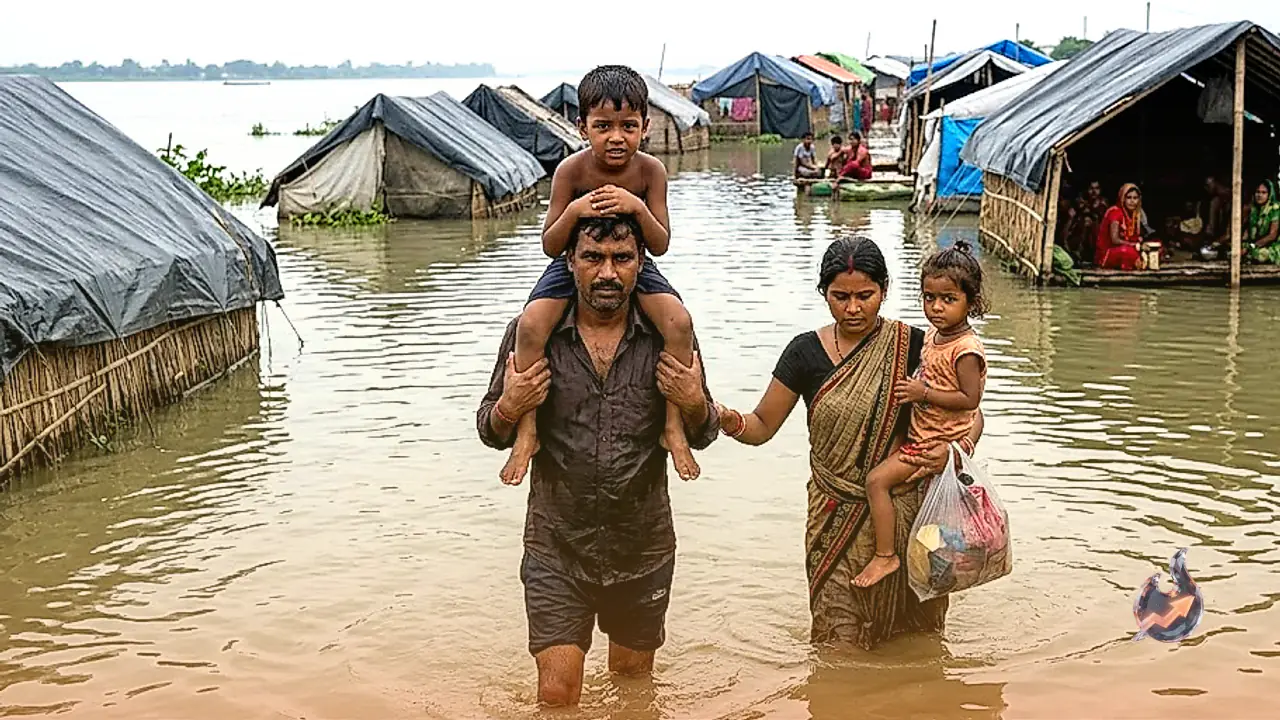





















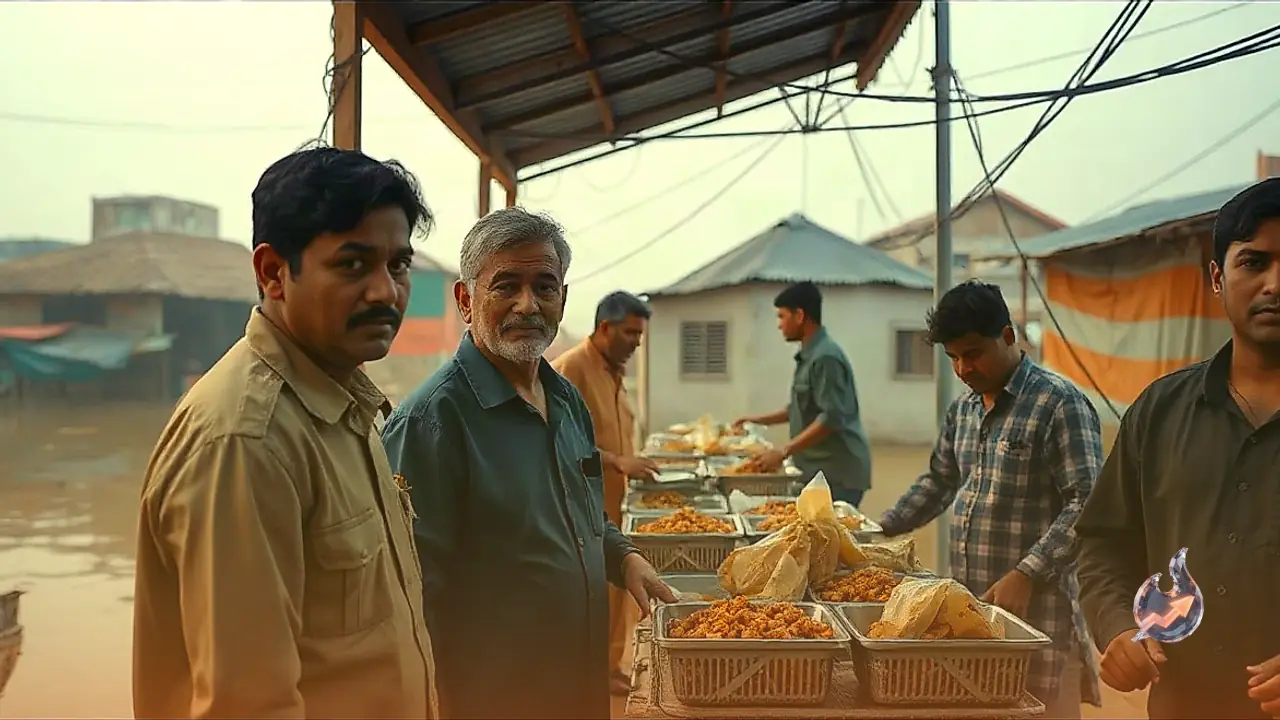

Low-lying areas of the capital Patna and several other districts across Bihar are currently reeling under a massive flood crisis. The surge in the Ganga river and its tributaries has disrupted normal life for a vast population in the state. To ensure that affected residents do not face undue hardships, Chief Minister Samrat Choudhary has personally taken charge of the situation. The Chief Minister visited Vaishali and Saran to inspect the community kitchens operating in the region. During his visit, he personally served meals to the flood-affected citizens and dined with them to gauge the quality of arrangements firsthand while listening directly to their grievances.
Strict Directives to District Officials
Issuing strict instructions to the District Magistrates and Superintendents of Police of all flood-hit districts, the Chief Minister emphasized that essential supplies and amenities must reach affected people on time. He stressed that citizens should not experience any distress due to administrative delays. According to state data, a total of 226 community kitchens are currently operational, providing cooked meals to approximately 3.75 lakh people so far. Additionally, four relief camps have been set up to shelter, feed, and provide medical care for 2,505 individuals.
Deployment of National and State Disaster Teams
As part of ongoing relief measures, authorities have distributed 81,100 polythene sheets and 19,000 dry ration packets among displaced families. To maintain connectivity across inundated zones, 1,602 boats have been deployed for public transportation. A total of 37 teams from the National Disaster Response Force and State Disaster Response Force have been stationed across the vulnerable districts. The administration maintains that water levels are being continuously monitored and rescue operations are being ramped up wherever required.
Stabilizing Water Levels in Major Rivers
Amid the ongoing crisis, some encouraging signs have begun to emerge. Water levels in several prominent rivers have stabilized or started receding. The Ganga, Gandak, Kosi, and Son rivers at the Indrapuri barrage are either holding steady or dropping rapidly in multiple locations. Officials from the disaster management department noted that relief distribution, covering morning and evening meals, dry ration packets, and polythene sheeting, is being expedited. Furthermore, the fleet of operational boats has been increased to facilitate easier movement.
Discharge Data for Gandak and Kosi
According to statistics released by the disaster management department, the discharge of the Gandak river near the Valmikinagar barrage was recorded at 1,21,500 cusecs at 10 AM on Monday, with a steady trend. Similarly, the discharge of the Kosi river near the Birpur barrage stood at 1,98,150 cusecs, while the Son river discharge at the Indrapuri barrage was registered at 1,33,134 cusecs, with both rivers showing a receding trend.
Rivers Flowing Above Danger Mark
Despite stabilizing trends in some areas, the department reported that several rivers continue to flow above the danger mark. These include the Gandak at Dumariya Ghat and Hajipur, the Kosi at Baltara and Kursela, the Budhi Gandak at Khagaria, and the Ganga at Digha, Hathidah, Bhagalpur, Kahalgaon, Buxar, and Munger. Other rivers crossing danger thresholds include the Punpun at Sripalpur, the Bagmati at Benibad, and the Ghaghra at Darouli and Gangpur. The rising waters have affected approximately 27.01 lakh people across 423 village panchayats in 74 blocks spanning 13 districts, namely Patna, Bhojpur, Saran, Vaishali, Bhagalpur, Begusarai, Buxar, Samastipur, Munger, Katihar, Lakhisarai, Khagaria, and Arwal.
Rainfall Forecast for Coming Days
The Bihar Meteorological Service Centre has predicted light to moderate rainfall across multiple locations in the state over the next two days, with isolated heavy downpours expected in some areas. The disaster management department remains on high alert. Meanwhile, in the capital Patna, rising floodwaters from the Ganga have submerged parts of Bind Toli in Digha, displacing roughly 1,500 families who are now forced to live in tents and tarpaulins along the JP Ganga Path.