




















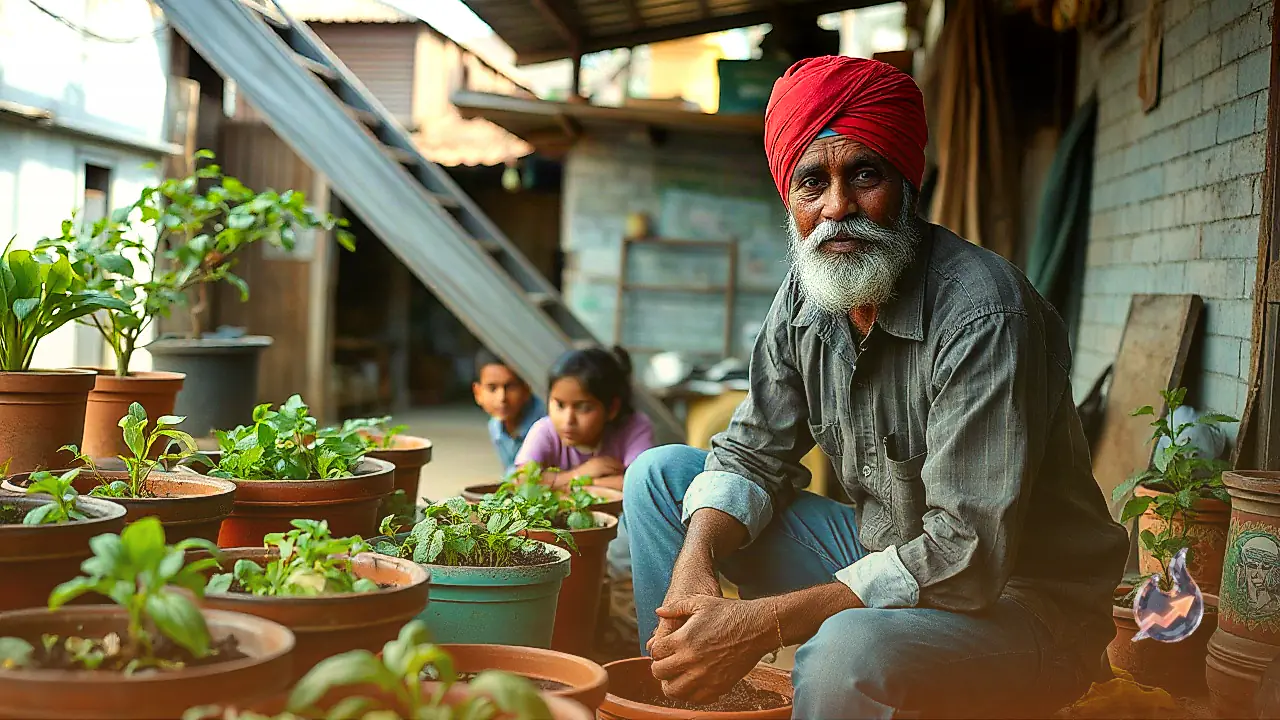

Securing a daily supply of fresh, chemical-free vegetables directly from one's own premises remains a primary wellness goal for many households today. However, limited yard space and concrete-covered courtyards in modern residential setups frequently deter people from cultivating their own produce. Offering a practical and inspiring alternative, farmer Kothari Singh Patel from Barhat village in the Manikpur tehsil of Chitrakoot has successfully transformed a compact domestic area into a thriving organic kitchen garden. By growing a variety of rotational seasonal vegetables right beside his home, he reliably supplies his household kitchen with pure, freshly harvested greens.
Health Challenges Prompted The Switch To Natural Cultivation
The journey towards organic farming began as a necessity rather than a hobby for Kothari Singh Patel. Facing persistent personal health troubles, he closely examined his dietary habits and recognized the potential harm caused by chemical residues in conventionally grown food. Determined to restore his well-being, he made a decisive turn toward organic farming in the year 2023. By switching entirely to organically grown grains and home-harvested vegetables, he observed substantial and lasting improvements in his overall health. On his agricultural land, he currently cultivates staple crops such as paddy, pigeon pea (arhar), and sorghum (jowar) using strict natural methods, while reserving the space surrounding his home for daily kitchen garden vegetables.
Careful Crop Selection Tailored For Household Kitchen Needs
Location and crop choices play a decisive role in the long-term utility of a domestic garden. Patel highlights that a kitchen garden should ideally sit directly adjacent to the home kitchen, ensuring that fresh produce can be plucked on demand during meal preparation. Cultivation should emphasize varieties that are consumed routinely rather than ornamental or exotic plants. While he previously harvested crops like pointed gourd (parwal) and sweet potato, his current garden patch thrives with daily cooking staples including bottle gourd (lauki), brinjal, green chilies, and tomatoes. Patel notes that although small home setups may yield modest overall volumes compared to commercial farms, the output remains more than sufficient to satisfy an entire family's everyday vegetable demand.
Cultivating Vegetables On Paved Floors Using Pots And Containers
One common hurdle for urban and semi-urban residents is the absence of bare, unpaved soil around their living quarters. Patel demonstrates that solid concrete floors present no barrier to productive gardening. By substituting field beds with conventional pots or deep containers packed with an enriched mix of fertile soil and organic manure, anyone can establish a functional setup on hard surfaces. Sturdy plants such as tomatoes, chilies, eggplants, and creeping bottle gourd vines adjust exceptionally well to container gardening. Furthermore, Patel points out that with diligent daily maintenance and balanced organic inputs, several vegetable varieties begin bearing harvestable produce within just 20 days of planting.
Organic Nutrition And The Wider Bundelkhand Awareness Drive
Patel strongly advises against introducing synthetic chemical fertilizers or artificial pesticides into home gardens, as they defeat the core objective of growing pure food. Pure organic compost and farmyard manure preserve soil vitality, enhance natural flavors, and keep plants free of toxic residues. Beyond the immediate economic advantage of reducing grocery purchases, tending to potted plants serves as a rewarding recreational activity that alleviates daily stress while adding vibrant greenery around the house. Dedicated to sharing these tangible benefits with his wider community, Patel heads an initiative called Kheti Bachao Bundelkhand. Through this platform, he actively mobilizes rural farmers and urban dwellers alike, training them to embrace organic farming methodologies and build their own sustainable home gardens.