

















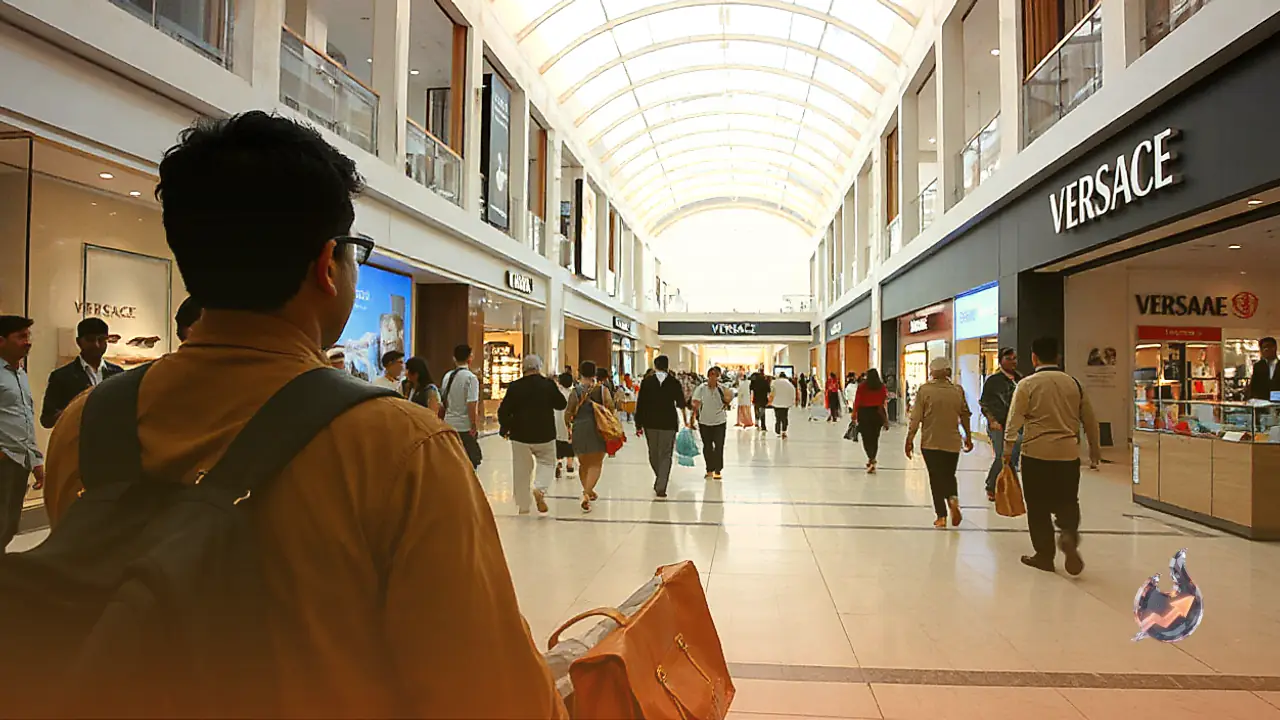

A momentary lapse of attention inside a shopping center can occasionally trigger an acute financial crisis. A customer visiting a luxury eyewear outlet in Hyderabad encountered an ordeal of this exact nature when a pair of Versace spectacles, carrying a price tag of around Rs 25,000, slipped from his grasp and crashed onto the floor. Store representatives promptly intervened, insisting that the visitor bear the full expense of the ruined merchandise. The customer, however, had merely Rs 144 remaining in his bank account, creating an intensely stressful standoff right inside the commercial establishment.
The AMB Mall Trial and a Costly Compromise
The sequence of events unfolded at an upscale eyewear boutique situated within AMB Mall in Hyderabad. The patron had entered the premises with the intention of browsing optical frames and proceeded to examine a pair from the luxury fashion house Versace. As he attempted to try the item on, the frame slipped from his hands and hit the floor. A store staff member approached him immediately, stating that the spectacles were compromised and that he would have to pay their full market value of Rs 25,000. Faced with an immediate demand that exceeded his resources, the shopper engaged in lengthy discussions with the retail personnel. Following extensive back-and-forth negotiations, the staff eventually agreed not to levy the entire cost of the complete product, settling instead on collecting the price of the damaged lenses alone, an amount fixed at Rs 12,000.
Scraping Together Funds With Bare Minimum Savings
Even the reduced compensation demand of Rs 12,000 posed a formidable hurdle for the customer, whose active bank balance stood at an austere Rs 144. Determined to resolve the tense confrontation and exit the premises, he reached out to a close friend over the phone to explain the predicament. The friend agreed to assist and transferred Rs 12,000 as a temporary loan, which enabled the shopper to settle the store demand and depart. While the patron expressed empathy toward the retail employee, acknowledging that working retail and handling high-stress on-floor incidents is demanding, he candidly admitted that the ordeal left him completely alienated from the Versace brand altogether.
Complaint Escalated Against the Store Manager Over Denied Invoices
The matter did not conclude with the transaction at the counter. In a subsequent update shared about the incident, the patron confirmed having lodged a formal grievance against both the parent enterprise and the specific store manager. The central thrust of his complaint revolves around procedural irregularity: despite collecting Rs 12,000 against a product originally valued at Rs 25,000, the management strictly refused to issue an official printed invoice, a payment receipt, or any written justification outlining the specific regulatory or retail policy under which the money had been demanded. Having documented the store manager's identity, the customer formally submitted the details to company authorities, challenging the practice of demanding unbilled compensation on retail floors.
Online Debate Over Retail Insurance and Consumer Protections
After the individual narrated his ordeal on the social forum Reddit, it ignited a wide debate surrounding retail liability and the rights of shoppers in premium retail environments. Commentators questioned whether brick-and-mortar stores maintain any legitimate authority to extract immediate, out-of-pocket settlements from patrons over accidental in-store breakages. Numerous contributors pointed out that shoppers caught in similar circumstances should demand to see official store breakage regulations and commercial insurance provisions prior to remitting any funds.
One participant noted that Versace eyewear operations are tied to the eyewear conglomerate Luxottica, emphasizing that such corporate networks routinely have formal warranty frameworks and claim protocols to absorb accidental display damage. Drawing a parallel, that user recounted a previous incident involving Prada frames where the retail outlet absorbed the damage through a corporate warranty claim instead of penalizing the customer. In reply, the aggrieved Hyderabad customer restated that the outlet flatly declined to supply any receipt or paperwork documenting the payment. Other participants underlined that established commercial retailers carry comprehensive commercial indemnity and in-store property insurance precisely to cushion such routine breakages. Commentators recommended that the customer revisit the store accompanied by legal counsel or a family senior to demand restitution through the proper insurance channel. Simultaneously, many acknowledged that when faced with confrontation in an upscale venue, standard consumers naturally experience severe anxiety, often consenting to immediate payment simply to escape the hostile environment.