




















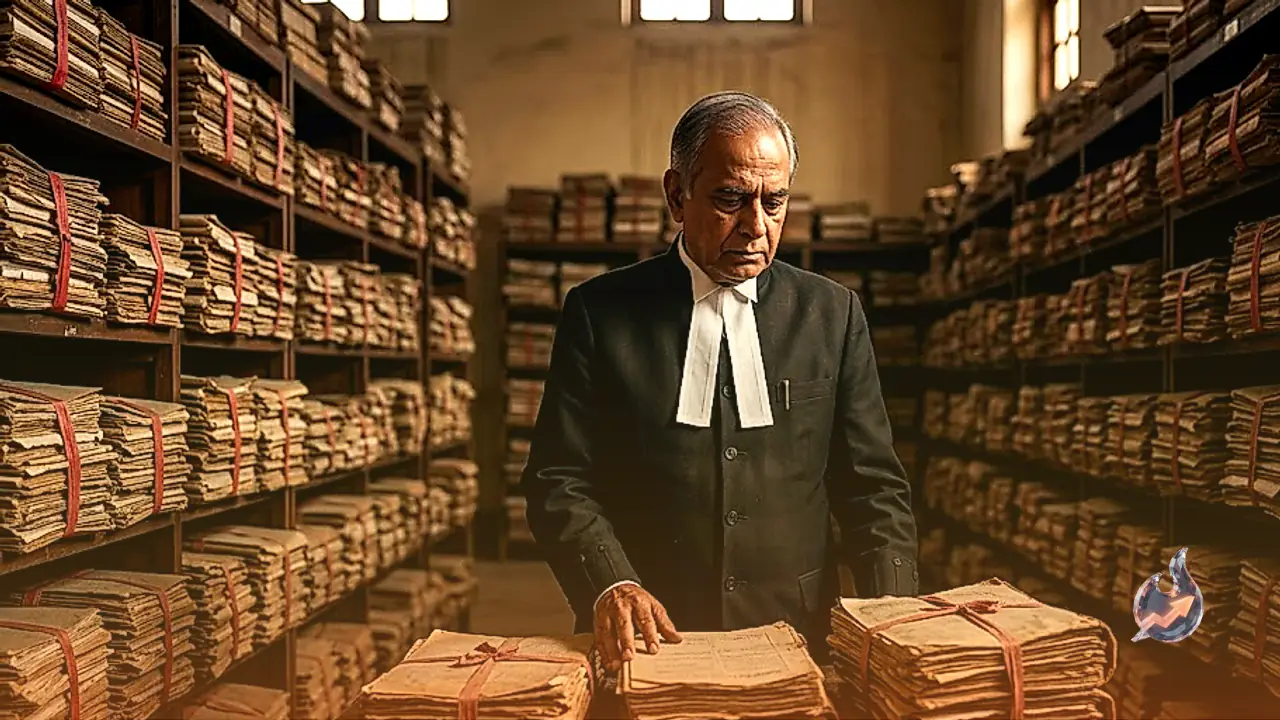

The sluggish pace of case resolution within the country's judicial system has once again brought to light deeply concerning figures. From the highest court of the land to various high courts, an overwhelming mountain of lawsuits has piled up, leaving countless files gathering dust for decades. According to recent data, more than 10,000 cases have been pending in the Supreme Court alone for anywhere between 10 to 30 years. What makes these numbers even more astonishing is that despite pumping approximately ₹9,800 crore or more into judicial infrastructure and technology since 2011, the backlog situation remains virtually unchanged. Statements presented in Parliament by Law Minister Arjun Ram Meghwal, alongside heavy statistics regarding vacant judge positions, have made it explicitly clear that without establishing strict timeframes and filling vacant posts, timely justice for ordinary citizens remains a formidable challenge.
Thousands of Cases Linger for Decades
A closer look at judicial records reveals a distressing reality. Within the Supreme Court, over 10,000 cases have been pending for more than a decade. Among these, 558 matters have remained unresolved for over 20 years, while 26 cases have crossed the 30-year mark of pending status. The situation across the country's 25 high courts is equally troubling, where more than 80,000 cases have lingered for over 30 years. This state of affairs persists despite spending upwards of ₹9,800 crore since 2011 to upgrade court infrastructure and integrate technology into the justice delivery system, with these financial outlays failing to provide any significant relief in reducing the mountain of pending litigations.
Parliamentary Disclosures and Severe Judge Vacancies
In a written reply to a parliamentary question last week, Union Law Minister Arjun Ram Meghwal shifted the onus of case disposal squarely onto the judiciary, noting that it has failed to establish any defined timeframe for concluding matters. He further elaborated that the timely disposal of cases depends on a multitude of factors, including the adequate presence of judges and judicial officers, court staff and physical infrastructure, the complexity of facts involved, the nature of evidence, the cooperation of stakeholders such as the bar, investigative agencies, witnesses, and litigants, alongside the proper application of rules and procedures. While the Supreme Court has accelerated the appointment of judges to fill vacant posts, the scenario across 25 high courts and subordinate courts tells a different story. High courts currently face 341 vacancies against a sanctioned strength of 1,122 judges. Similarly, in subordinate courts, out of a total sanctioned strength of 30,868 judges, 7,311 positions remain vacant.
Collegeiums and Legislative Reforms
The Law Minister accused respective high court collegiums of failing to adhere to stipulated timelines for initiating recommendations for judge appointments, which he identified as the primary catalyst behind the extensive vacancies. A high court collegium comprises the chief justice and the two senior-most judges of that court, whereas recommendations for the Supreme Court are initiated by the Chief Justice of India. Highlighting mitigation efforts, Meghwal stated that arrears committees have been established across all 25 high courts and district courts specifically to tackle cases pending for over five years. Furthermore, the government has enacted several legislative measures to curb backlogs, including the New Criminal Laws 2023, the Negotiable Instruments (Amendment) Act 2018, the Commercial Courts (Amendment) Act 2018, and the Specific Relief (Amendment) Act 2018.