























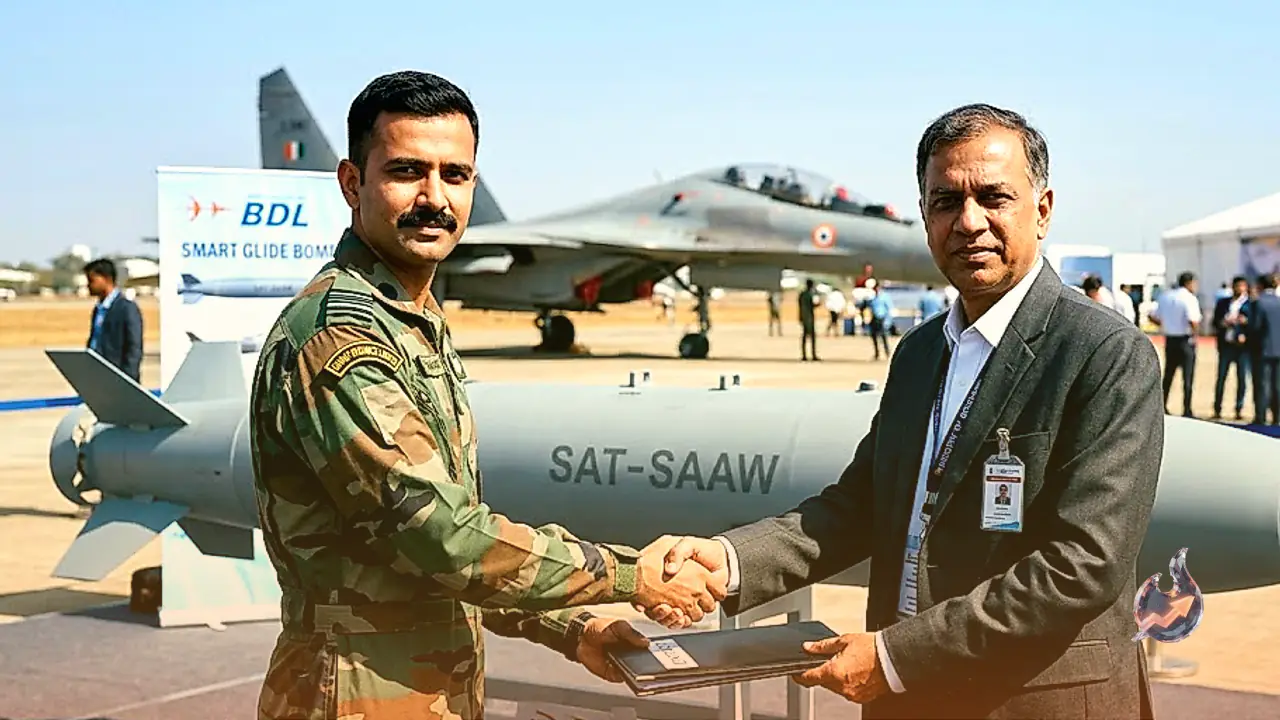

In a major boost to the operational readiness and offensive striking capability of the Indian Air Force, the Ministry of Defence has finalized a significant procurement contract. Defence Secretary Rajesh Kumar Singh oversaw the signing of the agreement in New Delhi, which awards Bharat Dynamics Limited a contract valued at Rs 810.79 crore. Under this procurement, the armed forces will receive 160 units of the Satellite Smart Anti-Airfield Weapon, known as SAT-SAAW, engineered to neutralize high-value ground assets with precision from extended distances.
Domestic Development Under Buy Indian-IDDM Classification
According to the Ministry of Defence, the capital acquisition contract has been concluded under the 'Buy Indian-IDDM' (Indigenously Designed, Developed, and Manufactured) category. This procurement route prioritizes military hardware whose research, design framework, and fabrication are rooted in domestic capability. The deal reflects ongoing institutional efforts to advance technological sovereignty and expand production capacity across India's domestic defence manufacturing ecosystem.
The engineering design and foundational development of the SAT-SAAW system were spearheaded domestically by the Defence Research and Development Organisation (DRDO). Through this home-grown effort, the weapon incorporates approximately 60 percent indigenous content. In addition to structural engineering, multiple critical sub-systems powering the munition have been designed and manufactured within the country, ensuring reduced lifecycle dependencies on foreign suppliers.
Standoff Range Dynamics and Precision Guidance Mechanics
From an operational standpoint, SAT-SAAW functions as an air-to-ground precision-guided glide bomb. The weapon is specifically designed to allow strike aircraft to deliver ordnance against heavily protected surface locations from extended standoff distances, ensuring that delivery platforms are not exposed to high-density defensive networks.
The defining technical attribute of this munition is its standoff launch profile. In conventional tactical strikes, aircraft frequently face severe hazards when penetrating within proximity of targets shielded by modern surface-to-air missile batteries. With the SAT-SAAW glide bomb, fighter pilots can release the payload well outside the engagement envelope of enemy terminal air defence systems. Once detached from the hardpoint, the weapon glides along an optimized aerodynamic trajectory directly toward designated coordinates, striking with pinpoint accuracy.
Strategic Neutralization of Adversary Airfields
Operational documentation from the Ministry of Defence highlights that the primary mission profile for the SAT-SAAW focuses on disabling adversary airbases and airfields. During aerial warfare, airfields represent pivotal operational nodes. They serve as launch pads for combat air patrols, staging areas for strike packages, and centers for critical logistical turnaround and rearming routines.
Strikes carried out by precision glide munitions against runways, taxiways, and associated airfield infrastructure immediately impair the adversary's flight operations. Immobilizing aircraft on the tarmac and halting launch cycles degrades the enemy's ability to wage sustained air campaigns. By fielding a long-range standoff glide weapon capable of neutralizing these nodes, operational commanders gain immense flexibility when crafting campaign strategies while maintaining high mission success rates.
Integration Across Su-30 MKI, Jaguar, and Hawk Fleets
To maximize operational utility, the SAT-SAAW architecture has been designed for seamless integration across multiple fighter platforms in the Indian Air Force inventory. Among the key aircraft designated to deploy this smart glide munition are the Su-30 MKI heavy multirole fighter, the Jaguar deep-penetration strike aircraft, and the Hawk advanced jet trainer.
This multi-platform deployment capability allows air planners to tailor specific strike sorties based on mission complexity and theatre requirements. Deploying a unified, indigenous weapon across diverse fleet assets lowers integration hurdles and offers commanders an expanded menu of tactical choices, particularly when conducting high-stakes missions where target ingress carries unacceptable combat risks.
Induction Schedule and Long-Term Operational Sustenance
The contractual framework stipulates that deliveries of the 160 SAT-SAAW units will take place across financial years 2027-28 and 2028-29. This phased induction schedule ensures a steady, structured pipeline for integration into active IAF squadrons as Bharat Dynamics Limited scales its production line.
The arrival of these precision glide bombs will substantially expand India's standoff strike options against fortified ground targets. The Defence Ministry emphasized that the induction will directly elevate operational combat readiness. Furthermore, because a substantial portion of the weapon's vital subsystems and underlying components are produced domestically, the armed forces can sustain ongoing maintenance, lifecycle overhauls, and potential future production surges without reliance on foreign supply chains.