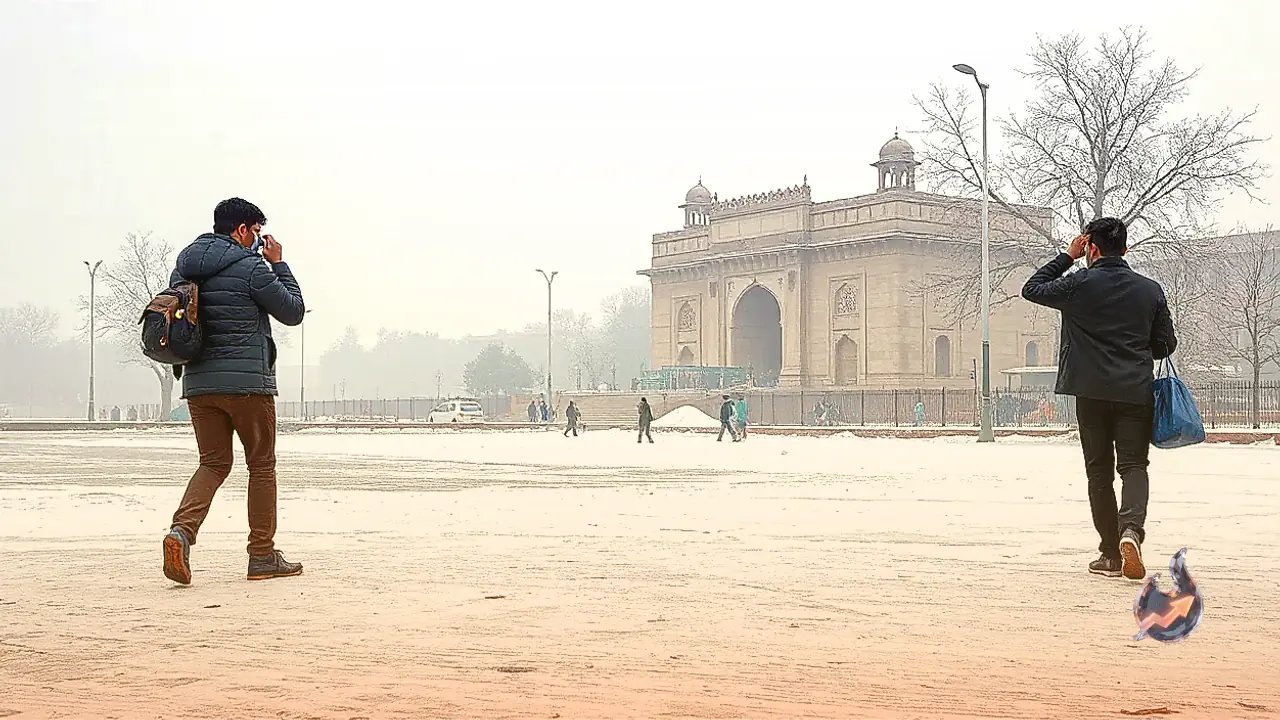

Winter has officially arrived in Delhi and the National Capital Region with a noticeable drop in temperatures. Since the morning of November 18, chilly winds have been sweeping across the region, making tap water noticeably cold and signaling the true onset of the winter season. According to the India Meteorological Department, the temperature has dropped to its lowest level this season, sending shivers through the early morning commuters.
Forecast and Temperature Trends
The India Meteorological Department reports that the skies will remain mainly clear with a layer of moderate fog expected during the early morning hours. A significant drop in temperature is driving the sudden chill across the city. Today's minimum temperature is projected to hover between 12 and 14 degrees Celsius, while the maximum temperature is expected to reach 27 degrees Celsius, with the cold becoming particularly intense after sunset.
Wind Patterns and Air Quality Improvements
The brisk winds blowing across the capital are not only lowering the mercury but also helping disperse pollutant particles, leading to an improvement in overall air quality from severe levels. According to fresh data from the Central Pollution Control Board, Delhi's average Air Quality Index stood at approximately 212 on Wednesday morning, placing it in the poor category, which is an improvement compared to previous days.
Area-Wise AQI Breakdown
Monitoring stations across the city recorded AQI readings ranging between 200 and 290. Chandni Chowk registered around 292, Siri Fort stood at 278, Burari recorded 249, Alipur was at 235, and Anand विहार hovered around 206. Meanwhile, locations such as the IGI Airport and Jawaharlal Nehru Stadium experienced moderate air quality with readings between 150 and 190. However, PM 2.5 remains the primary pollutant across the region.
Administrative Relaxations and Health Advisories
The Commission for Air Quality Management recently lifted restrictions under GRAP Stage 3, bringing some relief to residents, though the air in several areas remains less than ideal for breathing. Health experts have issued advisories urging sensitive groups, including children, the elderly, and those with respiratory ailments, to limit outdoor exposure, wear masks, and increase indoor activities to safeguard their health.