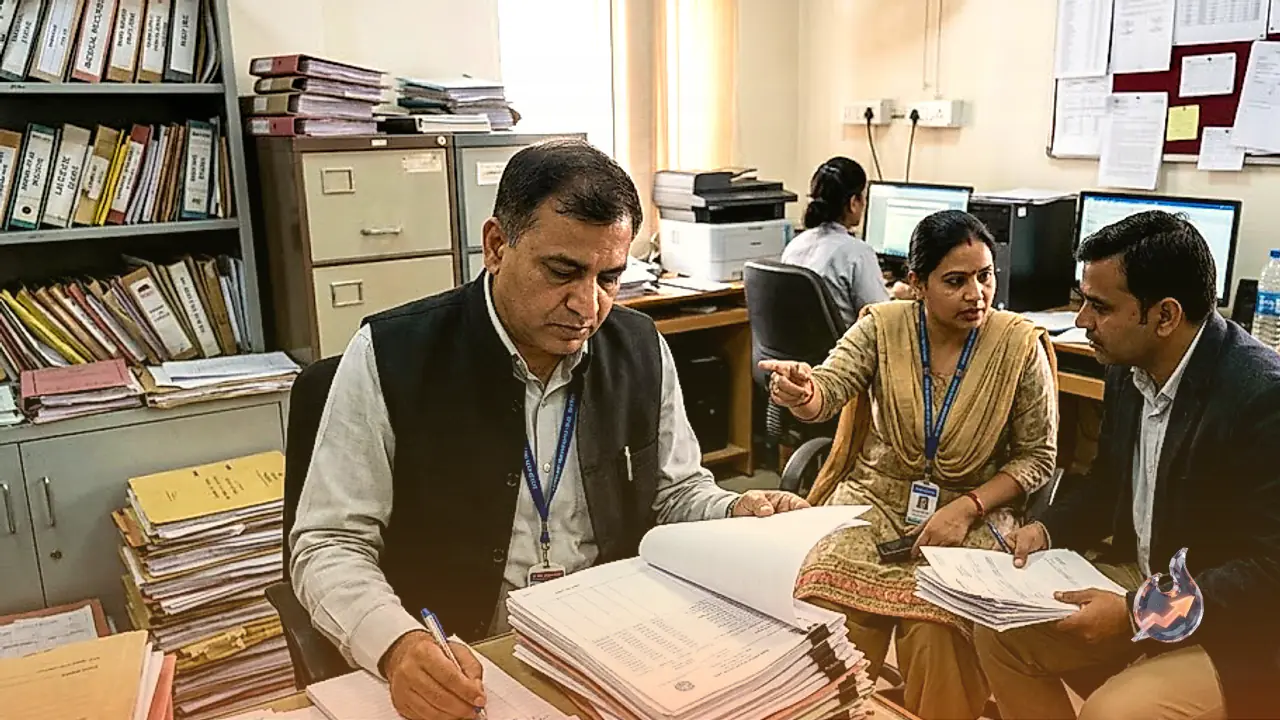



















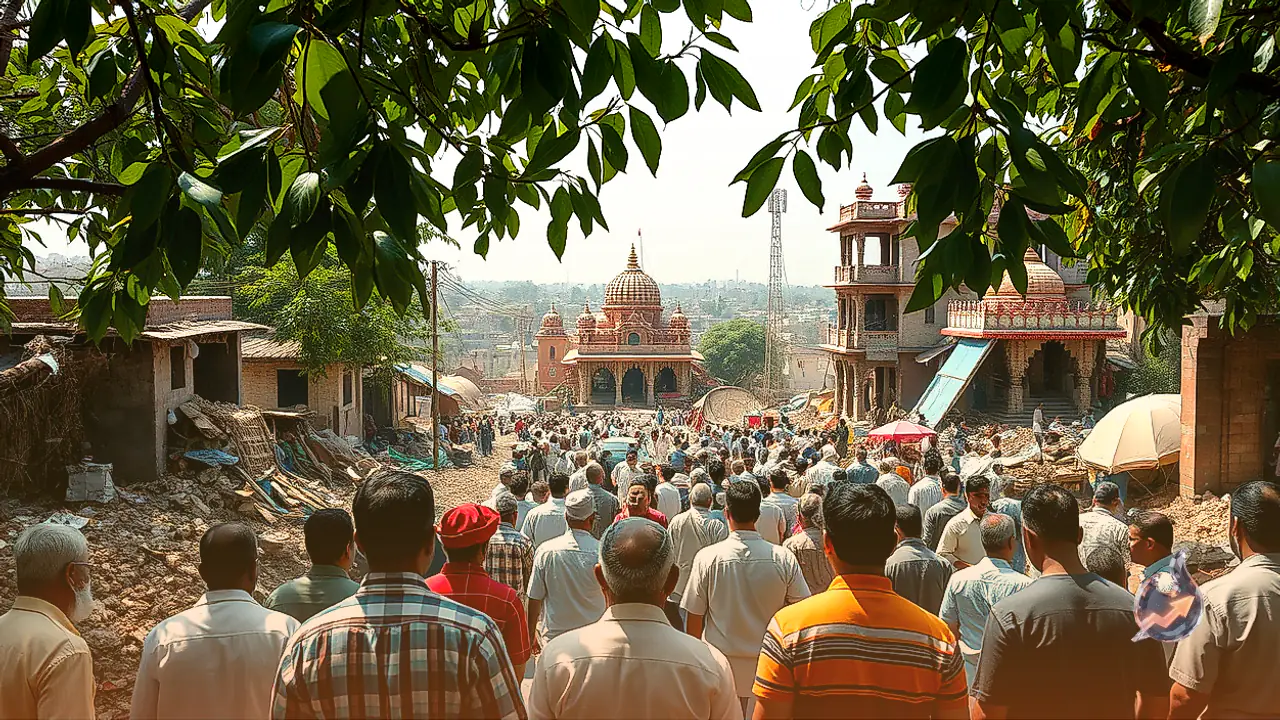

A sweeping transition is underway in the heart of Lutyens' Delhi as two of the most iconic landmarks of Indian governance, Shastri Bhawan and Krishi Bhawan, are being systematically vacated. For several decades, these sprawling bureaucratic hubs served as the nerve center for formulation of national policies, high-level administrative meetings, routine file movements, and regular interactions involving government personnel, journalists, and citizens alike. Under the latest phase of the Central Vista redevelopment project, these aging buildings are scheduled for demolition to make way for modern executive complexes designated as Kartavya Bhawan-4 and Kartavya Bhawan-5. While the administrative shift represents a massive logistical overhaul for central ministries, it has brought to light an equally critical ecological dilemma: the uncertain fate of the hundreds of rhesus macaques that have called the trees, rooftops, and balconies of these two government complexes home for generations.
Decades of History and an Unspoken Everyday Coexistence
Constructed during the formative years of independent India's administrative build-up, both structures carry immense historical significance. Krishi Bhawan was erected around 1957, serving through the decades as the command centre for agriculture and food security strategies that eventually ushered in the Green Revolution. A few years later, in the 1960s, Shastri Bhawan was constructed, housing key ministerial departments overseeing education, law and justice, culture, and information and broadcasting. As newly independent India rapidly expanded its bureaucratic footprint, the lush green courtyards and large shade trees surrounding these complexes inadvertently established a thriving urban sanctuary for wildlife.
Over the subsequent six decades, a unique and quiet coexistence took root between civil servants and the resident monkey troops. Inside the corridors, corridors buzzed with officers, staff, and visitors navigating paperwork, while outside, troops of monkeys inhabited the branches of mature trees, parapets, window cornices, and rooftop edges. During afternoon lunch hours, when employees gathered in courtyards or opened their tiffin carriers, the presence of the simian residents became an inseparable part of the daily workplace routine. This informal coexistence evolved into a defining visual characteristic of the capital's power corridor, offering a living, organic contrast to the rigid world of official files, committee rooms, and bureaucratic protocol.
The Looming Threat of Displacement and Human-Animal Conflict
Concerns regarding the fate of the monkeys first surfaced in January, when official timelines for tearing down the twin structures were made public. Now that packing crates, archival files, computers, and office furniture are being actively hauled out to make way for demolition machinery, the crisis has become immediate. For government ministries, vacating an office is an administrative exercise managed through logistics and designated new spaces; for wildlife, the demolition of a long-established territory amounts to a complete disruption of life, safety, and survival mechanisms.
Monkeys establish their presence based on familiar environmental anchors, including mature canopy cover, reliable shade, accessible water, predictable food scraps, and a deeply ingrained territorial layout built over decades. When these massive structures are knocked down and surrounding vegetation cleared, the simians will find their familiar environment abruptly wiped out. Deprived of shelter and sustenance, the displaced troops are highly likely to scatter into surrounding green belts, India Gate lawns, arterial roads, and nearby residential neighbourhoods. Such sudden dispersal significantly amplifies the risk of vehicular accidents on busy avenues and triggers sharp human-wildlife encounters across adjoining residential colonies.
The Asola-Bhati Precedent and Practical Challenges of Relocation
Efforts to manage Delhi's urban monkey population have a long administrative history, with civic bodies such as the Municipal Corporation of Delhi and the New Delhi Municipal Council tasked with trapping and translocating problem troops. For years, the primary destination for captured monkeys has been the Asola-Bhati Wildlife Sanctuary, located on the southern edge of the capital. However, municipal records and ground reality demonstrate that translocation to Asola-Bhati has rarely provided a permanent or trouble-free solution. Translocated troops frequently struggle with food and water scarcity in the sanctuary, often prompting them to drift back into urban settlements, while vacated urban spots are quickly recolonized by rival troops moving in from adjacent territories.
Given that the Asola-Bhati sanctuary is already carrying an enormous population of relocated urban macaques, unceremoniously transferring hundreds of monkeys from Shastri Bhawan and Krishi Bhawan poses severe ecological strain. Civic authorities face an operational challenge that goes far beyond simply setting traps and transporting cages. A durable relocation program demands providing a well-managed habitat equipped with sustainable, natural food trees and dedicated water points, ensuring the animals do not experience starvation that inevitably forces them back into crowded residential quarters.
Balancing Modern Infrastructure with Urban Biodiversity
The impending demolition of Shastri Bhawan and Krishi Bhawan underscores a broader, systemic challenge confronting rapidly growing metropolises: how urban renewal projects balance state-of-the-art infrastructure against the preservation of existing urban biodiversity. While modern, energy-efficient office blocks like Kartavya Bhawan-4 and Kartavya Bhawan-5 will provide advanced facilities for governance, the transition often sidelines the ecological dependencies developed over decades within urban micro-habitats. The bureaucratic transition represents progress on paper, but it risks erasing a shared natural fabric that thrived alongside the national government for more than half a century.
Urban ecologists and civic planners emphasize that prior to full-scale demolition and construction activity, civic bodies and project developers must execute an integrated, scientific mitigation framework. This involves carrying out an accurate headcount of resident monkeys across both complexes, mapping their feeding and movement corridors, and executing a staged, humane relocation strategy. Failing to plan for these non-human residents before the bulldozers move in risks turning an ambitious administrative modernization project into a prolonged human-animal conflict across central Delhi.