


















A multi-day financial inspection targeting billing practices under publicly funded healthcare programs has intensified across several private medical centers in northern India. In the town of Jhunjhunu, officials from the Income Tax department continued their detailed examination at R and R Multispeciality Hospital on Churu Road for a third straight day. The inquiry focuses largely on whether claims submitted for government-backed patient treatments correspond accurately with actual pharmaceutical purchases, patient admissions, and digital accounting records.
Investigators Maintain Scrutiny at Jhunjhunu Facility
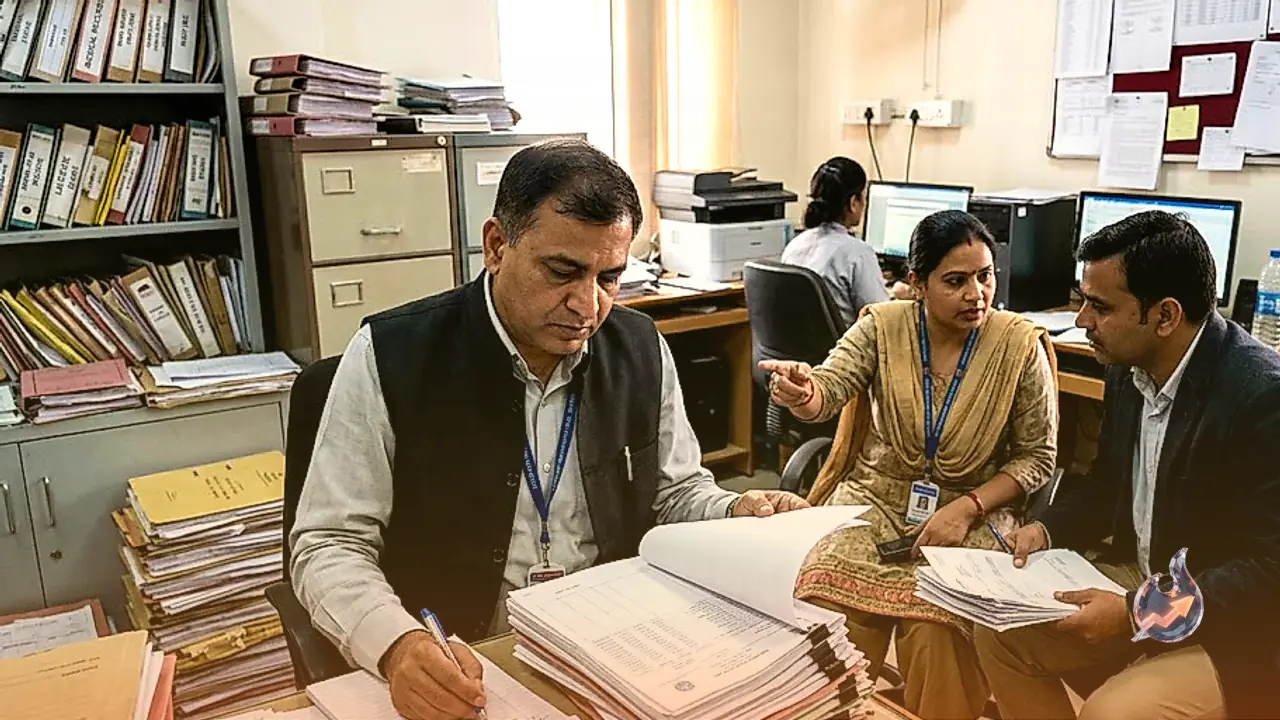
The enforcement action commenced at roughly 5:00 AM on Monday, October 12, when an inspection team comprising more than 15 officials and staff arrived at the premises in five vehicles. By Wednesday, the search operation remained actively underway, with personnel examining billing ledgers, paper documentation, and electronic data stored across hospital computer terminals. Four individuals linked to the medical facility have faced questioning regarding administrative and financial procedures, while expectations indicate the process could extend through Friday.
Technical Assessment by Cyber Specialists
To ensure a comprehensive evaluation beyond paper ledgers, authorities incorporated two cyber specialists into the visiting inspection unit. These technical personnel have been reviewing data from institutional computers, billing infrastructure, and mobile devices used by key hospital personnel. The primary focus of this forensic review is to identify whether discrepancies exist between the digital entries maintained for medicinal stock, patient admissions, and the physical invoices produced for monetary clearance.
Detailed Cross-Verification Across Four Welfare Schemes
A critical dimension of the ongoing probe revolves around claims lodged under multiple state and federal healthcare initiatives designed to provide financial relief to distinct beneficiary groups
- Chiranjeevi Scheme and MAA: Formerly operated across Rajasthan as the Mukhya Mantri Chiranjeevi Swasthya Bima Yojana, this framework facilitated cashless care for eligible families and was subsequently continued under the Mukhyamantri Ayushman Arogya Yojana (MAA). Invoices and claim histories from both legacy and current iterations remain under scrutiny.
- RGHS: The Rajasthan Government Health Scheme provides designated healthcare benefits to serving state employees, pensioners, and authorized dependents. Invoices for consultations, indoor treatment, and pharmacy distribution are being verified against official entitlements.
- Ayushman Bharat: Under the central government flagship initiative, accredited medical facilities receive reimbursements for treating eligible low-income individuals according to set tariff packages, requiring strict alignment between billed procedures and actual clinical interventions.
- ECHS: The Ex-Servicemen Contributory Health Scheme provides comprehensive medical benefits to retired defense personnel and their families, making the validation of claimed treatments and medicine costs an essential check.
Because these initiatives reimburse treatment costs straight from state coffers, verifying the alignment among procurement costs, billed pharmaceutical charges, and patient treatment files is essential. Any unexplained divergence between recorded purchases and claimed disbursements forms the core of the financial inquiry.
Multi-State Operation and Tax Irregularity Estimates
The inspection in Jhunjhunu forms part of a wider enforcement sweep launched on October 12, which spanned locations in Rajasthan, Haryana, and Punjab involving both the Income Tax department and the Enforcement Directorate (ED). Within Rajasthan, searches encompassed Amar Medical and Research Centre in Jaipur, Park Kailash Hospital located in Behror, and the R and R Multispeciality facility in Jhunjhunu.
Unconfirmed estimates indicate that potential tax evasion under review across the targeted operations could surpass 20 crore rupees. Investigating officers are analyzing the underlying sources of capital flows and assessing whether the accounting declarations reflect authentic day-to-day operations or mask unrecorded transactions.
Preserving Program Integrity and Public Trust
Private hospitals play a substantial role in delivering care under welfare programs, especially when public facilities face heavy patient volumes. When institutions receive state funding to provide treatment, accurate recordkeeping serves as the backbone of public trust. The thorough audit underway in Jhunjhunu underscores the importance of preventing any diversion of welfare funds, ensuring that subsidies meant for citizen relief genuinely correspond to legitimate healthcare services.