





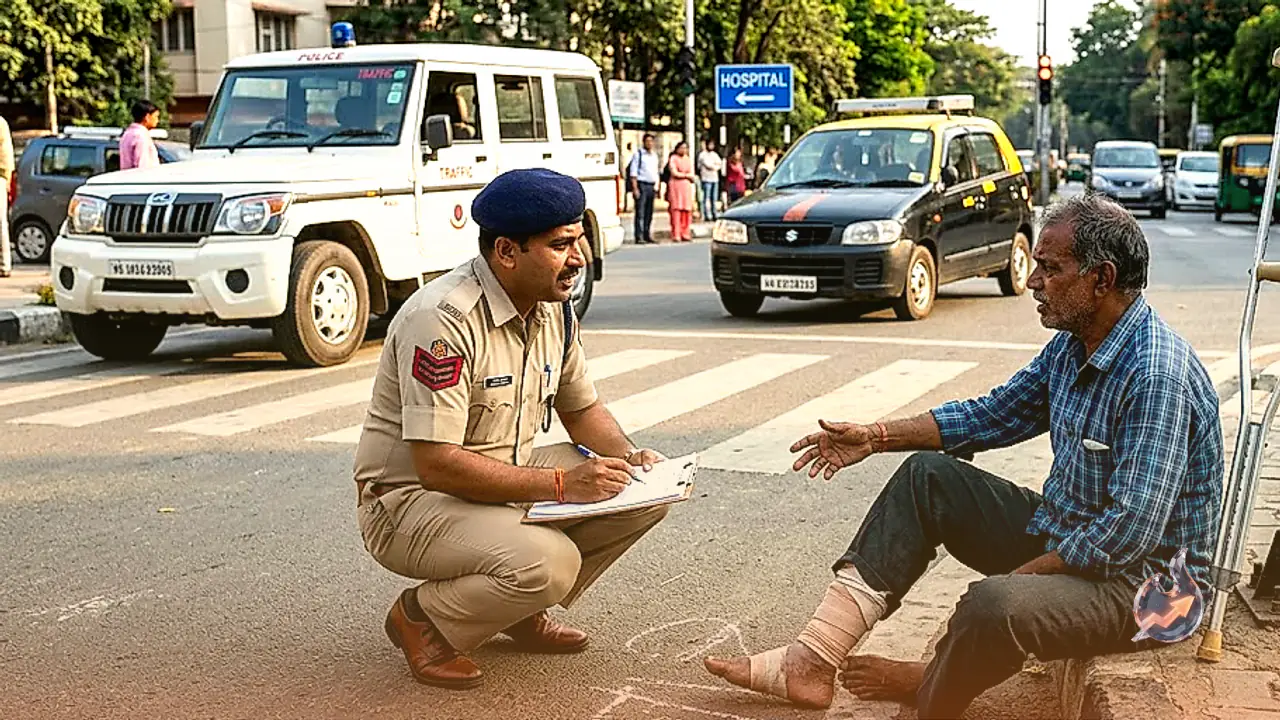














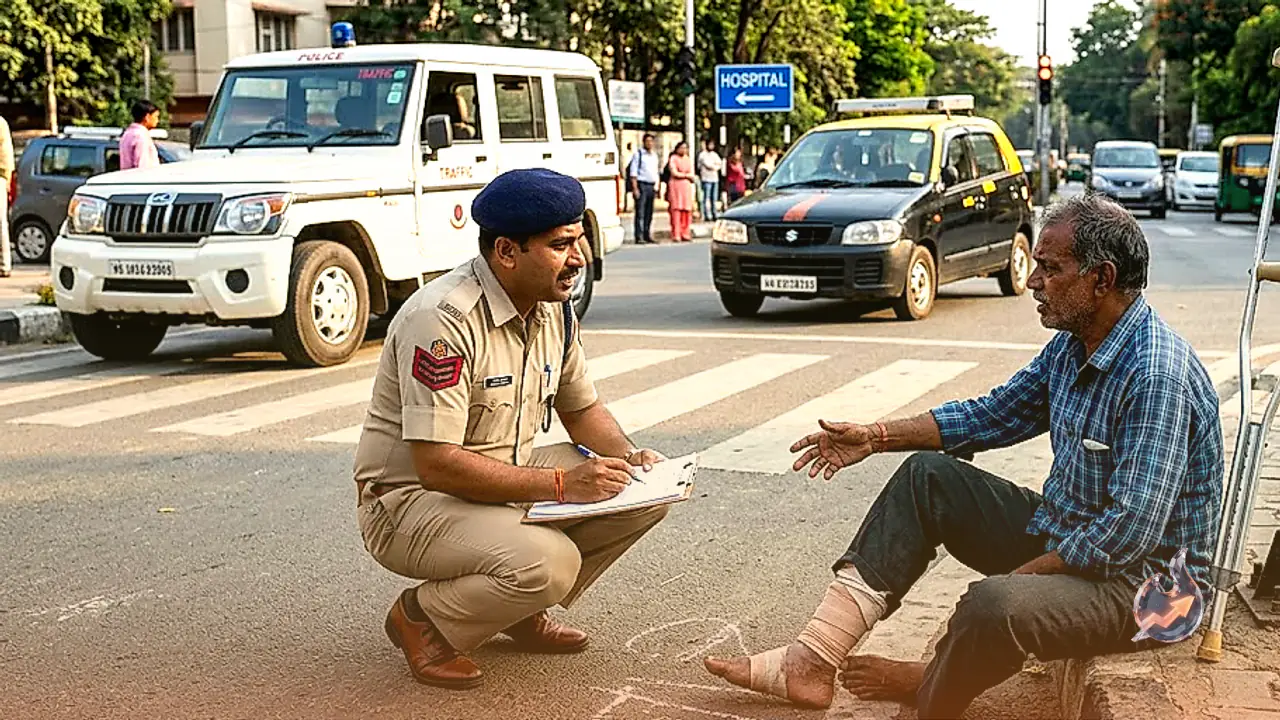

Collisions involving pedestrians attempting to cross active thoroughfares continue to pose a grave challenge to road safety across Indian cities. A stark reminder of this vulnerability occurred recently near the Khajuri flyover in Delhi, where a 55-year-old woman lost her life in a tragic sequence of events. Police accounts indicate that while negotiating the roadway, she was first struck by a motorcycle before being crushed by an oncoming truck. Such catastrophic occurrences routinely trigger intense debates around legal accountability. Determining whether the fault lies squarely with the motor vehicle operator or whether the pedestrian shares culpability requires a rigorous analysis of traffic legislation and judicial principles governing right of way.
Statutory Framework Safeguarding Pedestrians
The Motor Vehicles (Driving) Regulations introduced in 2017 formally identify pedestrians as an indispensable component of the road ecosystem. Under these statutory guidelines, vehicle drivers and occupants bear an affirmative legal obligation to prioritize the safety of vulnerable road users, notably pedestrians, cyclists, children, the elderly, and persons with disabilities. The regulations mandate that when approaching areas where people are crossing the street and no automated traffic light signals exist, motorists must actively reduce their speed. Furthermore, whenever prevailing circumstances require, motorists are obligated to bring their vehicles to a complete halt to permit the pedestrian to finish crossing safely. The rules also explicitly prohibit the operation of motorized vehicles over designated pedestrian pavements or dedicated bicycle tracks, unless an authorized police officer directs otherwise or an official signal expressly permits such passage.
Specific Driver Duties at Designated Zebra Crossings
Zebra and marked pedestrian crossings are legally designated zones engineered specifically to facilitate safe transit for people moving on foot. Under driving regulations, drivers must exercise heightened prudence whenever their vehicle nears a pedestrian crossing. At signalized intersections, vehicles must stop entirely behind the prescribed stop marking before the crossing commences. Critically, even if the traffic light turns green to allow vehicular movement, a motorist is legally barred from surging forward if a pedestrian is already present within the intersection or on the corresponding pedestrian crossing. Drivers are bound to yield right of way. In subsequent accident litigation, evidentiary focus heavily centers upon the exact location of the victim relative to the crossing and the specific degree of vehicular control maintained by the motorist at that instant.
Assessing Culpability in Jaywalking and Mid-Block Crossings
Contrary to widespread public belief, a road mishap is never judged solely on the narrow fact that a pedestrian was crossing away from an authorized crossing point. Judicial adjudications demand an exhaustive review of all surrounding conditions. Investigators must ascertain whether proper signals or dedicated pedestrian bridges were reasonably accessible, the exact velocity at which the motor vehicle was moving, and whether the driver was afforded sufficient reaction time and sight distance to avert the impact. In legal terms, if the findings demonstrate that an injured party acted rashly by entering a high-speed corridor abruptly, courts evaluate the entire record to establish proportional fault rather than assigning absolute liability by default. Consequently, no automatic presumption exists that either the driver or the pedestrian is exclusively to blame without examining tangible site evidence.
Criminal Liability and Penal Sanctions for Reckless Driving
When an official inquiry demonstrates that a motorist operated their vehicle in a rash, negligent, or hazardous manner that endangered human life or caused bodily injury, criminal prosecution is initiated under Section 281 of the BNS. This statutory provision penalizes dangerous and negligent vehicle operation upon public pathways. In graver circumstances where the negligent act results in the death of a victim not amounting to culpable homicide, the driver faces prosecution under Section 106(1) of the BNS. An individual convicted under Section 106(1) of the BNS can face imprisonment extending up to 5 years along with substantial monetary fines.
Mandatory Post-Accident Obligations Imposed on Motorists
Whenever an incident causes bodily injury or property damage, Section 134 of the Motor Vehicles Act imposes strict post-crash duties upon the person driving or in charge of the vehicle. The operator is statutorily bound to take all reasonable steps to secure immediate medical attention for the victim, including arranging prompt transport to the nearest qualified physician or medical facility unless prevented by external hostility. Furthermore, the driver is mandated to furnish relevant facts to investigating authorities and report the complete occurrence to the nearest police station as quickly as practical, within a maximum statutory limit of 24 hours.
Statutory Compensation Pathways for Victims and Families
Financial remedies for road casualties are systematically established within the Motor Vehicles Act. Under Section 164 of the legislation, legal heirs are entitled to receive a fixed compensation payment of 5 lakh rupees in the event of a fatal accident arising from motor vehicle use, while victims suffering grievous hurt are granted 2.5 lakh rupees. A crucial benefit of claiming under Section 164 is that the claimant is not burdened with proving fault, wrongful neglect, or default on the part of the vehicle owner or driver. Beyond this no-fault framework, aggrieved parties can pursue higher claims through the Motor Accidents Claims Tribunal, established under the administrative authority of Section 165 of the Motor Vehicles Act.
Balancing Rights and Responsibilities on the Road
Ultimately, determining legal responsibility in vehicle-pedestrian collisions avoids rigid generalizations. The law balances the conduct of both parties against the concrete physical realities of the incident. While pedestrians are expected to observe basic self-preservation practices and use dedicated crossings wherever provided, vehicle operators remain held to a superior standard of caution owing to the inherently lethal potential of motorized transport. Final legal determinations rest upon forensic evidence, adherence to traffic regulations, and the precise sequence of events established during investigation.