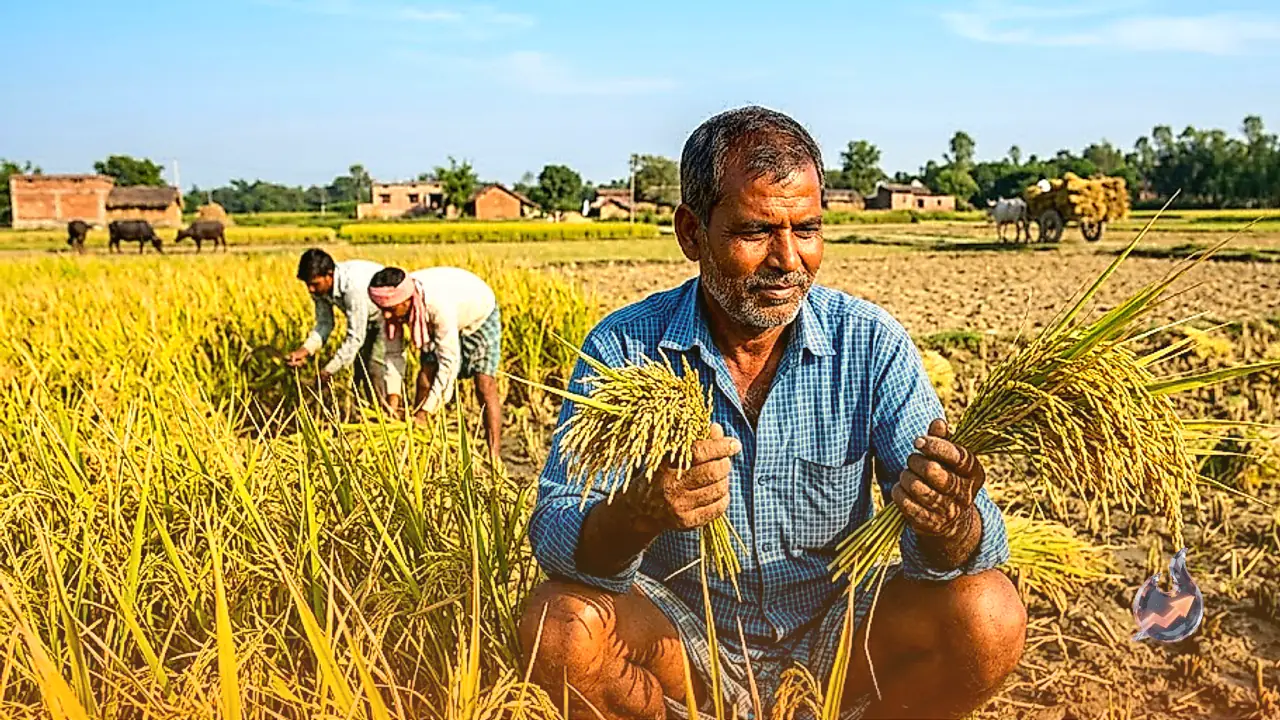

























Managing unwanted weeds is critical for paddy farmers as wild grass steals essential soil nutrients from the main crop. Neglecting weed control during the early stage of cultivation can reduce overall rice yield by 30 to 50 percent, creating severe financial strain for agricultural households.
Early Chemical Control Methods After Paddy Transplanting
Agricultural advisor Chandrabhushan Pandey highlights that the first 15 to 30 days immediately following paddy transplanting are the most critical period for weed management. A small oversight during this initial phase can cause irreversible damage to the harvest. Farmers are advised to initiate chemical control within 2 to 3 days of transplanting.
For early application, spraying Pretilachlor 50% EC at a dose of 500 milliliters per acre or Butachlor 50% EC at 1 to 1.5 liters per acre offers effective protection against early weed emergence.
Delayed Application Options and Scientific Insights
If farmers miss the initial window within the first few days, applying Bispyribac Sodium 10% SC around 20 to 25 days after transplanting serves as the most potent alternative. The recommended formulation requires dissolving 80 milliliters of the chemical in 150 liters of water for spraying across one acre. This treatment successfully eradicates Sawam grass, Motha, and various broad-leaf weeds.
Agricultural scientist Shailendra Gautam notes that weeds not only drain essential soil nutrients but also act as breeding grounds for harmful insects and plant diseases. This degrades grain quality and reduces overall output. Maintaining the right timing and accurate chemical dosage is therefore vital. Additionally, experts recommend combining chemical treatments with traditional practices by performing manual weeding and hoeing 20 and 40 days after transplanting for optimal field maintenance.
Farmer Lalit Demonstrates Profitable Mixed Farming Model
Alongside crop protection measures, innovative agricultural practices are proving highly profitable. Farmer Lalit has established a successful mixed farming model on his 2.25 acres of land. Moving away from conventional monoculture, he adopted modern diversified farming to achieve financial self-reliance and sustained earnings.
Lalit planted a variety of fruit-bearing trees across his farm. He established around 250 to 300 pear plants four years ago, which are expected to yield fruit starting next year. Furthermore, his orchard includes 20 to 25 guava trees, 10 to 12 mango trees, and approximately 10 mulberry plants, creating a reliable multi-crop revenue stream.
Political Shift in Bankipur By-Election Results
In political developments, the Bankipur by-election witnessed a notable electoral contest where the BJP fielded candidate Neeraj Kumar. Political strategist and Jan Suraaj founder Prashant Kishor challenged the seat.
Upon completion of all 32 counting rounds, official vote tallies confirmed that Prashant Kishor secured 63,946 votes compared to 44,700 votes received by Neeraj Kumar. Consequently, the BJP lost its established constituency by a margin of approximately 19,000 votes.