




















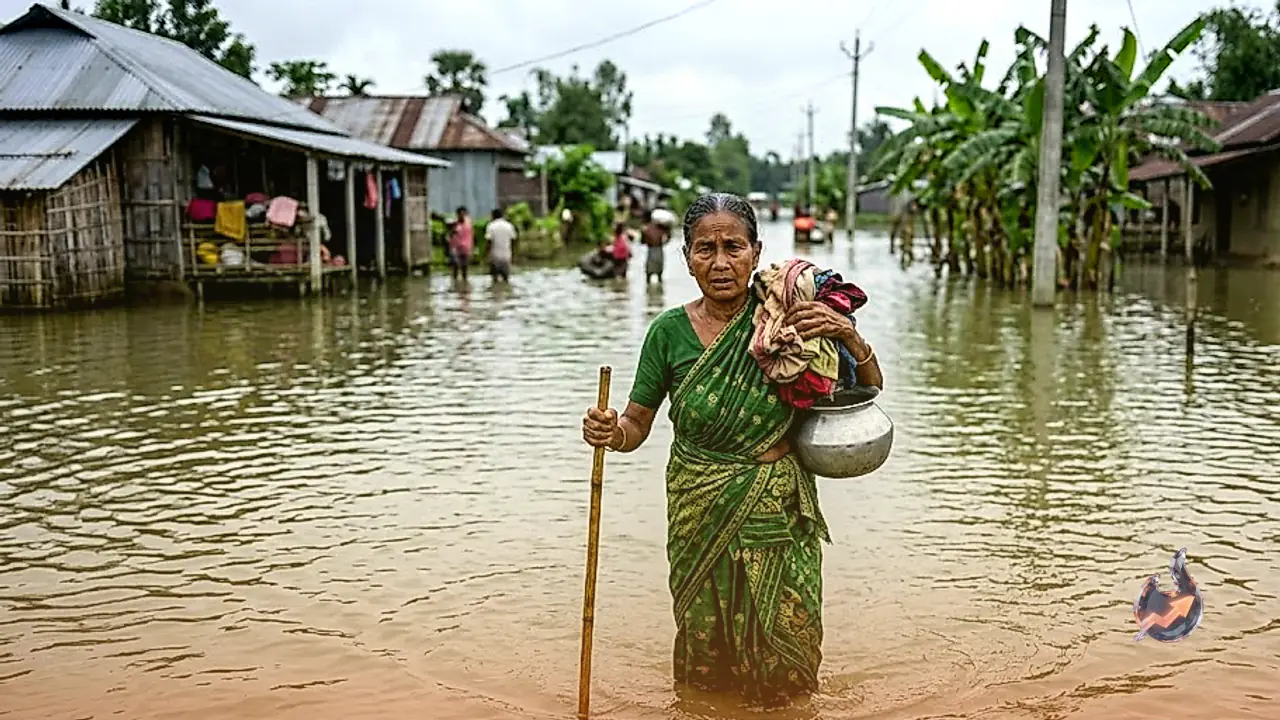

Severe inundation continues to cause major disruptions across northeastern India, where rising waters have submerged large swathes of residential areas and agricultural lands in Assam. A total of 1,55,849 residents across 464 villages situated in 33 revenue circles are currently facing extreme hardship due to the deluge that has gripped 13 districts. Human casualties linked to this season's flood disaster have risen to 98, reflecting the severe intensity of the disaster that has inundated areas previously considered safe from inundation.
District-Wise Breakdown of Affected Populations
The scale of disruption varies across regions, with eastern and central districts bearing the heaviest burden of the overflowing rivers. Golaghat has registered the highest number of impacted citizens, with 58,750 individuals struggling against the rising waters. In Sivasagar district, 48,286 people remain severely affected, while Jorhat has reported 25,259 residents coping with flooded surroundings. Further stats indicate that 12,779 people are affected in Charaideo, 5,424 in Nagaon, 3,367 in Darrang, and 1,265 in Dhemaji district. In total, 10,748.64 hectares of cultivated crop fields remain completely submerged under floodwaters, posing a severe threat to regional agricultural output and rural livelihoods.
Relief Operations and Shelter Infrastructure
To assist displaced families, authorities have operationalized 73 relief camps and relief distribution centers across the affected districts. Currently, 10,326 displaced individuals are staying inside relief camps, receiving shelter and basic necessities. Additionally, 6,881 people are accessing vital aid through the established relief distribution points. Essential supplies being distributed among the affected population include food grains, safe drinking water, specialized baby food, and other emergency items needed for daily survival.
Water Levels, Property Loss, and Livestock Impact
Hydrological monitoring on Friday morning indicated that the Dhansiri (South) river was flowing above its critical danger mark at both Golaghat and Numaligarh. Similarly, the Kushiyara river breached its danger mark in Sribhumi district. However, none of the rivers in the region have crossed their official Highest Flood Level (HFL). The destruction extends heavily to infrastructure and domestic property, with 126 houses completely destroyed and another 344 structures suffering partial damage. The disaster has also severely hit livestock, affecting 47,879 animals across the submerged districts.
Emergency Rescue Measures and Field Deployment
Emergency response operations remain active in vulnerable locations, led by personnel from the State Disaster Response Force (SDRF), Civil Defence units, and associated emergency teams. A total of 219 rescue teams along with 8 boats and multiple specialized medical teams have been deployed to perform rescue operations and deliver healthcare services directly to stranded villagers. Officials maintain continuous surveillance over fluctuating river levels and have issued precautionary advisories instructing residents in vulnerable low-lying zones to stay vigilant.