


















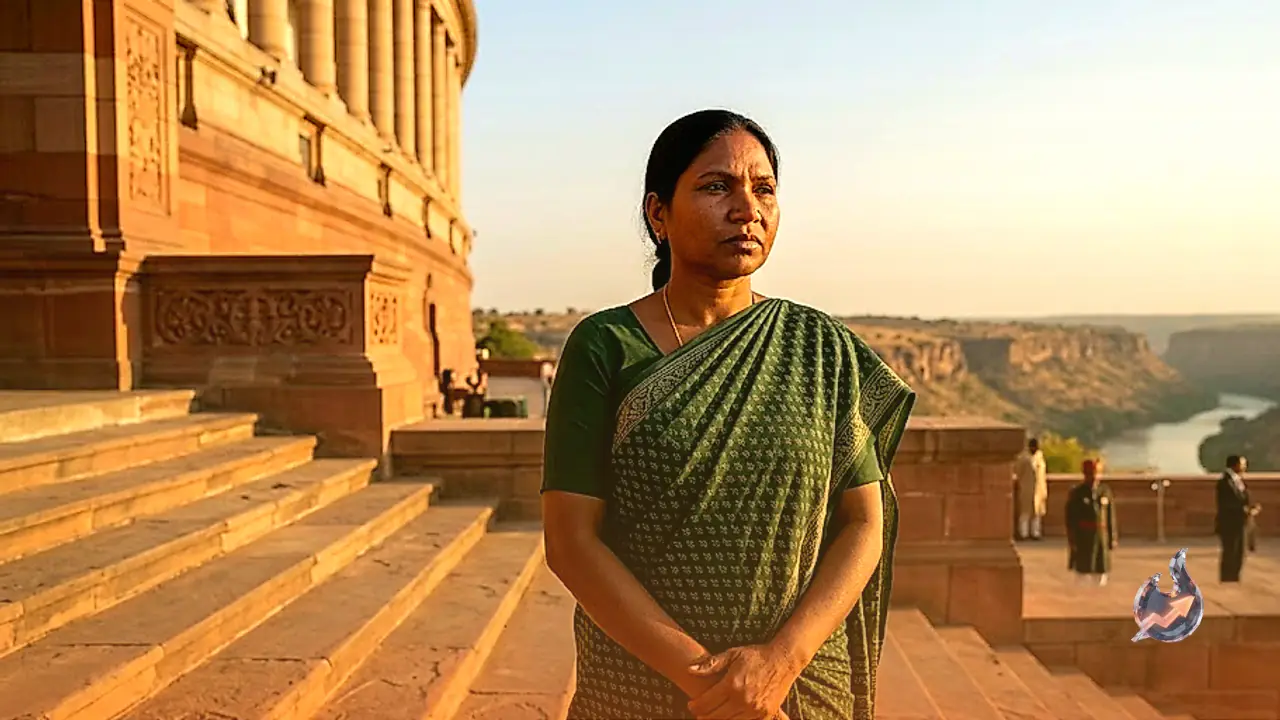

The date of February 12, 1983, remains etched in history as a dramatic moment when a young woman laid down her weapons before portraits of Mahatma Gandhi and Goddess Durga amid a massive crowd and armed police personnel in Madhya Pradesh's Bhind district. Wearing a khaki police uniform, a red shawl, and a red band tied across her forehead, the woman was none other than Phoolan Devi, widely recognized as the Bandit Queen, who had captured the nation's attention through a violent path of rebellion.
Early Hardships and the First Stand Against Injustice
Born on August 10, 1963, into a poor Mallah family in Gorha کا Purwa village of Uttar Pradesh's Jalaun district, Phoolan faced adversity from an early age. Her father Deviadin's land was usurped by his uncle and cousin Maiyadin by bribing the local village head. At just 10 years old, Phoolan stood up against influential locals trying to cut down a neem tree and seize her family land, for which she faced severe physical abuse, laying the foundation for her lifelong defiance against oppression.
Child Marriage and Domestic Ordeal
Pressed by severe poverty and social pressures, she was married off at the tender age of 11 to Puttilal, a man nearly three times her age. After enduring relentless physical, mental, and sexual abuse at her marital home, she firmly rejected the marriage and returned to her parents.
Abduction, Vikram Mallah, and the Chambal Ravines
Following continuous harassment by local authorities and powerful villagers, Baboo Gujjar's dacoit gang abducted Phoolan Devi in 1979. During captivity, she suffered repeated sexual assault by Baboo Gujjar. Vikram Mallah, a member of the gang, protested these atrocities, killed Baboo Gujjar, and offered protection to Phoolan. Vikram taught her how to handle a rifle, and the two eventually fell in love, embarking on a campaign of looting upper-caste villages under the banner of championing the oppressed, though this alliance was short-lived.
The Behmai Massacre and Retribution
According to accounts, upper-caste dacoits Shriram and Lalaram killed Vikram Mallah in a turf war and held Phoolan Devi hostage in Behmai village, subjecting her to days of captivity and gang rape. After managing to escape her captors, Phoolan Devi formed her own gang and returned to Behmai on February 14, 1981, where over 20 upper-caste Thakur men were lined up and shot dead. This incident transformed her into a Robin Hood figure among the marginalized communities.
Surrender, Imprisonment, and Parliamentary Career
Following her surrender in 1983, Phoolan spent 11 years in Gwalior and Jabalpur jails without trial before her release in 1994. Upon leaving prison, she chose the path of democracy and established the Eklavya Sena to teach self-defense to women and marginalized groups. Disillusioned by caste discrimination in Hinduism, she converted to Buddhism on February 15, 1995, at Deekshabhoomi in Nagpur. In 1996, she won the parliamentary election from Mirzapur to become a Member of Parliament.
Tragic End and Controversies
She penned her autobiography, I Phoolan Devi, which gained global recognition, though she fiercely opposed Shekhar Kapoor's film Bandit Queen, with writer Arundhati Roy also criticizing the movie for commercializing her trauma. On July 25, 2001, Phoolan Devi was shot dead outside her New Delhi residence by Sher Singh Rana and his associates.