






















Incessant torrential rainfall across the catchment areas of Nepal has triggered severe flooding across northern Bihar, pushing the Gandak river into violent spate. Multiple districts along the river basin have been affected, with West Champaran bearing the heaviest devastation. River currents have overwhelmed entire settlements across Nautan, Bairia, Yogapatti, and Bagaha 02 blocks, submerging dozens of villages within hours. While impacted communities are dealing with the harsh reality of natural destruction, lingering administrative inaction and delayed emergency response have left local populations struggling without adequate relief during the peak of the crisis.
Displaced Residents Camp Beside Cremation Sites and Venomous Canals
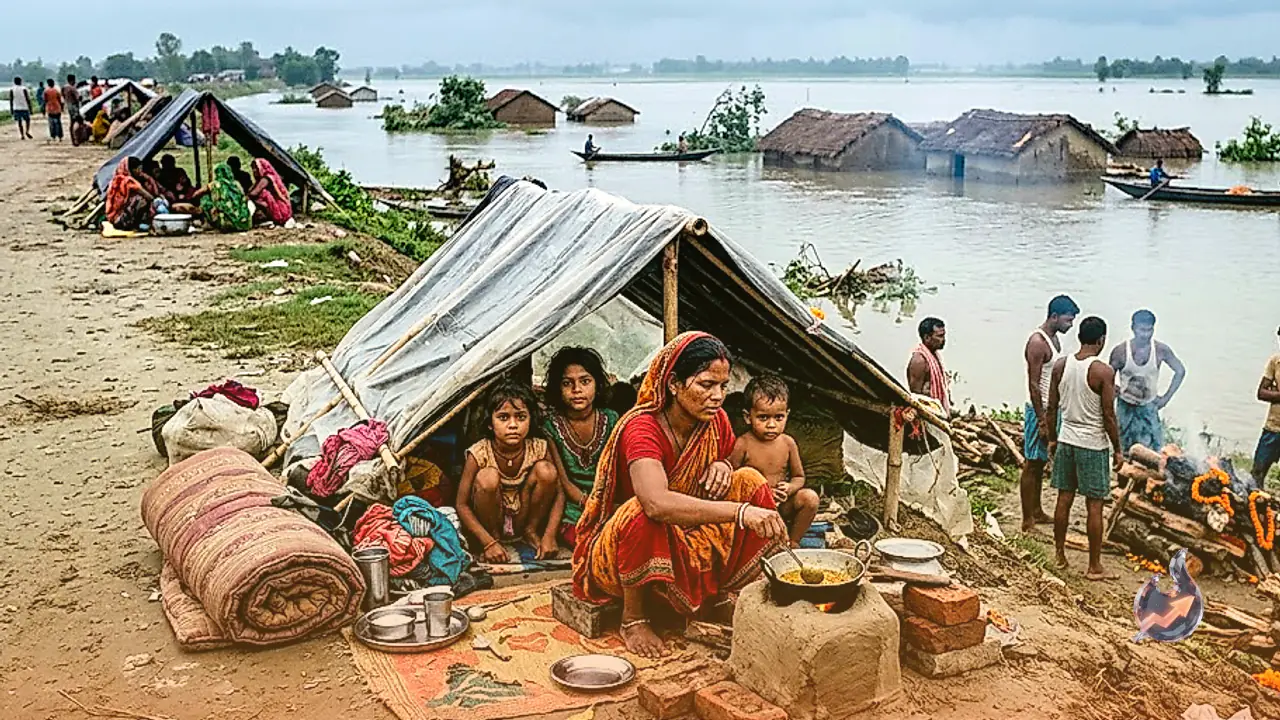
The inundation has completely cut off and submerged villages in Nautan block, including Mangalpur Kala, Bishambharpur, and Phuliakhand. Stripped of shelter and basic household belongings, evacuated residents have been compelled to seek refuge along elevated road shoulders, canal embankments, and areas surrounding local cremation grounds. Hundreds of displaced villagers are spending nights under makeshift tarpaulin tents alongside irrigation canals teeming with snakes, scorpions, and other venomous reptiles. The predicament is compounded by continuous high-volume water discharge from the Gandak Barrage at Valmikinagar, which has pushed canal levels to brim capacity and triggered fresh fears of sudden submersion among families camped on the banks.
Breach in Champaran Embankment Sweeps Away Homes
Describing the scale of disruption, Sarita Devi from Phuliakhand village noted that the settlements where families lived peacefully just days ago are now completely underwater. The breach of the Champaran embankment near Mangalpur allowed aggressive currents to enter low-lying hamlets, washing away multiple dwellings and damaging rural infrastructure. With their households destroyed, families fled to safety with young children, moving along paved roads without permanent protection against the weather. Rising water levels continue to threaten these temporary elevated refuge points, keeping families in persistent distress.
Local Frustration Mounts Over Delayed Disaster Response
Expressing deep grievance over the government handling of the breach, local resident Shrikant stated that rescue and evaluation teams arrived only after the turbulent waters had leveled villages and caused irreversible losses. According to residents, appeals for preventive fortification and evacuation support began the moment the Champaran embankment gave way in Bagaha, yet authorities failed to intervene in Nautan before the surging currents engulfed downstream habitations. Only after total destruction took place did district administrative machinery mobilize ground units to oversee the disaster zone.
Families Cook Near Cremation Pyres as Livestock Face Starvation
Recounting her ordeal, Chanda Devi explained that she has been stranded with her children on the narrow verges of submerged agricultural fields alongside hundreds of displaced neighbors. The only available dry elevated ground lies adjacent to a village cremation ground where a funeral pyre was lit barely two days earlier. With their homes entirely inundated, families are compelled to prepare food and shelter their children right next to the cremation site. Meanwhile, farm cattle and livestock remain tethered along highway boundaries with no fodder supply available, severely compromising animal health and worsening the survival challenge for agrarian households.