



















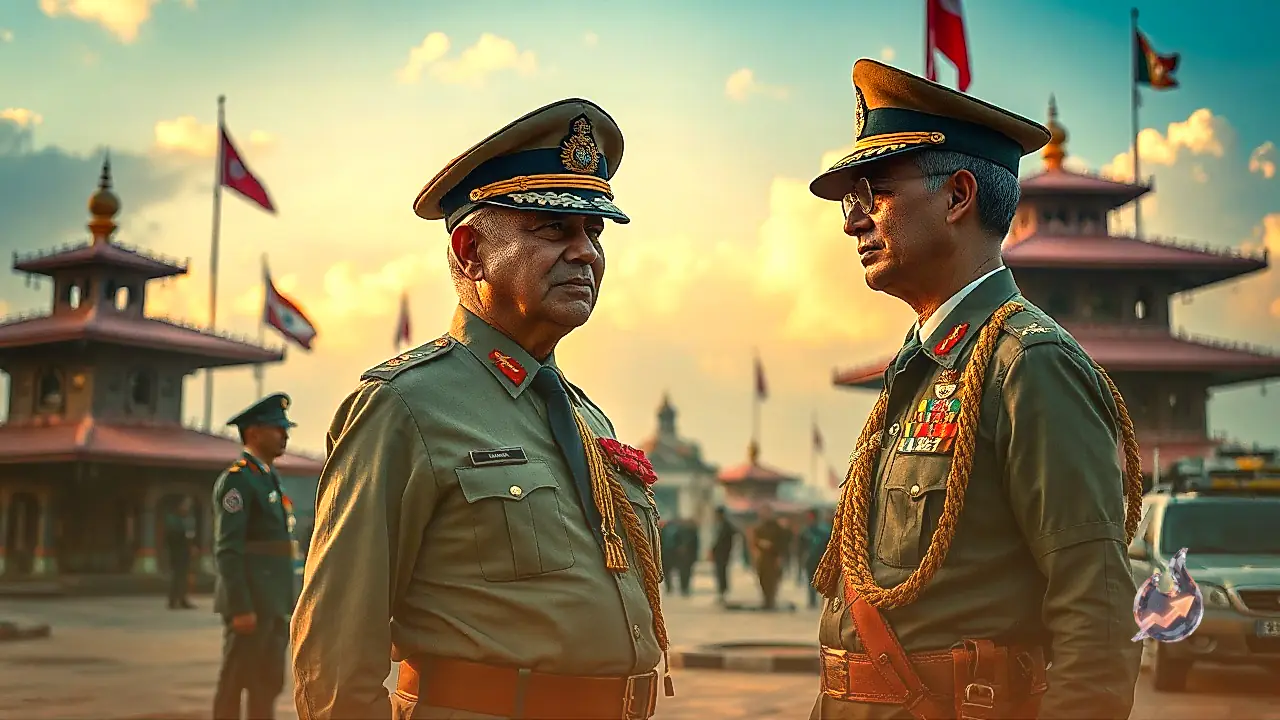

Indian Army Chief General Dheeraj Seth is set to embark on a 4-day official tour to Nepal beginning August 16. This high-profile visit holds substantial strategic and diplomatic weight for both nations as they look to deepen their long-standing bilateral security partnership. Over the course of the 4-day visit, General Dheeraj Seth is expected to be conferred the honorary rank of General of the Nepali Army, carrying forward an iconic defense tradition. Beyond ceremonial proceedings, the tour will feature comprehensive high-level deliberations with the top leadership of Nepal to address critical defense concerns.
Military Traditions and the Honorary Rank
India and Nepal share an unprecedented military legacy where the Army Chiefs of both countries are granted the honorary rank of General in each other's armed forces. General Dheeraj Seth's interaction with the Nepali military setup during his 4-day trip reinforces this decades-old custom of mutual respect and camaraderie. This traditional honor underlines the deep-rooted ties between the two militaries and serves as a cornerstone for continuing high-level institutional engagement between New Delhi and Kathmandu.
Agnipath Framework and Gorkha Recruitment Roadmap
A central focal point of this bilateral visit revolves around the future of Gorkha recruitment in the Indian Army. In recent months, former Gorkha veterans in Nepal have actively raised demands regarding the resumption of Gorkha soldier enlistment under the Agnipath scheme. The historic Gorkha connection represents one of the strongest pillars of India-Nepal defense ties. This upcoming tour will mark the highest military-level dialogue addressing how Nepali Gorkhas will be integrated into the Indian Army under the Agniveer framework going forward.
Strategic Border Topics and the 1954 Pilgrimage Route
Strategic discussions during the visit are also anticipated to encompass key regional matters, including points raised by veteran groups concerning Kalapani and the Lipulekh Pass. On the Lipulekh issue, India has consistently maintained a firm and transparent stance. India has clarified that the Lipulekh Pass has functioned as a recognized, traditional route for the Kailash Mansarovar Yatra since 1954. Pilgrims have traversed this historic pathway for decades, and India's position on this matter has remained unchanged throughout.