






















Har Ghar Tiranga Campaign Empowers Amethi Women as SHGs Produce 1.5 Lakh National FlagsIndia
14 Aug 2026, 8:07 am (48 days ago)· 0

Har Ghar Tiranga Campaign Empowers Amethi Women as SHGs Produce 1.5 Lakh National Flags

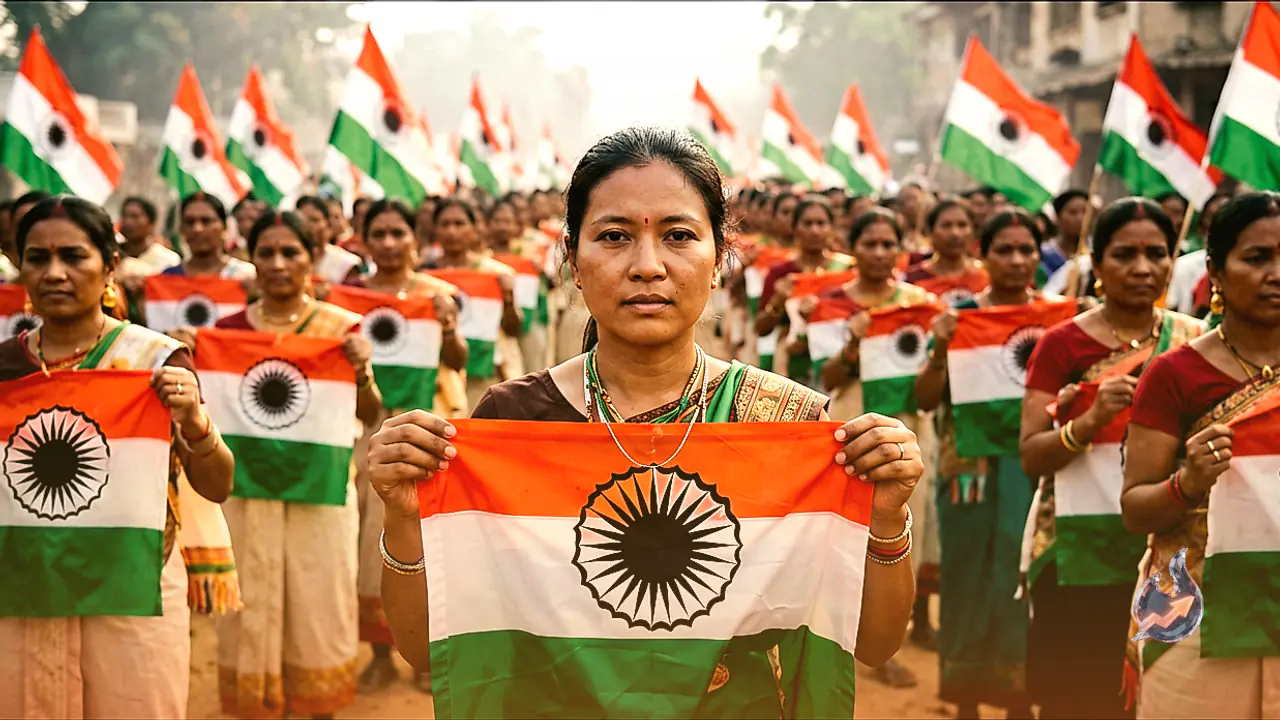
Hundreds of women associated with Self-Help Groups in Amethi are building financial independence by crafting nearly 1.5 lakh national flags. With each flag made at Rs 10 cost earning them Rs 20, around Rs 20 lakh will be distributed across 148 groups.

A remarkable blend of patriotism and financial self-reliance is unfolding across the rural pockets of Amethi district, where local women are handcrafting the Indian national flag right from their homes. Particularly driven by Muslim women across various Gram Panchayats, this initiative allows participants to serve the country while establishing sustainable livelihoods. Operating under the umbrella of Self-Help Groups, the flag-making drive has emerged as a reliable source of employment and financial stability for numerous families in the region.

Widespread Production Across Multiple Blocks

The manufacturing of the tricolor is progressing rapidly across several blocks in the district, including Shahgarh, Amethi, Sangrampur, Bhadar, and Jais. Members of local Self-Help Groups are dedicating significant time to meet the demand generated by the national flag campaign. In return for their craftsmanship, the women receive direct honorarium payments, ensuring a steady stream of income without needing to step out of their domestic setups. This regular revenue stream has noticeably bolstered their financial security and boosted self-confidence.

Also read

Personal Transformations and Relief from High-Interest Debt

Women participating in the initiative highlighted how the collective model has reshaped their socioeconomic standing. Expressing her pride, group member Lakshmi shared, "The tricolor is the pride of our nation, and getting the chance to make it at home fills us with honor." She noted that the work uniquely combines a deep sense of national service with practical income generation for her family.

Another group worker, Praveena Singh, reflected on how the project has restored her hope and independence. She noted that the national flag keeps the country shining, adding that the group's backing has enabled her to stand on her own feet and experience meaningful life improvements. Expanding on the broader economic shift, Bharti explained that before joining the group, unemployed women often had to rely on high-interest loans from local lenders during emergencies. Now, members regularly pool their savings into the group fund and withdraw money whenever required, freeing them from predatory debt cycles while allowing them to earn through patriotic work.

Financial Breakdown: Rs 20 Lakh Distribution Across 148 Groups

The scale of the project underscores its substantial economic impact across Amethi. Around 500 women operating across more than 100 Self-Help Groups are producing approximately 1.5 lakh tricolor flags. From a financial standpoint, the estimated production cost stands at Rs 10 per flag, while the women receive Rs 20 per completed unit. Consequently, a total revenue of around Rs 20 lakh will be distributed among 148 Self-Help Groups, delivering direct financial gains to hundreds of rural artisans and solidifying their path to economic self-sufficiency.


Questions & Answers

How many Self-Help Groups in Amethi are involved in making national flags?
Over 100 Self-Help Groups across various blocks in Amethi district are actively participating in flag production.
How many women in Amethi are benefiting from this flag-making initiative?
Approximately 500 women across the district have gained direct work-from-home employment and income through this campaign.
What is the cost of producing one flag and how much are the women paid?
The estimated production cost per flag is Rs 10, while the women receive a remuneration of Rs 20 for each flag they complete.
What is the total revenue to be distributed among the groups under this drive?
Upon completing nearly 1.5 lakh flags, a total revenue of around Rs 20 lakh will be distributed across 148 Self-Help Groups.

Comments 5

Divya Reddy@divya-reddy·47d ago

Amethi's initiative goes beyond mere patriotism, offering a robust model for rural skill development and sustainable livelihoods. The financial inclusion of women through Self-Help Groups and their liberation from predatory debt highlights how organized grassroots efforts can transform local economies. Moving forward, scaling such seasonal campaign-based outputs into permanent micro-enterprises could ensure long-term financial security and continuous employment for these women.

Ravikash Gupta@ravikash·47d ago

The tricolor manufacturing initiative driven by Self-Help Groups in Amethi is not merely a social campaign, but a robust economic model strengthening the rural economy. A cost-to-return ratio of 10 to 20 rupees, resulting in a distribution of approximately 20 lakh rupees across 148 groups, proves how grassroots micro-finance and demand-driven local production can eradicate predatory moneylending and financially empower women. If such seasonal campaigns are systematically transitioned into sustainable cottage industries, it can significantly accelerate the financial landscape of rural India.

Sophie Laurent@sophie-laurent·47d ago

This initiative demonstrates how seasonal civic campaigns can drive grassroots financial inclusion through decentralized production. When traditional predatory lending barriers are dismantled via micro-finance and self-help groups, it paves the way for long-term economic stability among the rural labor force, particularly women.

Karan Malhotra@karan-malhotra·47d ago

The tricolor production drive via Self-Help Groups in Amethi goes beyond economic empowerment; it addresses a critical vulnerability in the rural credit ecosystem. By breaking the reliance on high-interest informal moneylenders, the initiative rescues marginalized women from predatory debt traps. From a legal and socio-economic protection standpoint, this systemic shift safeguards vulnerable households from financial exploitation, thereby reinforcing grassroots financial security and systemic equity.

Arjun Mehta@arjun-mehta·47d ago

Amethi's model demonstrates that merging local economic campaigns with social security yields positive internal governance outcomes. Women breaking free from exploitative high-interest lending and achieving financial inclusion through self-help groups effectively weakens the grip of informal debt networks. This grassroots empowerment strengthens public security and administrative outreach, serving as a powerful template for inclusive economic development in a politically significant region.

Citizen journalism

Become a TrendKia journalist

Voice of the people

Share news, photos and videos from your area with TrendKia and let your voice reach the nation. Every citizen a journalist.

Join now
CH 01 LIVE
TrendKia TV ON AIR
Chamar no WhatsApp