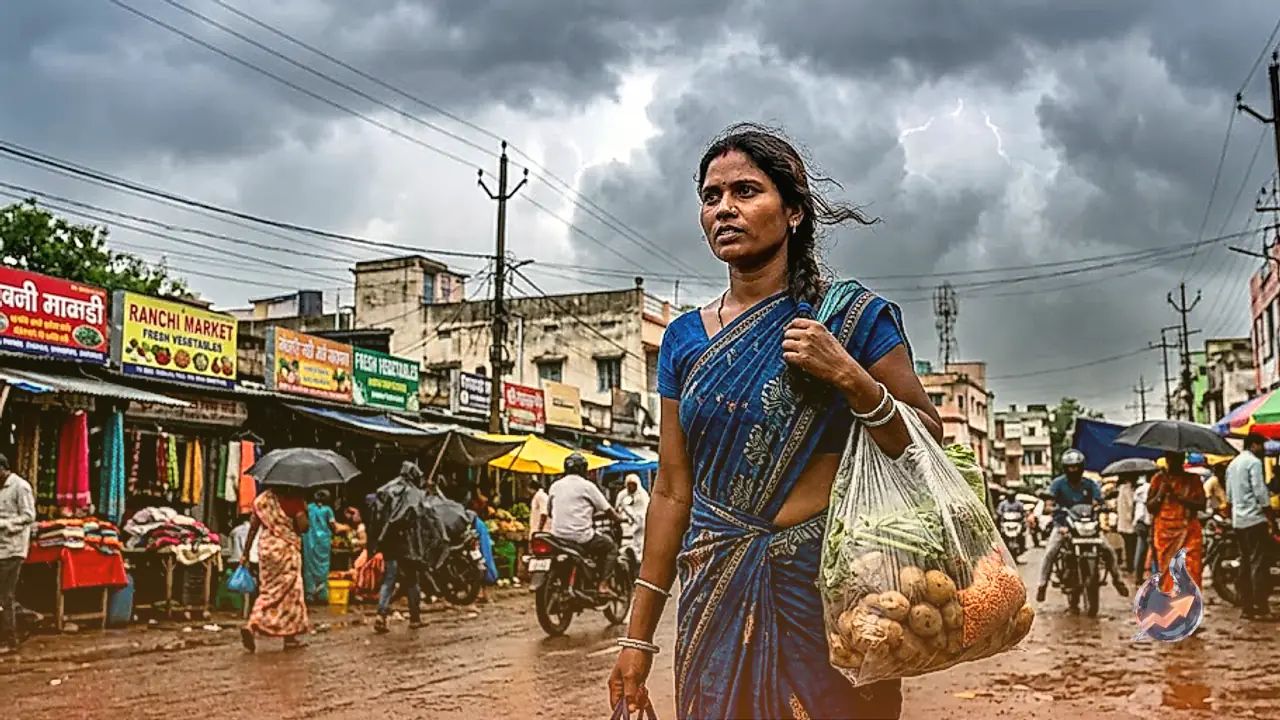


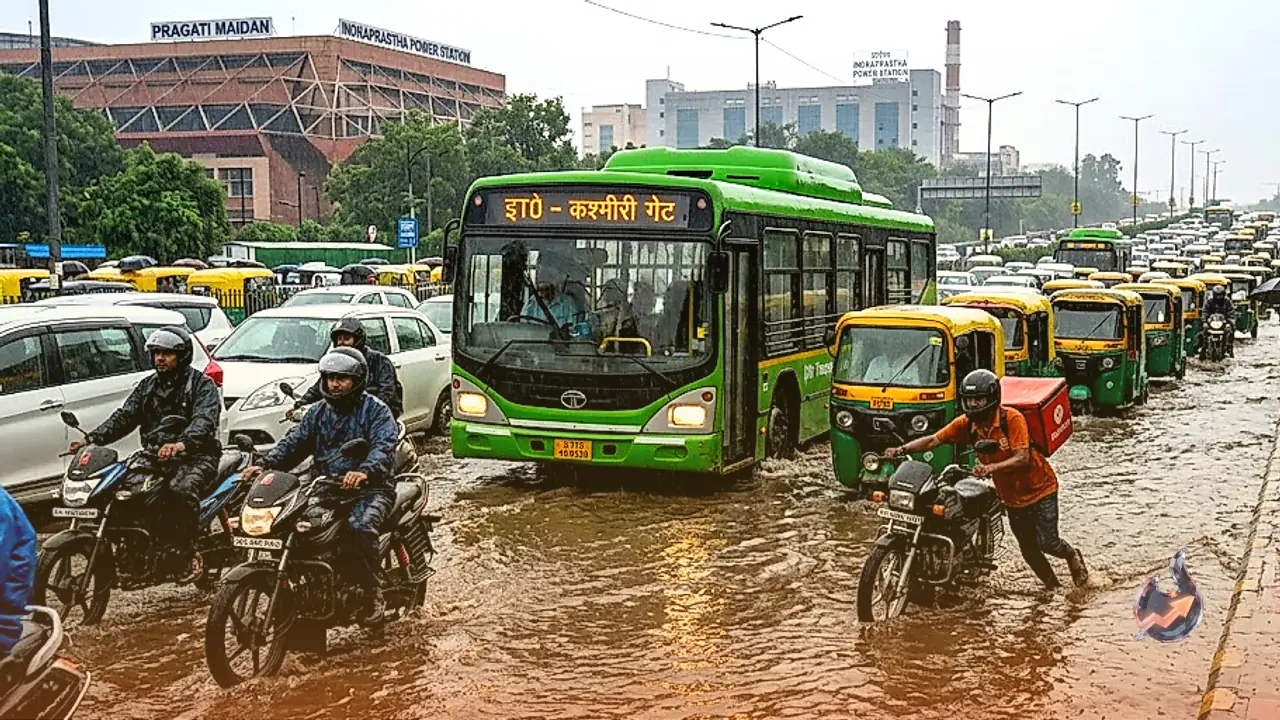




















Incessant heavy rainfall starting Saturday morning completely disrupted normal life across the national capital, turning major thoroughfares into water bodies and halting traffic movement in numerous localities. The severe downpour caused widespread waterlogging, slowing down vehicles across key corridors and leading to massive traffic jams. While local administration and concerned agencies rushed to drain out the accumulated water, the recurring waterlogging issues during every spell of rain exposed the inadequate infrastructure and unfulfilled civic claims.
Major Waterlogging Points and Undercroaks
Several locations in Delhi repeatedly face severe water accumulation whenever heavy downpours lash the city, including crucial underpasses, busy intersections, and vital routes leading to the airport. The Minto Bridge underpass has long remained a prominent waterlogging hotspot in Delhi, where heavy rains quickly disrupt traffic flow due to deep water accumulation. Similarly, the Pul Prahladpur underpass witnesses rapid water buildup within a short span, forcing authorities to completely halt vehicular movement for safety reasons. Furthermore, major junctions like ITO and Tilak Bridge experience heavy waterlogging, which puts enormous traffic pressure on surrounding feeder roads. The Zakhira underpass, known for industrial and dense traffic, also slows down vehicles significantly during heavy downpours, causing immense hardship for daily commuters.
Critical Corridors Across South and West Delhi
Important traffic corridors situated in the southern and western parts of Delhi, such as Ashram, Dhaula Kuan, and Mahipalpur, frequently experience severe gridlocks due to surface waterlogging and heavy vehicle pressure during storms. For travelers heading towards the airport, the low-lying sections around Mahipalpur and the Indira Gandhi International Airport hold particular significance. Additionally, segments of the Ring Road, Outer Ring Road, Mehrauli-Badarpur Road, Dwarka underpass, Azadpur, and Jahangirpuri remain highly vulnerable to sluggish traffic and water accumulation whenever it rains heavily. Consequently, traffic police have advised commuters planning to use these routes to factor in extra travel time.
Delhi-Gurugram Highway and Shiv Murti Bottleneck
The heavy rainfall severely impacted the Delhi-Gurugram highway near Shiv Murti, where large-scale waterlogging disrupted traffic movement for commuters traveling in both directions and created long tailbacks. Recognizing the gravity of the situation, the Delhi Traffic Police issued advisories suggesting alternative routes for motorists. Drivers heading towards Delhi were advised to take a U-turn from Iffco Chowk and proceed via MG Road and the Aya Nagar border. Meanwhile, passengers heading to the airport were encouraged to utilize the Dwarka Expressway to steer clear of the congestion.
On Saturday morning, continuous downpours also brought vivid scenes of water accumulation inside the Terminal-3 underpass of the Delhi airport, significantly slowing down vehicles and causing distress to travelers. In central Delhi near ITO and the Ring Road, heavy waterlogging inundated roads and surrounding slum areas. The overflowing rainwater left streets submerged and caused major inconvenience to local residents and motorists alike. Amidst the continuous downpour, the pressure of heavy rains also led to the collapse of a mud house near ITO.
Disruption at Indira Gandhi International Airport
The intense Saturday morning rains severely impacted operations at the Indira Gandhi International Airport. Water accumulation outside and inside Terminals 2 and 3 caused considerable distress to passengers trying to access or leave the facilities. The ensuing waterlogging heavily disrupted traffic on approach roads leading to the airport. Reports indicated that multiple flights suffered delays while several others had to be diverted. Furthermore, water inundation inside the Delhi domestic airport tunnel trapped several vehicles, stalling traffic completely. Airport administration and allied agencies mobilized efforts to clear the waterlogged zones and restore normalcy.
Following the continuous rain, several other neighborhoods in the capital witnessed severe waterlogging, which choked vehicular movement and frustrated commuters. Visuals from near Subroto Park showed roads submerged under standing water while vehicles crawled at snail's pace during early morning hours. People were seen navigating cautiously through flooded stretches. The sheer intensity of the torrential rain was underscored by dramatic scenes of water cascading down from flyovers and bridges like waterfalls. The persistent bad weather also escalated traffic pressure on routes leading from Delhi towards the National Capital Region, causing severe congestion and hardship at the Delhi-Gurugram border as administrative authorities monitored the evolving situation closely.