



















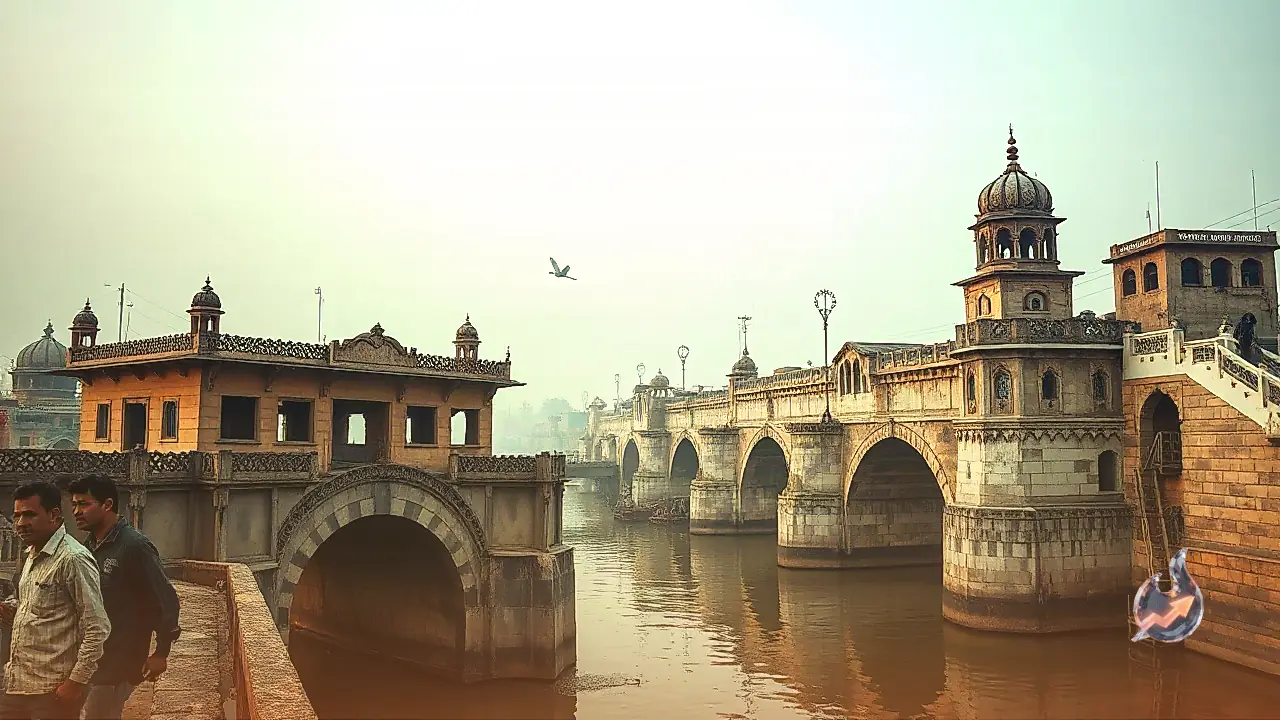

Some of the oldest bridges standing over the Ganga canal in Haridwar have outlasted their concrete neighbours by more than a century, even though they were built without a single bag of cement or a rod of steel. Made from a lime and surkhi mortar mix, these structures are still rock solid 172 years after they went up.
How the canal and its bridges came to be
The story goes back to 1842, when British engineer Sir Proby Thomas Cautley drew up the plan for the Upper Ganges Canal, stretching from Haridwar all the way to Kanpur Dehat. Turning that plan into reality took roughly 12 years of work, and the canal was finally completed in 1854. The then Governor General, Lord Dalhousie, inaugurated it. Once the canal was in place, the biggest challenge was letting people on either bank move freely between the two sides, which is why a string of bridges went up over the canal, structures that still bear witness to the engineering skill of that era.
Hathi Pul carries the weight of millions of pilgrims
Hathi Pul, next to the Mela Niyantran Bhawan near Har Ki Pauri, is regarded as the busiest crossing for pilgrims. Historian Manoj Kumar says the same bridge links travellers to major commercial markets like Bada Bazar and Moti Bazar. Iron pillars roughly three feet high have been fixed at its entrance to keep four wheelers out, so only two wheelers and pedestrians can pass through. Whether it is the Ganga Aarti or a massive gathering like the Kumbh, this bridge has carried the load of crores of people and still stands without a single crack.
Laltarau Pul, named after a goddess
The Laltarau Pul near Chandi Chowk carries both historical and cultural weight. According to Manoj Kumar, the bridge takes its name from Lalita Devi, the goddess of the Shri Mantra. A small stream flowing down from the hills passes near this bridge on the way to the post office, and a temple of Lalita Devi stands right there, which is how the bridge got its name. When it was built during British rule, so much technical care went into its foundation that it still carries its history, its faith and its engineering strength together.
Mayapur's bridge links the station to the bus stand
Further into the town, the old Mayapur bridge stands out for its distinctive build. On one side it connects to the state guest house, and on the other it opens up routes to the railway station, the bus stand, the main fire station and administrative offices. To protect this piece of colonial-era heritage, the Uttar Pradesh irrigation department has put up a board at one end banning entry of heavy vehicles. Standing amid the fast current of the Ganga, this bridge has quietly handled decades of vehicles and commuters.
Singhdwar Pul and the new bridge built alongside it
Manoj Kumar adds that Singhdwar Pul connects some of the city's largest trading hubs. It links busy commercial and industrial areas like Ranipur Mor to several key routes leading into the religious town of Kankhal. As traffic grew heavier, the administration built a new concrete bridge right next to it, yet locals still trust the old structure more. Built without any cement or steel rods, this bridge is proof of just how forward looking Sir Cautley's engineering was for its time.
Jatwara Pul in Jwalapur remains the traffic lifeline
The Jatwara Pul in the suburb of Jwalapur is still central to daily traffic there. It connects Jwalapur's biggest market to the surrounding rural and suburban areas. Thousands of traders and residents from Jamalpur Kalan, Sarai and nearby localities cross this old route every single day. Despite bearing decades of heavy traffic for well over a century and a half, the bridge's strength hasn't dipped even slightly, and this colonial-era structure still stands firm.