




















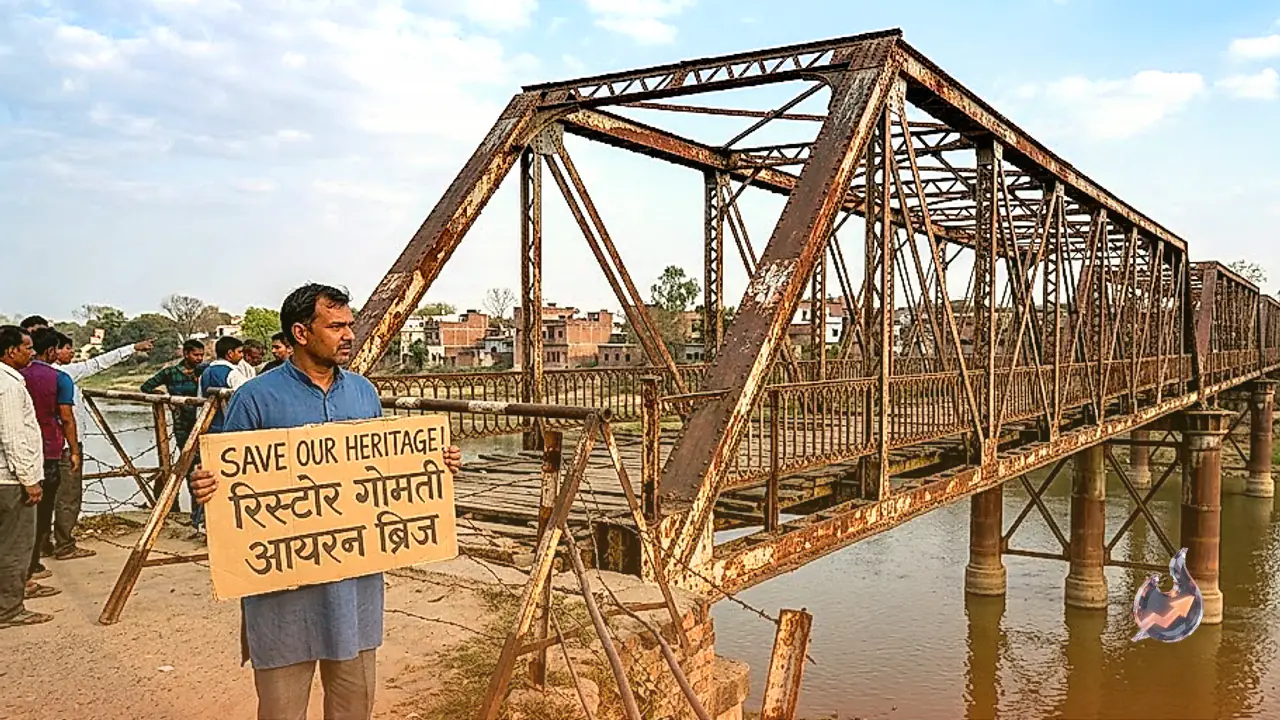

A historically significant landmark in the Sultanpur district of Uttar Pradesh is currently teetering on the edge of destruction due to prolonged administrative apathy. Situated over the Gomti River, the iron bridge associated with the 1857 War of Independence is deteriorating rapidly without necessary preservation efforts. Historically, this vital structure formed the primary backbone of Sultanpur's commercial trade. The British administration originally constructed the bridge to connect the Awadh province with key regional routes, but today this once-thriving infrastructure is battling for its very existence.
Historical Links to the Awadh Region
The origins of this iron structure are deeply intertwined with the aftermath of the 1857 freedom struggle. During the height of the uprising, local revolutionaries actively challenged British authority across the region. To prevent freedom fighters and local residents from crossing the Gomti River, British troops deliberately destroyed a pre-existing wooden bridge at the location. Re-establishing military and logistical connections to the Awadh province became an urgent priority for the colonial administration. Consequently, after suppressing the rebellion, the British built a heavy iron bridge to secure long-term transport routes.
The Shelling Legacy Behind the Name 'Golaghat'
According to historical details highlighted by senior journalist Vikram Brijendra Singh, the site witnessed intense military action during the 1857 conflict. Colonial forces deployed heavy artillery and fired cannonballs directly at the bridge area to halt the movement of local fighters. The heavy bombardment with cannonballs led to the location being named 'Golaghat' by local residents. The site stands as a historic reminder of colonial suppression and the bravery of Indian revolutionaries during the first war of independence.
Structural Decay, Safety Closure, and Anti-Social Elements
Over time, lack of maintenance has severely compromised the structural integrity of the iron bridge. Recognizing the safety risks posed by the weakened architecture, authorities eventually prohibited all vehicular and pedestrian traffic across the river. However, the protective brick wall erected by officials to block public access has collapsed over time. Without proper security oversight, the abandoned heritage site has turned into a gathering spot for anti-social elements. Further compounding the neglect, a liquor shop has opened right beside the historic bridge, creating significant distress among local citizens.
Local Demands for Urgent Restoration and Heritage Protection
Disturbed by the continuous decay of their historical identity, local residents of Sultanpur are urging the district administration and the state government to initiate immediate repair work. Citizens emphasize that this centuries-old bridge represents an indispensable piece of regional heritage. If prompt conservation measures are not undertaken, Sultanpur risks losing a tangible link to India's freedom struggle. Residents are demanding that the government restore the iron structure and preserve it as a protected historical monument for future generations.