



















As India prepares to mark its Independence Day on August 15, the inspiring notes of Vande Mataram are once again reverberating across educational institutions, public assemblies, and national broadcasts. Composed nearly a century and a half ago, this patriotic masterpiece transcended its origins as a literary verse to become the defining anthem of resistance against British colonial rule. The enduring resonance of its opening lines captures a crucial chapter in the evolution of Indian nationalism and cultural identity.
Creation of a Patriotic Emblem: Bankim Chandra Chattopadhyay and the Birth of Vande Mataram
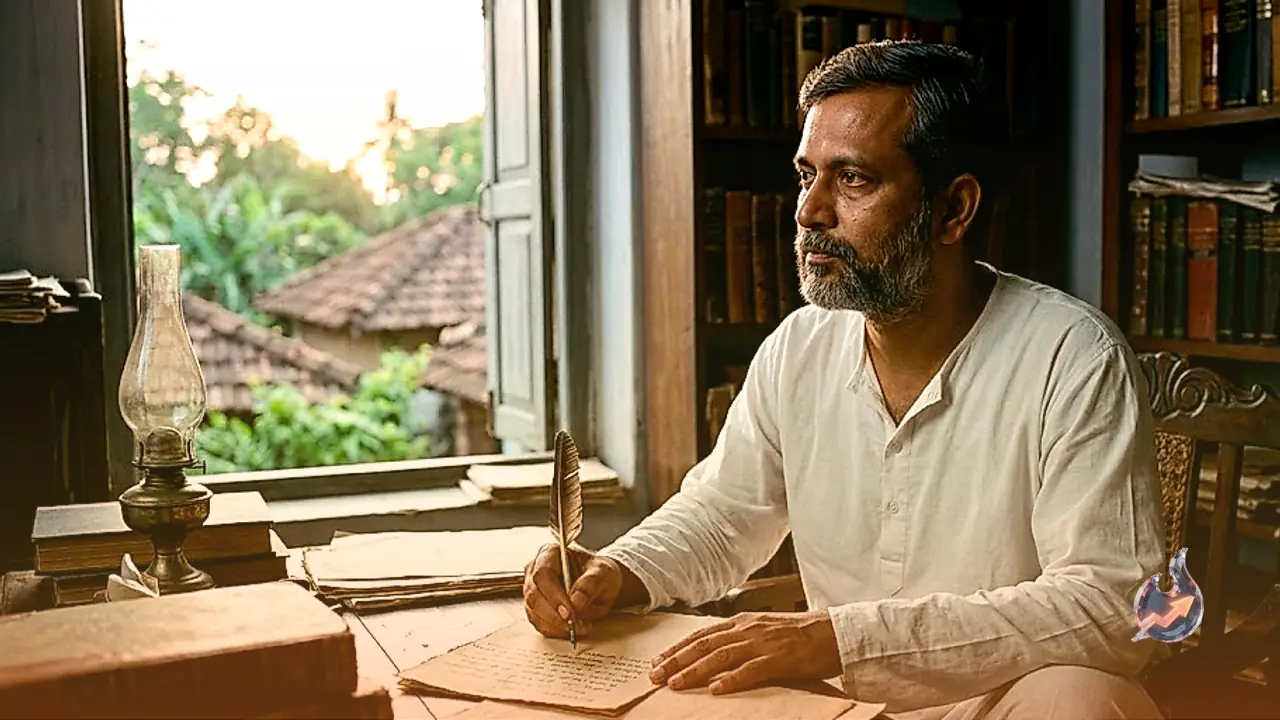
The origins of this historic composition trace back to Bankim Chandra Chattopadhyay, one of the most prominent literary figures of 19th-century Bengal who also served as a civil servant under the British administration. Official records from the Government of India commemorating its 150-year anniversary note that Vande Mataram was first published on November 7, 1875, in his literary magazine Bangadarshan. It was later embedded into his celebrated 1882 Bengali novel Anandamath.
Bankim Chandra Chattopadhyay passed away on April 8, 1894, more than five decades before India achieved independence on August 15, 1947. Although he did not live to witness the end of colonial rule, his words outlived him to form the core emotional vocabulary of the freedom movement. Through seminal literary works such as Anandamath, Devi Chaudhurani, Kapalkundala, and Durgeshnandini, Bankim explored Indian society, historical consciousness, and the emerging idea of nationhood.
Sacred Imagery and Literary Roots: Understanding the Verse
The term Vande Mataram translates literally to "I bow to the Mother" or "I salute the Mother." In this context, the mother figure is not an abstract deity but the motherland itself. The opening verses paint a vivid portrait of India's natural bounty and physical beauty: "Sujalam, Suphalam, Malayaja Shitalam, Shasya Shyamalam."
These words evoke a land endowed with abundant water bodies, rich harvests, soothing breezes coming from the sandalwood-scented Malaya mountains, and verdant green fields. What set Bankim's composition apart from conventional patriotic poetry of his era was his visualization of the nation. Rather than depicting India merely as a territorial boundary on a map, he personified the country as a maternal entity, beautiful, nurturing, and deserving of supreme reverence. This powerful allegory imparted immense emotional force to the text.
From Literary Poem to Freedom Rallying Cry: 1896 to the Swadeshi Movement
The transition of Vande Mataram from a literary creation to a national rallying cry accelerated during the late 19th and early 20th centuries. In 1896, Rabindranath Tagore rendered the poem musically at the Indian National Congress session in Calcutta (now Kolkata), bringing it into the mainstream political arena for the first time.
The political weight of the song escalated dramatically following the Partition of Bengal in 1905. During the Swadeshi and anti-Partition agitation, Vande Mataram emerged as the primary slogan of political resistance. Demonstrators chanted the phrase during public rallies demanding the boycott of British manufactured goods and the adoption of indigenous Indian products. Recognizing its mobilizing power, the British administration imposed a strict ban on the public chanting of Vande Mataram at Barisal in 1906. The imperial prohibition only solidified the song's status as a symbol of defiance against foreign rule.
Prohibitions, Revolutionaries, and the Marching Chants of Independence
The legacy of Vande Mataram remained deeply connected with multiple streams of Bengal's nationalist movement. Sri Aurobindo wrote extensive philosophical commentaries on its spiritual and political importance. Revolutionary groups across the country adopted the phrase as their sacred oath. Later, Subhas Chandra Bose's Indian National Army (INA) incorporated a marching adaptation of the song into their military mobilization efforts.
Constituent Assembly Debates: National Song versus National Anthem
A fundamental point of distinction regarding India's state symbols centers on the respective roles of Vande Mataram and Jana Gana Mana. While Jana Gana Mana is India's National Anthem, Vande Mataram holds the status of India's National Song.
On January 24, 1950, the Constituent Assembly formally adopted Vande Mataram as the National Song, while designating Jana Gana Mana as the National Anthem. This distinction reflected careful consideration of the structural composition of both works. The initial stanzas of Vande Mataram focus on the aesthetic and natural splendor of the motherland, whereas later portions contain traditional religious symbolism and references to Hindu goddess forms. In a religiously diverse democratic republic, the Constituent Assembly's balanced decision ensured that both historic compositions were accorded an honored position in India's national heritage.
Musical Legacy Across Eras: From Classical Ragas to Modern Pop Strains
The musical interpretations of Vande Mataram have evolved across successive generations. Following the early classical rendition by Rabindranath Tagore, Lata Mangeshkar delivered a highly popular cinematic version in the 1952 film Anand Math, with music composed by Hemant Kumar.
Decades later, composer A.R. Rahman re-energized the composition for younger audiences with his contemporary album "Vande Mataram" and the iconic track "Maa Tujhe Salaam." While musical arrangements and genres changed over time, the core sentiment of devotion to the motherland remained constant.
Echoes of 1947: The Song That Welcomed India's Dawn of Freedom
Though Bankim Chandra Chattopadhyay did not live to see the Tricolour hoisted over the Red Fort, his words heralded the birth of independent India. On August 14, 1947, the historic proceedings of the Constituent Assembly commenced with the singing of Vande Mataram by Sucheta Kriplani. On August 15, 1947, legendary vocalist Pandit Omkarnath Thakur rendered the song live over All India Radio.
From its initial publication in a 1875 literary journal to its sacred role in the 2026 Independence Day celebrations, the 150-year journey of Vande Mataram remains an enduring chapter in the story of Indian independence.