























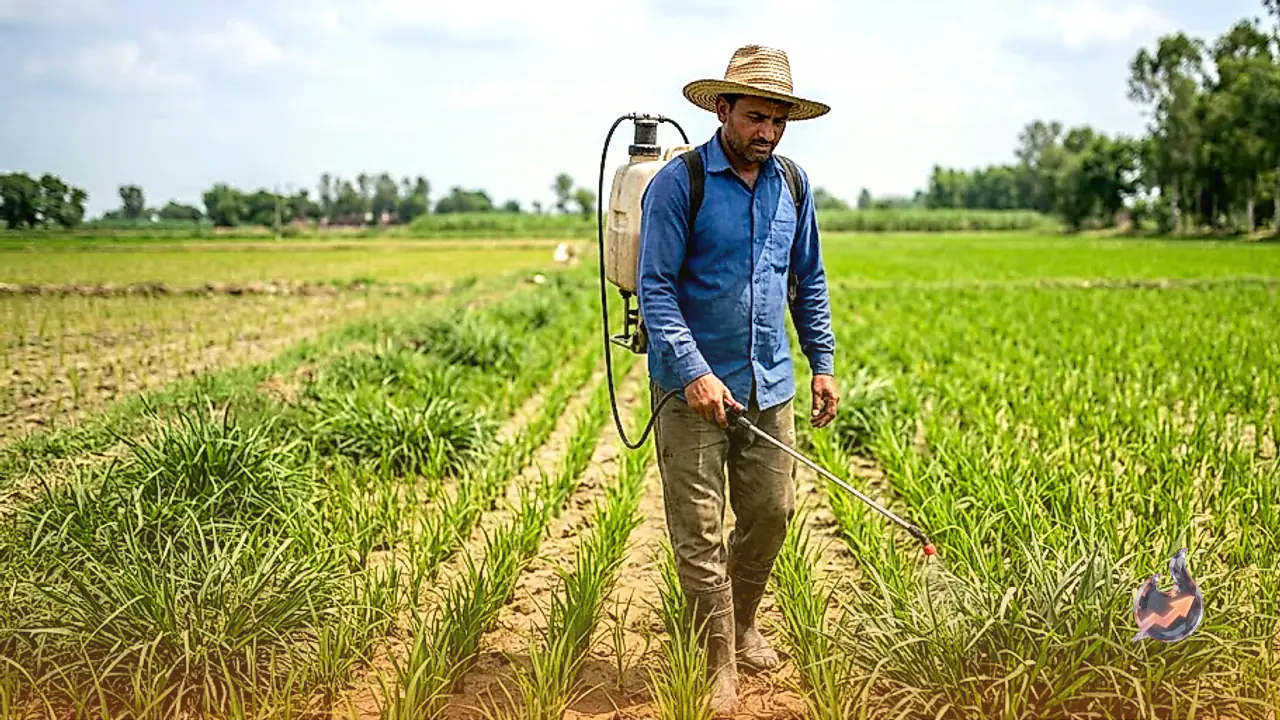

Farmers adopting Direct Seeded Rice (DSR) technology are facing a major challenge in the form of Motha grass. Known as a silent killer in agricultural fields, this aggressive weed rapidly consumes essential nutrients from the soil, causing paddy plants to weaken, dry up, and drastically reduce overall crop yield.
Chemical Treatments for Standing Paddy Crops
According to agricultural advisor Chandrabhashan Pandey, chemical methods alone are insufficient to combat Motha grass, making an integrated weed management strategy vital. In standing crops, spraying Halosulfuron Methyl 75% WG yields effective results. To ensure maximum efficiency, the field must retain light soil moisture during application, allowing the chemical solution to penetrate deep down to the roots.
Tackling Underground Tubers to Stop Regrowth
The primary reason Motha grass is difficult to eradicate lies in its underground tubers. Simply cutting or removing the top foliage leaves these tubers intact beneath the soil, triggering rapid regrowth. Chandrabhashan Pandey highlights that spraying Glyphosate in empty fields after harvest is an effective solution, as the chemical moves down into the root system to completely destroy hidden tubers.
Mechanical and Organic Control Methods
Agricultural advisor Avneesh Patel emphasizes that routine weeding and hoeing disrupt the growth cycle of this invasive weed. Using a khurpi or hand trowel helps uproot the underground tubers directly, significantly reducing the likelihood of regrowth, making it an ideal approach for organic farming. Additionally, deep summer plowing exposes hidden subterranean tubers to intense heat and direct sunlight, drying them out and permanently neutralizing them.