



















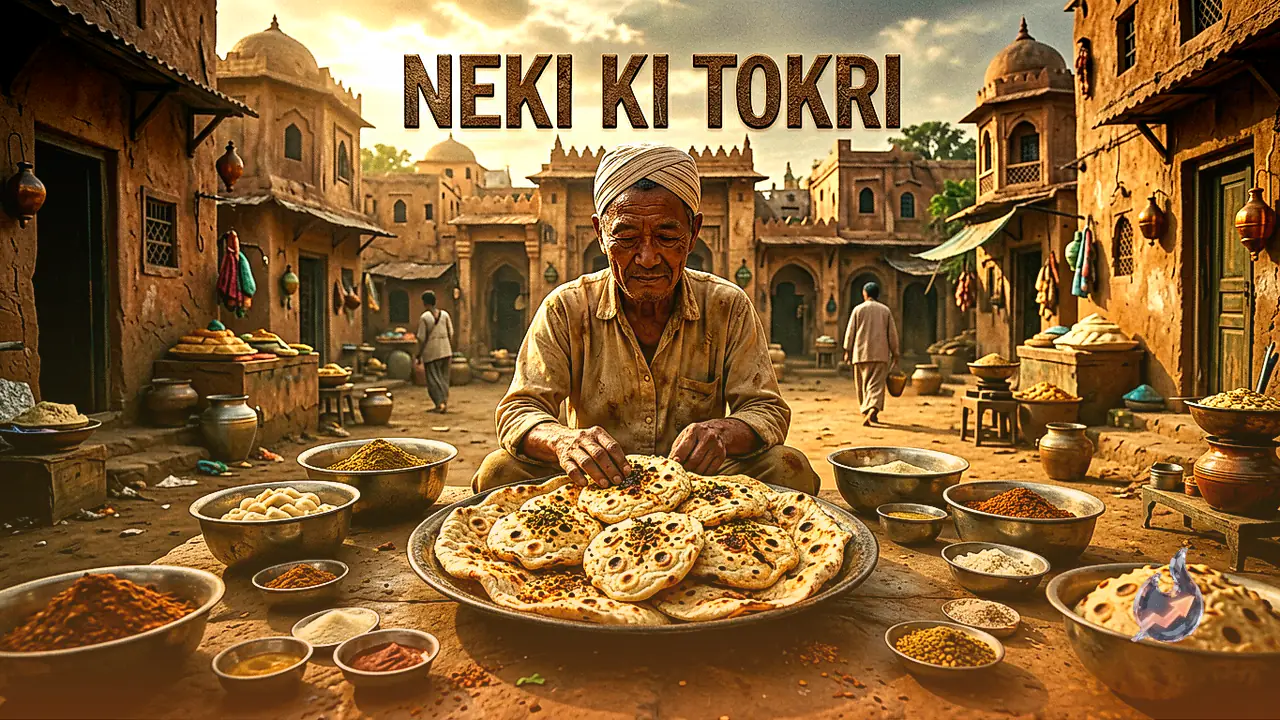

A community initiative in Hyderabad's historic King Kothi neighborhood is offering food to those in need without requiring payment or proof of identity. At a local bakery named Mughal Naan, a wall-mounted basket called Neki Ki Tokri, or Basket of Kindness, allows hungry passersby to collect fresh Sheermal bread free of cost. The initiative bridges the gap between donors and underprivileged individuals, preserving the dignity of those receiving assistance.
A Dignified Giving Mechanism
A wooden basket is fixed to the exterior wall of the Mughal Naan eatery, accompanied by a bilingual message written in Urdu and English. The notice reads that feeding a hungry person brings spiritual merit, inviting any person in need to take a Sheermal bread while encouraging those who have been blessed by God to purchase and leave extra loaves in the container. This simple mechanism enables direct, anonymous aid, allowing donors to contribute according to their financial capacity and recipients to take food without undergoing questioning or filling out paperwork.
Low Cost and High Durability
The traditional bread sold at Mughal Naan costs ₹18 per piece. Beyond its affordability, the Sheermal possesses practical qualities that make it particularly suitable for the charity effort. When wrapped securely in a clean cotton cloth, the bread remains soft, fresh, and fully edible until the following day. Customers with spare resources regularly buy extra pieces for ₹18 to deposit into the basket, ensuring a steady supply throughout the day for local laborers, travelers, and underprivileged residents.
Calls to Expand the Model
Local residents and social activists have praised the practical nature of the initiative, describing it as an easily replicable solution to urban hunger. Advocates suggest establishing similar kindness baskets across high-traffic urban areas, including major commercial markets, public hospitals, bus terminals, railway hubs, and sites surrounding religious institutions. Proponents argue that widespread adoption of this model could ensure that no individual in the city goes to sleep on an empty stomach.
Fostering Community Compassion
In an era where urban routines often cause people to overlook the struggles of others, the King Kothi initiative highlights how localized community efforts can foster empathy and mutual assistance. By turning a routine purchase into a collective act of social support, the project demonstrates how simple, low-cost community solutions can address daily hardship in urban centers.