























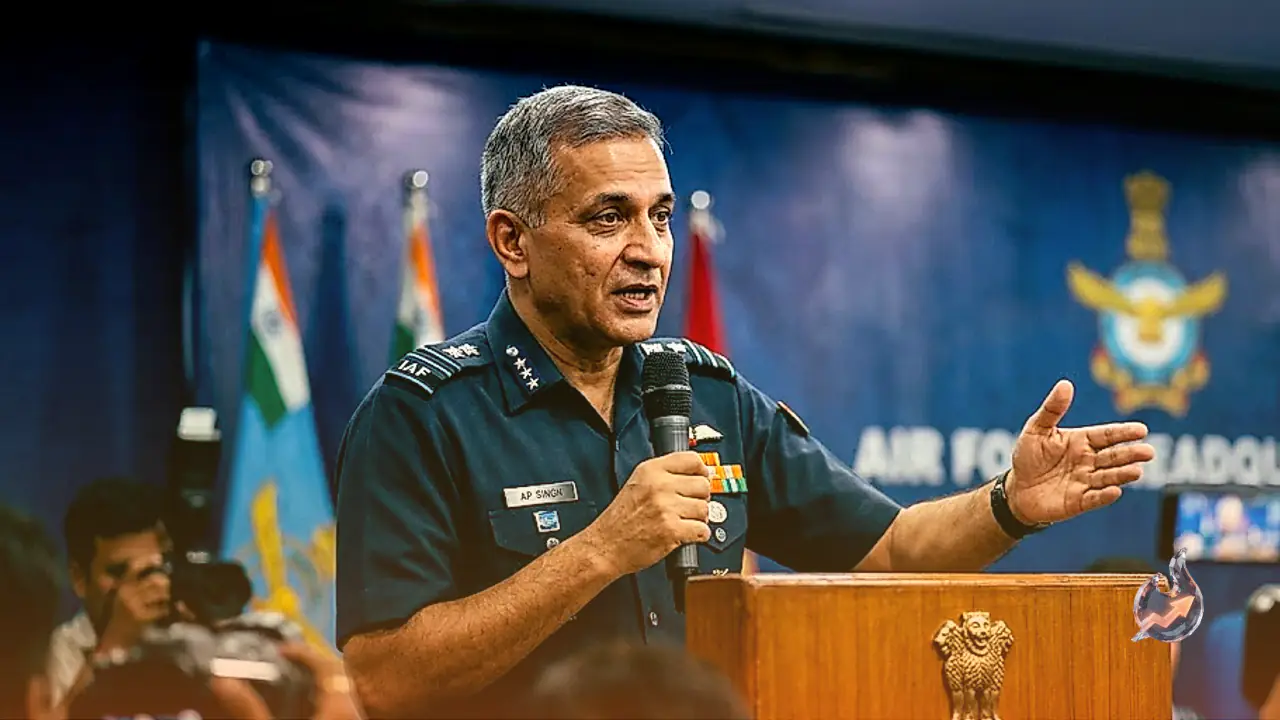

The Indian Air Force systematically disabled key military installations across the border through well-coordinated aerial strikes. Sharing details of the tactical mission on October 3, Air Chief Marshal AP Singh explained that advanced fighter aircraft and long-range precision weaponry exerted aggressive pressure, completely taking down opposing surveillance radar networks. High-value ground assets, including runways, aircraft hangars, command and control centers, and critical base infrastructure, were struck with surgical accuracy and neutralized.
Tactical Objectives and Integrated Air Defense Shield
Air Chief Marshal AP Singh underscored that the air force accomplished every primary military objective set for the operation while inflicting significant structural damage. Simultaneously, India's Integrated Air Defense System (IADS) established an impenetrable protective perimeter around national airspace, denying entry to hostile fighter jets and inbound aerial weapons. Suspicious aircraft attempting to posture aggressively near the frontier were intercepted and brought down mid-air, validating the operational precision and high readiness of the country's defensive shield.
Global Munition Shortages and the Push for Domestic Production
Addressing wider geopolitical developments, the air force chief observed that ongoing conflicts around the world are depleting stockpiles of weapons and ammunition across multiple nations. In addition to shortages in military hardware, components, and aircraft, critical logistical supply lines are operating under severe strain. In this operational climate, Air Chief Marshal AP Singh stated that self-reliance has transitioned from a strategic preference into an absolute necessity for India. Ensuring uninterrupted availability of defense systems requires robust domestic industrial capacity that can withstand international supply disruptions.
Integrating Drone Capabilities into Existing Commands
Clarifying the operational doctrine regarding unmanned aerial vehicles, the air chief remarked that creating an entirely separate branch or specialized force for drones is unnecessary. Instead, unmanned platforms must be embedded directly into existing military structures, operating alongside traditional systems and unified commands. Describing drone warfare as an evolutionary process rather than an abrupt disruption for the Indian Air Force, he highlighted that maximizing their battlefield utility depends on seamlessly integrating them into established combat infrastructure.