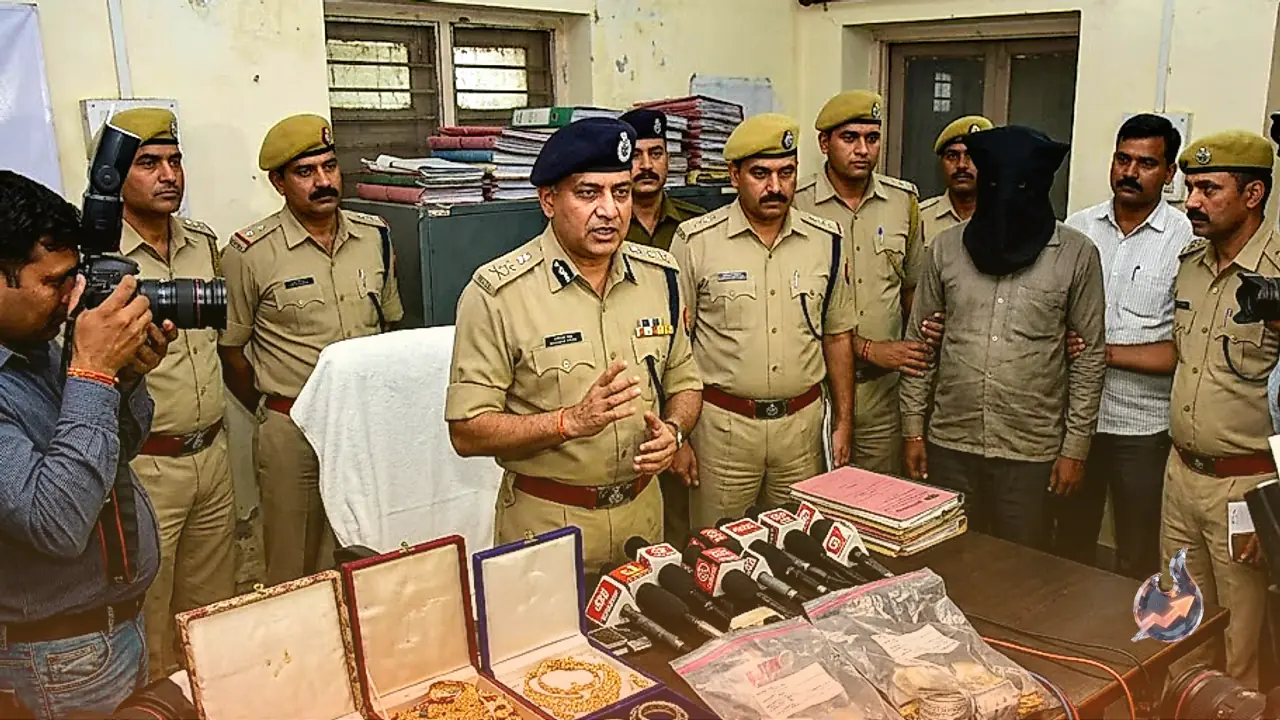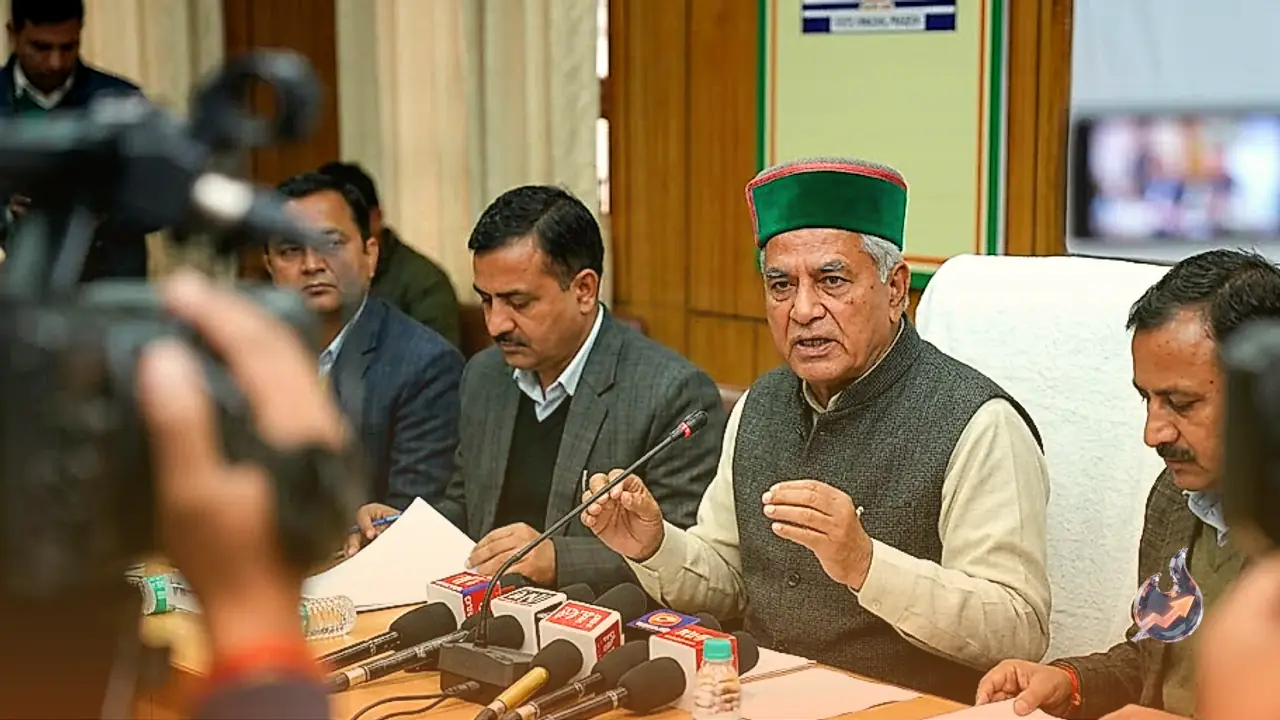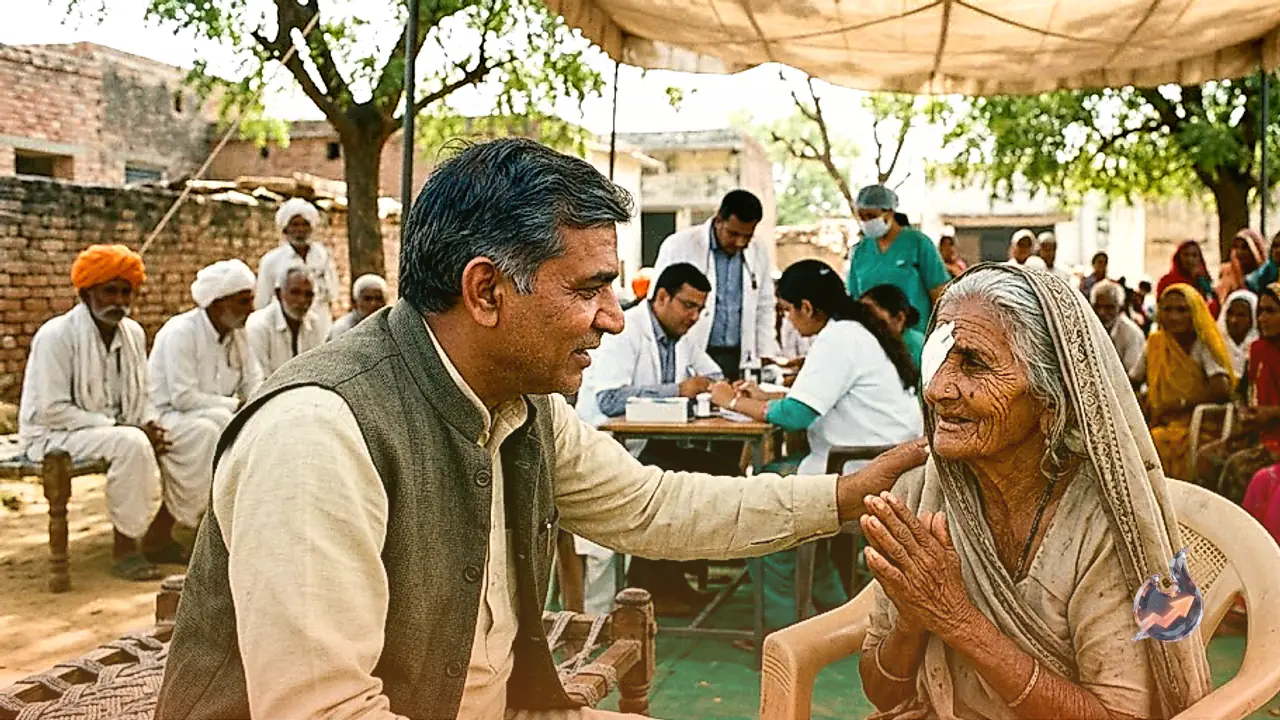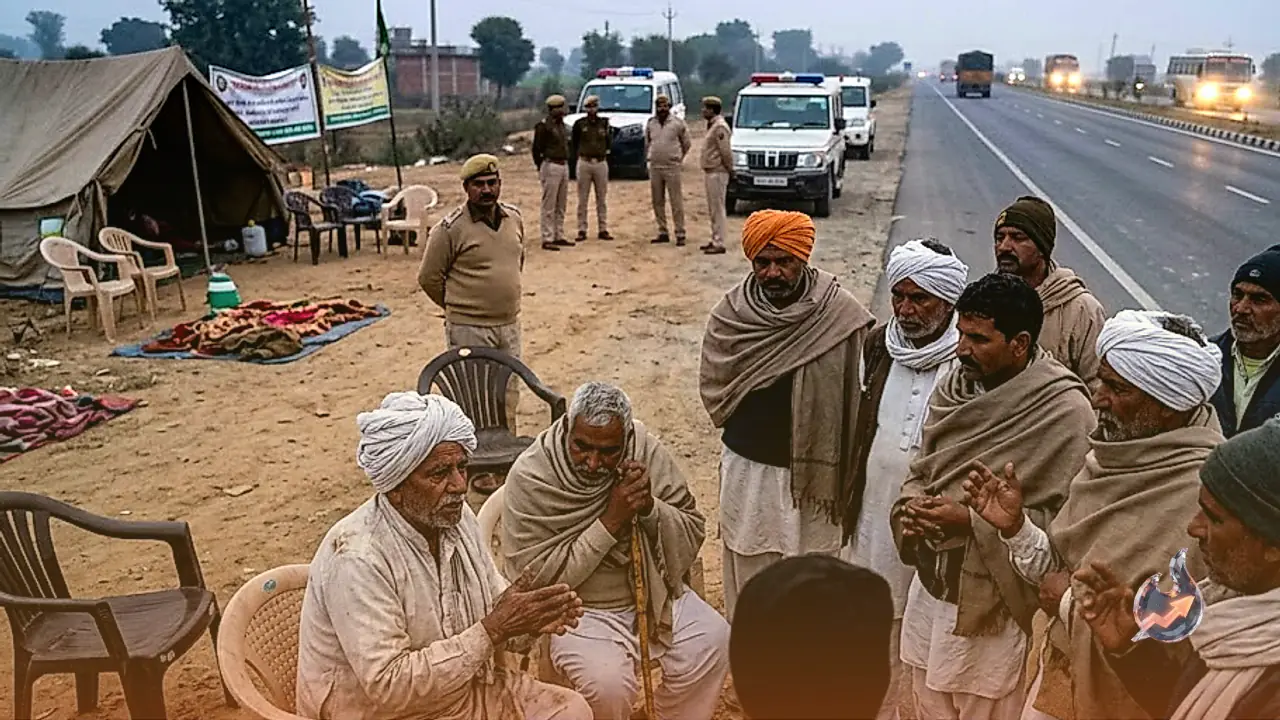





















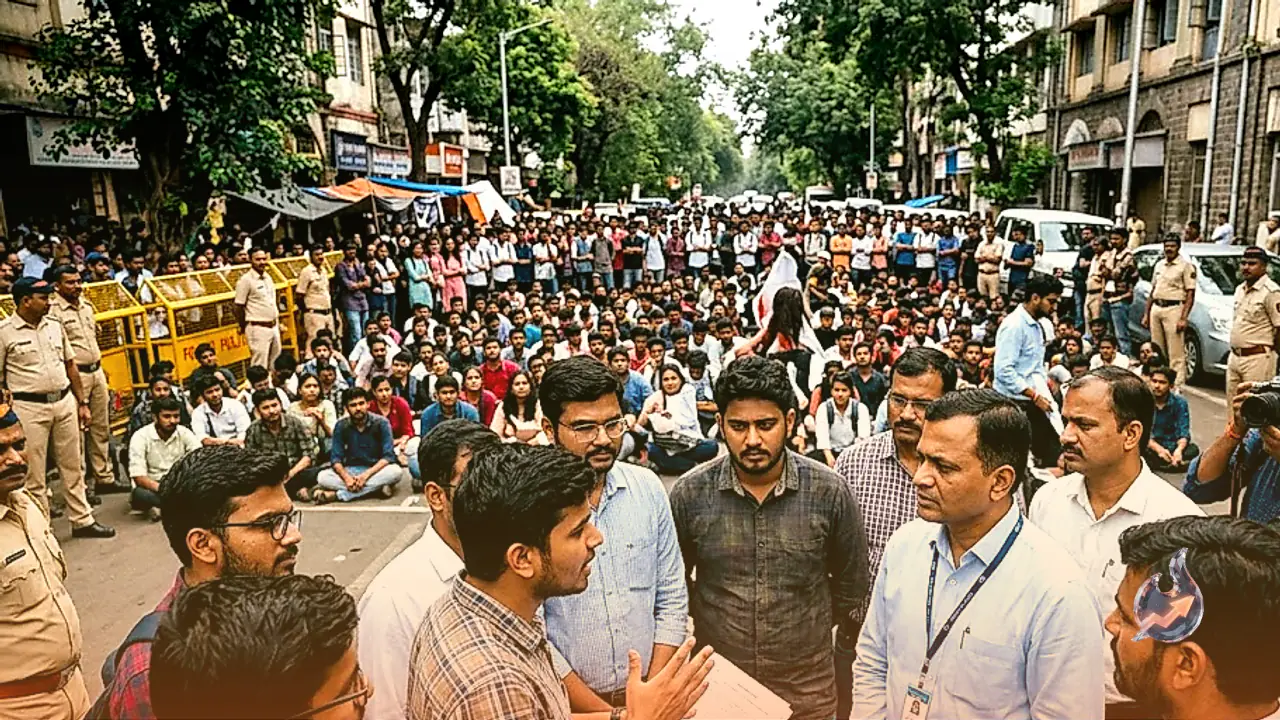

A ten-day confrontation between civil service aspirants and the Maharashtra government in Pune has concluded after authorities accepted major demands raised by the demonstrators. The resolution followed decisive intervention by the state administration, marked by the appointment of senior bureaucrat Tukaram Mundhe as member-secretary of a newly constituted reform and inquiry committee for the Maharashtra Public Service Commission (MPSC). Known for his uncompromising stance on transparency and zero tolerance for systemic negligence, Mundhe's direct involvement restored confidence among protesting candidates, leading to the immediate withdrawal of the street agitation.
The Ten-Day Demonstration at Pune's SM Joshi Bridge
Competitive exam candidates had been staging an intensive sit-in protest at the SM Joshi Bridge in Pune for ten consecutive days. The demonstrators voiced sharp grievances over alleged malpractices, exam paper leaks, and systemic irregularities within the MPSC evaluation process. Student organisations leading the agitation had taken a resolute stance, declaring that the demonstration would persist until commission chairman Vivek Bhimanwar was relieved of his post. The prolonged protest reflected deep-seated frustration regarding the integrity of recruitment exams and the futures of thousands of candidates.
Five-Member Judicial Inquiry Panel and Chairman's Leave
In response to the escalating crisis, the Maharashtra government established a five-member probe panel headed by former judge Dilip Bhosale. Tukaram Mundhe was formally designated as the member-secretary of this reform and paper leak inquiry committee. Immediately following the committee's formation, MPSC chairman Vivek Bhimanwar announced that he would proceed on leave on moral grounds, stating his intention to remain away from official duties until the judicial inquiry reached its conclusion. This step paved the way for an impartial investigation into the commission's operational affairs.
Government Engagement and Demands Accepted
A government delegation led by minister Shivendra Raje Bhosale held direct discussions with the demonstrating aspirants, ultimately conceding to several key structural and administrative demands
- Recruitment Drive: The administration committed to expediting state recruitment to fill 70,000 vacant posts across departments within the next three years.
- Expansion of Group-C Seats: The total intake for the upcoming Group-C examination scheduled for January 2027 will be expanded to create more opportunities for aspirants.
- Withdrawal of Police Cases: All criminal cases registered by the police against student representatives and participants over the course of the ten-day agitation will be dropped.
- Mandatory Background Screening: Future appointments to the critical posts of MPSC chairman and secretary will undergo mandatory background checks to preserve institutional integrity.
Following these formal assurances from the state cabinet representative, the student representatives officially called off their demonstration.
From a Drought-Prone Village to AIR 20 in UPSC
Tukaram Mundhe's journey into the civil services remains one of Maharashtra's most notable administrative stories. Born into an impoverished farming family, Mundhe walked barefoot to school as a child. Defying severe financial hardship, he prepared for the UPSC civil services examination entirely through self-study, without attending private coaching academies, and secured All India Rank 20 in the 2004 examination. He was formally inducted into the Maharashtra cadre in 2005. Throughout his career, he has built an enduring public reputation for strict adherence to rules, uncompromising honesty, and resistance to political interference.
Twenty-One Years of Public Service and Over 25 Transfers
Popularly referred to as the 'Singham' officer for his no-nonsense governance style, Mundhe's career has seen more than 25 transfers across 21 years of administrative service. His tenure across various districts has been defined by direct confrontation with entrenched interests, from taking on the illegal sand-mining mafia in Solapur to shelving multi-crore commercial ventures in Navi Mumbai to protect public funds. In October 2026, Mundhe was featured in the international publication The New York Times for his distinctive, aggressive administrative interventions across Maharashtra.
Key Postings Across Maharashtra's Administrative Landscape
Over more than two decades in public administration, Tukaram Mundhe has directed multiple civic bodies, state enterprises, and key departments
- Khadi and Village Industries Commission (KVIC): Served as Chief Executive Officer during the foundational phase of his senior administrative career.
- Navi Mumbai Municipal Corporation (2017): As Municipal Commissioner, launched the direct public interface initiative 'Walk with the Commissioner' and enforced decisive civic regulations.
- Pune Mahanagar Parivahan Mahamandal Limited (2017-18): As Managing Director, tackled staff indiscipline and unauthorized absenteeism while reorganizing bus transit fare and route structures.
- Nashik Municipal Corporation (2018): Spearheaded administrative restructuring and greater civic accountability as Municipal Commissioner.
- Planning Department, Mantralaya (2018): Served as Additional Secretary (Planning) in the Maharashtra state government, guiding policy allocation.
- Nagpur Municipal Corporation (2020): Led extensive municipal operations to improve civic delivery systems and urban administration as Municipal Commissioner.
- Commissioner of Health Services (October 2022 - November 2022): Conducted extensive surprise inspections across state health facilities to curb graft and enforce physician attendance.
- Food and Drug Administration Commissioner (2026): Enforced food safety compliances, ordering the sealing of major hotels and restaurants flouting regulations, which drew nationwide attention.
- Secretary, MPSC Reform Committee (October 2026): Assumed responsibilities as member-secretary of the specialized committee overseeing commission reforms and paper leak inquiries.
Public attention across Maharashtra is now focused on how effectively the five-member panel under former judge Dilip Bhosale and Tukaram Mundhe cleanses the examination machinery to secure merit-based selections for government aspirants.