






















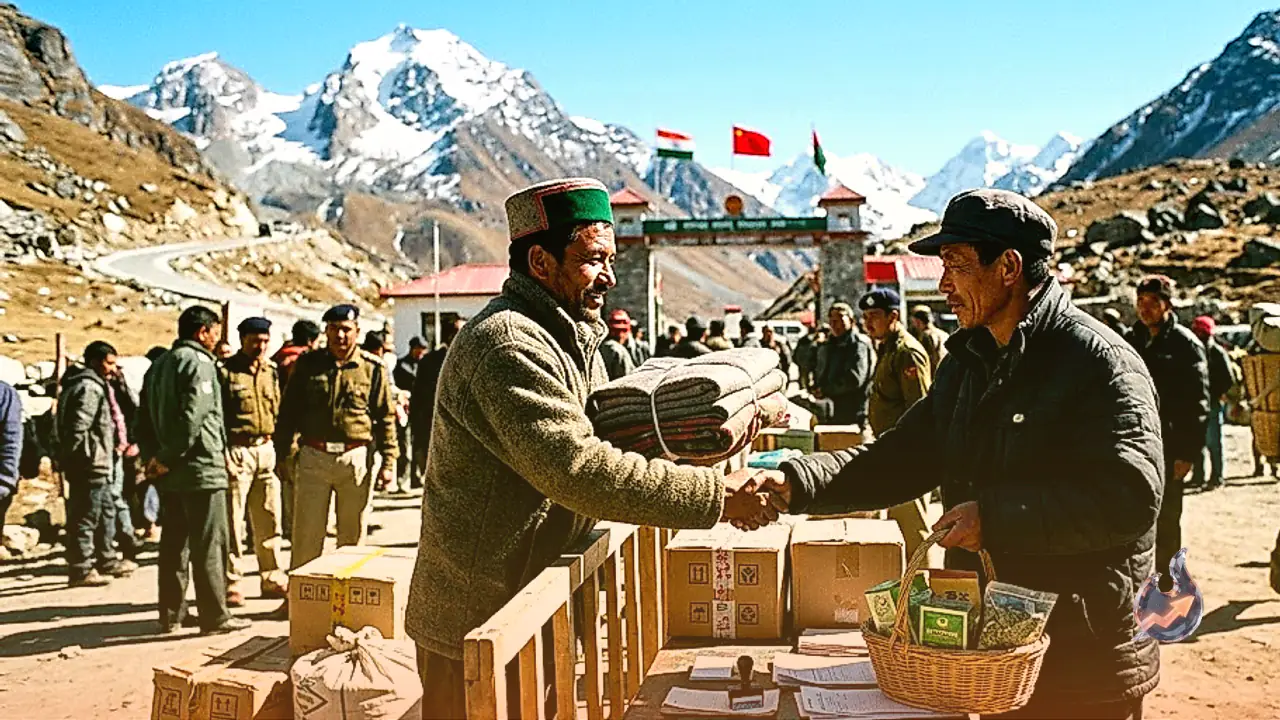

Bilateral border trade between India and China has officially resumed after a six-year hiatus, reopening vital commercial routes across high-altitude Himalayan mountain passes at over 14,000 feet above sea level on Saturday. Commercial activity through these strategic channels had been suspended since 2020 due to the COVID-19 pandemic and subsequent border standoffs between the two neighboring nations. The resumption of operations through key passes in Sikkim and Himachal Pradesh marks a significant development for local traders who rely on these seasonal border exchanges.
Nathu La Pass: Ceremonial Reopening and Trading Guidelines
In Eastern Sikkim, an official inauguration ceremony took place at the historic Nathu La pass, attended by administrative delegates and border officials from both India and China. Providing details on the reopening, Karma D. Yutso, Secretary of Sikkim's Commerce and Industry Department, confirmed that trade passes have been issued to 38 registered local merchants for the current season. Under the established bilateral trading framework, operations will run weekly from Monday through Thursday until November, with trading halted on the remaining days of the week.
Authorities have approved a total of 36 notified commodities for transaction across the Nathu La border post. Permitted items include traditional handicrafts, handloom products, religious ceremonial goods, ready-made garments, and other pre-authorized merchandise. Security measures at the high-altitude post have been heavily bolstered, with the Indo-Tibetan Border Police (ITBP) enforcing strict oversight according to standard operating procedures (SOP). Notably, an all-women ITBP platoon has been deployed at Nathu La for the very first time to oversee security protocols.
Historical Significance of the Nathu La Route
Nathu La holds historic importance as a designated border trade market between India and China. Following the outbreak of the 1962 Sino-Indian War, the mountain pass was closed for all commercial traffic. It remained non-operational for over four decades before being reopened for regulated border trade in 2006. Under normal circumstances, trading activities operate annually from May to November, though operations were completely halted in 2020 during the global health crisis and diplomatic tensions.
Barter Trade Operations via Shipki La in Himachal Pradesh
Simultaneously, border trade recommenced through Shipki La in Himachal Pradesh, an ancient pass along the historic Silk Route located in Kinnaur district. Jagat Singh Negi, Minister for Revenue and Horticulture in Himachal Pradesh, formally flagged off a group of 16 registered traders alongside their horses as they headed toward Shipki village in Tibet. Transactions at Shipki La are conducted under a traditional barter system, where merchants exchange goods directly rather than utilizing currency transactions.
Under the regulations, participating traders are permitted to remain in the Tibetan region for up to 72 hours before returning across the border to India. To strengthen border infrastructure and support commercial operations, Minister Jagat Singh Negi inaugurated the newly constructed Chhuppan Trade Mart in the Shipki La region of Namgya border gram panchayat. Built at a cost of Rs 1.70 crore, this modern trading center is designed to offer storage, administrative support, and enhanced facilities for border merchants.