




















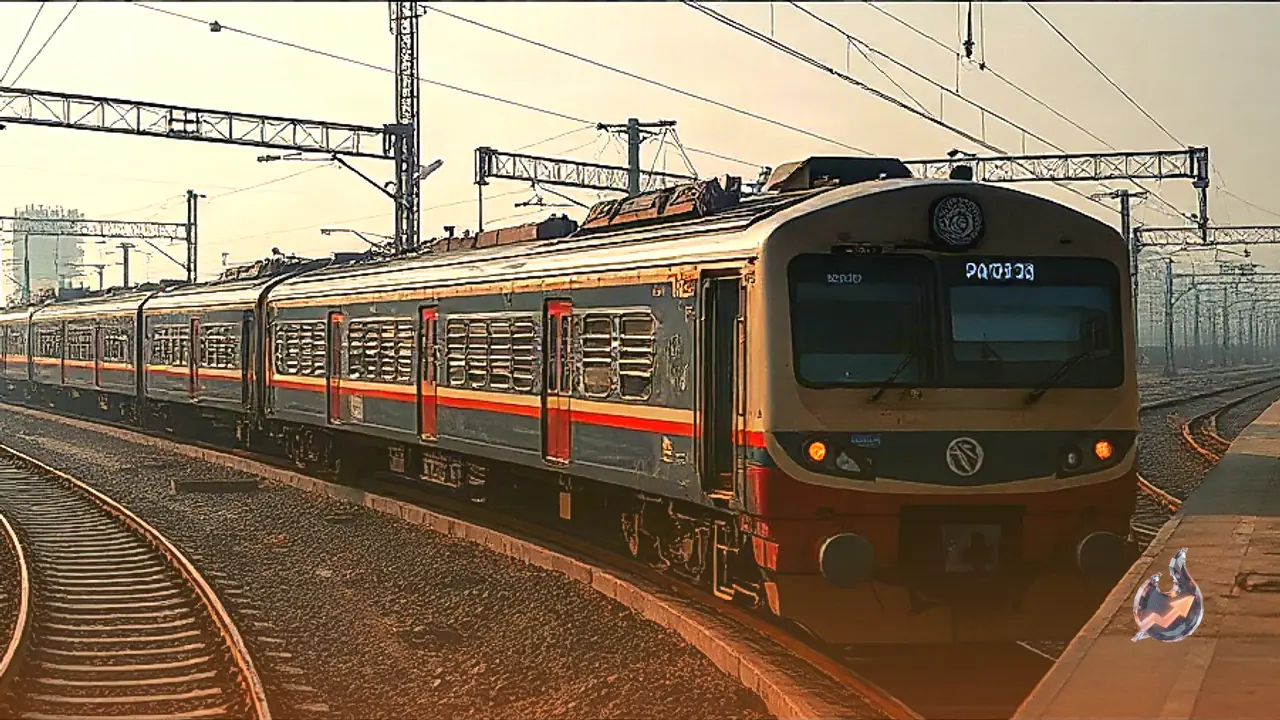

Indian Railways has achieved a fresh milestone in high-speed goods transportation after pushing its inaugural Vande Bharat Freight EMU train to a maximum operating speed of 130 kilometers per hour during a trial run along the busy corridor connecting Ahmedabad and Mumbai Central. Conducted across Western Railway's pivotal Ahmedabad, Vadodara, and Mumbai Central section, the high-speed assessment was closely monitored by engineers from the Research Designs and Standards Organisation (RDSO). Assembled at the Integral Coach Factory (ICF) in Chennai, this 16-coach self-propelled freight unit is built to transform regular parcel delivery across the national rail network by offering a significantly faster alternative to standard freight trains.
Speed Capabilities and Operational Assessment Parameters
Official details provided by the Ahmedabad Railway Division reveal that the freight rake underwent final preparations at the Inland Container Depot (ICD) in Sabarmati before making its debut. The train commenced its initial journey from Ahmedabad toward Mumbai Central around 9 AM on September 12, while the return evaluation run was successfully executed on September 13. To maintain strict safety standards during physical testing, the engineers loaded the train to 50 percent of its maximum payload capacity, maintaining a controlled axle load of 20.32 tonnes. Prior to this loaded assessment, the freight rake had already demonstrated its capabilities in an empty state, touching 145 kilometers per hour during testing in the Kota division of West Central Railway. The platform itself possesses an ultimate design speed threshold of 160 kilometers per hour.
Targeted Commercial Applications and Cargo Focus
Unlike heavy industrial trains that transport bulk commodities like coal or iron ore, this specialized freight EMU is geared toward time-sensitive commercial enterprise. Indian Railways engineered the platform to serve modern supply chains, catering specifically to e-commerce shipments, express courier packages, premium electronic goods, temperature-critical pharmaceuticals, and cold-chain agricultural produce. By integrating high operating speeds with fast processing features, the service aims to capture market share from traditional long-haul road transport, offering businesses a cleaner, safer, and highly predictable logistical corridor between major industrial nodes.
Advanced Engineering and Safety Infrastructure
To support rapid handling and safeguard high-value goods, the Vande Bharat Freight EMU incorporates several modern mechanical innovations. The train features custom-built refrigerated or reefer vans designed to preserve perishable foodstuffs and sensitive medical supplies across long distances. For rapid ground handling, the coaches are fitted with extra-wide automatic doors alongside specialized roller flooring that facilitates smooth pallet loading and unloading. On the security front, the rake includes automated door-locking mechanisms, advanced thermal and smoke detection systems, complete CCTV coverage, and the indigenous 'Kavach' automatic train protection technology to prevent collisions.
Strategic Role Alongside Dedicated Freight Corridors
Clarifying the operational scope of the project, railway officials emphasized that the new freight EMU is not intended to displace heavy-haul cargo trains operating along the Dedicated Freight Corridor (DFC). Instead, the system is designed to operate directly on existing passenger rail lines to haul compact, premium, and time-critical consignments at express speeds. According to representatives from Western Railway's Ahmedabad Division, the success of these ongoing trials unlocks new possibilities for modernizing national logistics, providing Indian industries with an agile transport network that combines reliability with rapid transit times. Engineers from RDSO are currently evaluating all mechanical and telemetry data gathered during the test run to shape the operational framework for future commercial deployments across major trunk routes.