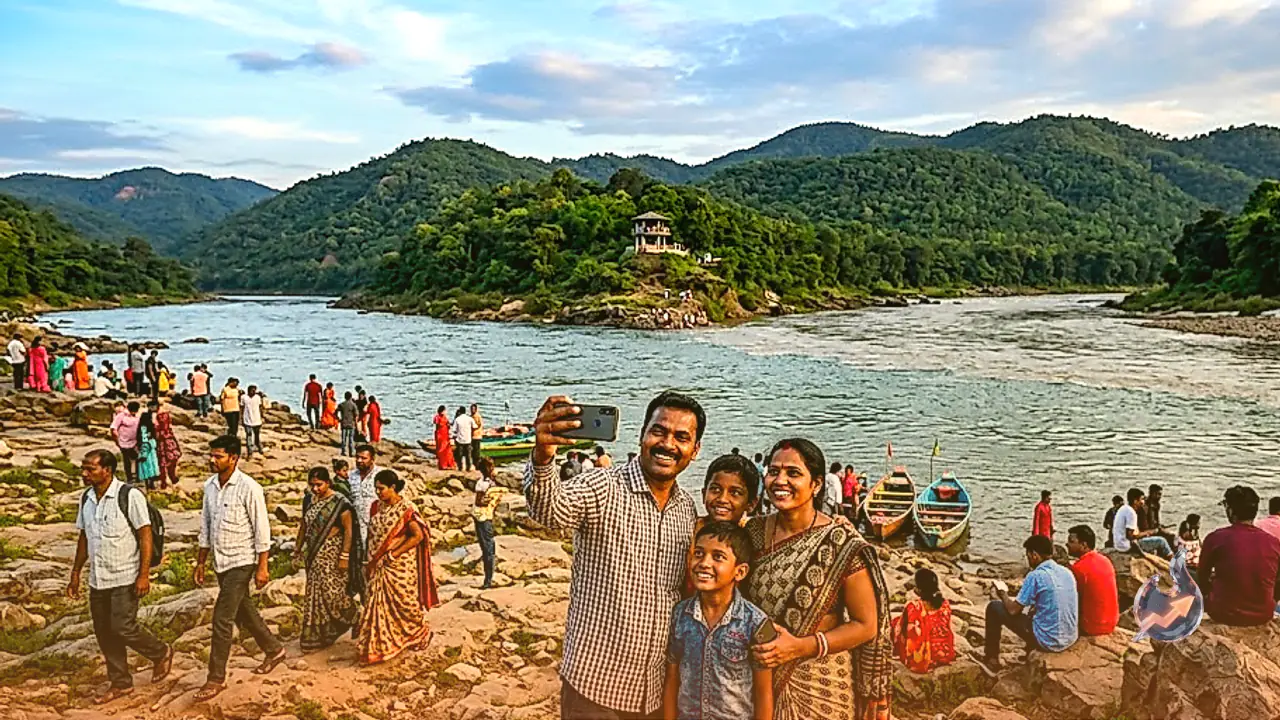

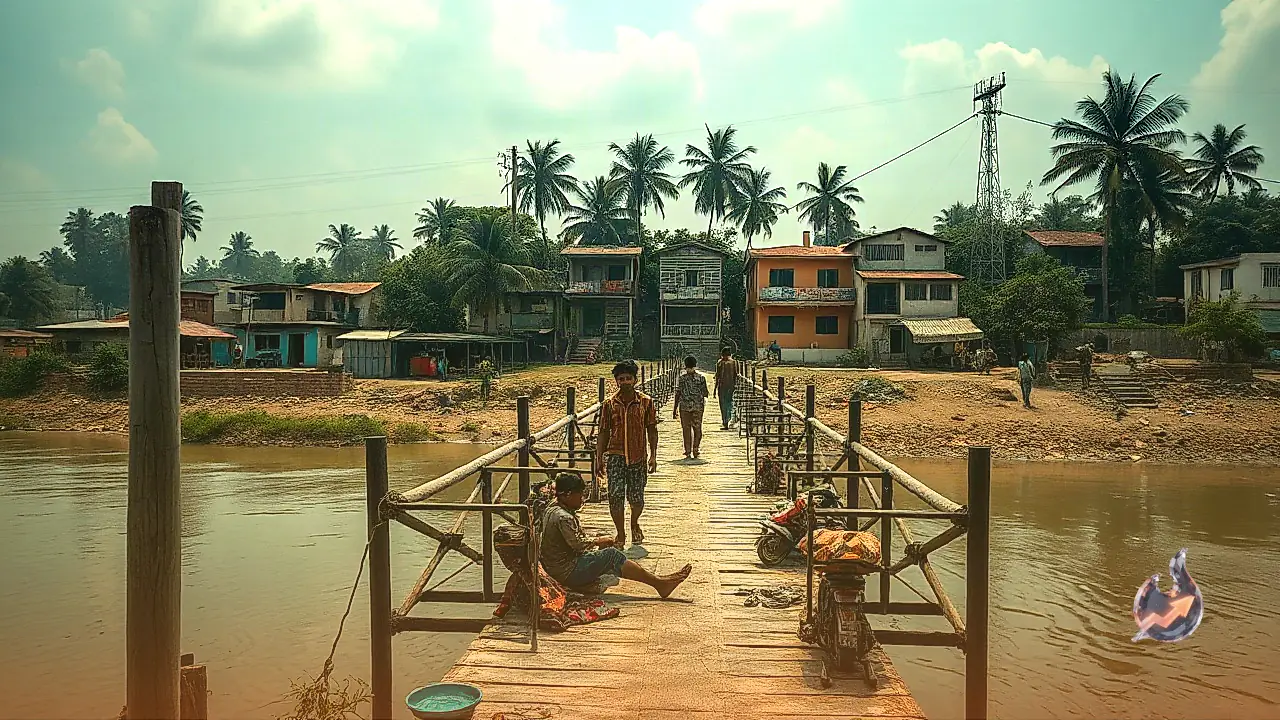



















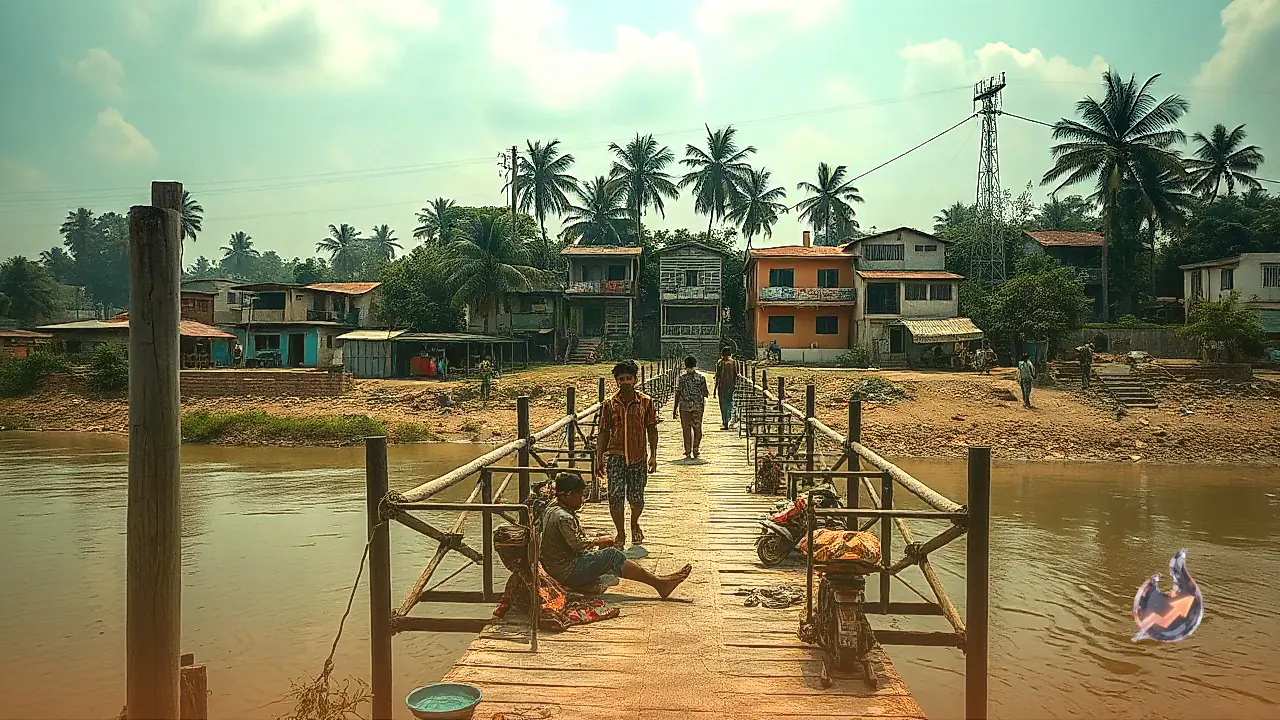

In the Bangakhlar Panchayat of Domchanch block in Koderma district, hundreds of residents across more than half a dozen villages face severe daily hazards due to the absence of a bridge over a local river. During the rainy season, as water levels rise significantly, commuting becomes extremely perilous for the local population. Schoolchildren, elderly citizens, sick individuals, and pregnant women bear the brunt of this structural infrastructure void. Without a safe alternative route to cross from one bank to the other, locals are forced to navigate through turbulent waters every day, risking potential accidents continuously.
Dangers Faced by Schoolchildren Crossing the River
To reach the nearby government school, young students must wade through dangerous river currents each morning. Anshu Kumari, a student in Class 5, shared her daily ordeal, noting that she faces a constant fear of being swept away by the current when water levels surge. She explained that children frequently have to wade through water that reaches well above their knees and sometimes up to their waists. Because there is no alternative path leading to their school, young students have no option but to risk their lives on this dangerous route every single day to obtain an education.
Carrying Shoes and School Bags on Their Heads
To keep their educational materials dry while wading through the deep river, students have developed a routine survival technique. Before entering the water, children remove their shoes and socks to hold them up in their hands, while balancing their heavy backpacks filled with textbooks and notebooks directly on top of their heads. Only after safely reaching the opposite bank do they dry off, put their footwear back on, and walk toward their classrooms. The situation worsens during heavy downpours when sudden flash floods increase water levels rapidly. If the river swells while children are at school, they remain stranded on the opposite bank for hours until the water level drops enough for them to return home safely.
Medical Emergencies Managed on Wooden Cots
The absence of a bridge creates critical risks during health emergencies. Local resident Faujdar Singh highlighted that this hardship has persisted for many decades without relief. Whenever a villager falls severely ill or a pregnant woman requires urgent hospital care, residents must carry the patient across the river on a traditional wooden cot or charpoy. Four villagers shoulder the cot while negotiating deep, flowing water. During the monsoon season, carrying a critically ill person across an overflowing river becomes an extraordinarily dangerous task, where a single slip could result in a fatal disaster.
Unfulfilled Political Promises Over Decades
Residents express deep frustration over long standing political neglect. Faujdar Singh noted that during every election cycle, political representatives visit the villages to seek votes, offering firm assurances that a durable bridge will be constructed over the river. However, once elections conclude, these solemn promises are routinely forgotten. Decades have passed, yet no concrete action or construction work has taken place, leaving the local population in perpetual isolation and risk.
Persistent Administrative Inaction and Urgent Demands
Addressing the community's plight, local Mukhiya Shiv Shankar Rai explained that officials at both the block level and district administration have been repeatedly informed about the severe hardships faced by the villages. Detailed representations and appeals have been submitted demanding the immediate construction of a bridge. Despite these repeated petitions, administrative authorities have failed to deliver a permanent solution. Rai emphasized that constructing a bridge would establish crucial connectivity between both riverbanks, ending daily struggles for hundreds of residents and providing young children with a safe, dignified route to school.