

















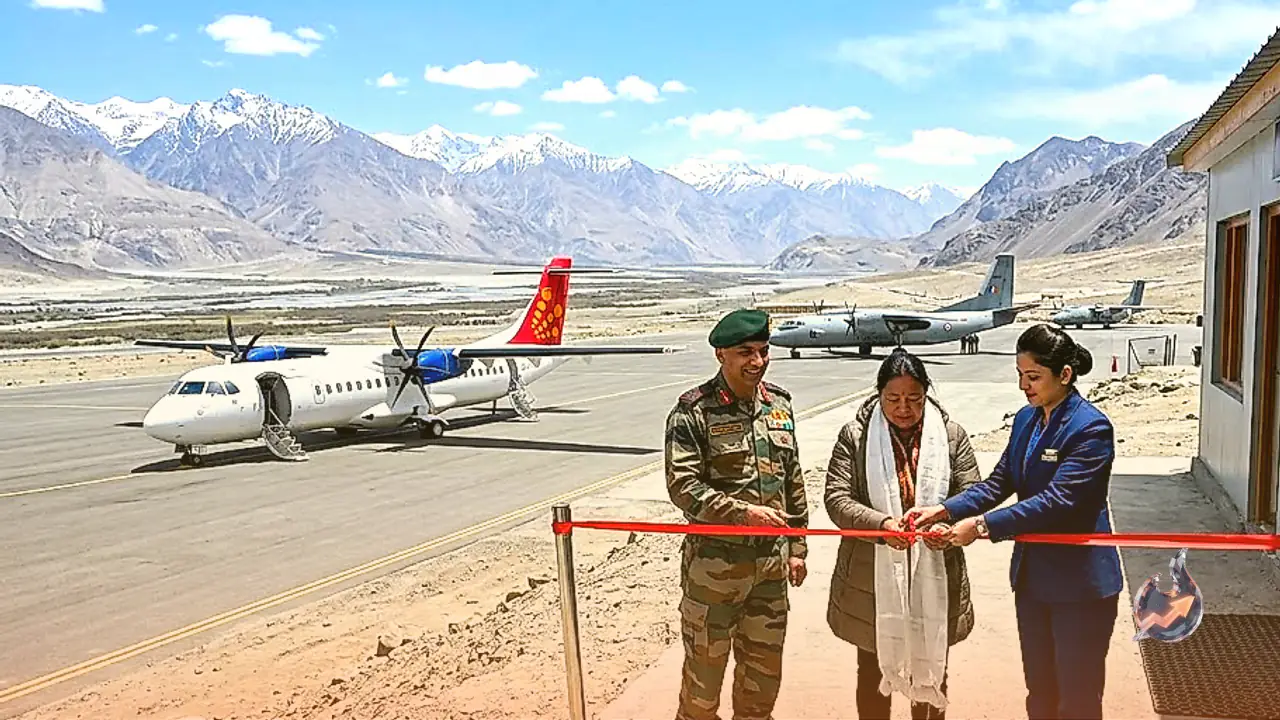

India is accelerating steps to overhaul civilian transport infrastructure in the strategically vital border union territory of Ladakh. Preparations are underway to open the Thoise airfield, located in close proximity to the Line of Actual Control (LAC) with China, for commercial passenger aircraft. Long operated as an exclusive airbase by the Indian Air Force (IAF) for defensive operations and high-altitude logistical support, the facility is now poised to accommodate dual-use operations. This forward-looking project is designed to provide seamless, all-weather travel access for residents and tourists visiting the remote region, while preserving the airbase's primary military mission and operational readiness.
Civil Aviation Setup in Sensitive Border Zone
The geographical position of Thoise Airfield makes it a vital military asset and a crucial node for regional connectivity. Situated near the picturesque Nubra Valley and close to the sensitive LAC bordering China, the airbase has historically served as a lifeline for military deployment. Consequently, the decision to introduce civilian air services here extends beyond routine passenger transport. Security analysts view the integration of civil flights as a major step toward strengthening civilian infrastructure in border districts. However, administrative officials have reaffirmed that commercial flight schedules will not supersede military logistics. Thoise will maintain its core function as a front-line defense airfield, with its runway and air space shared under controlled civilian protocols.
Review Meeting Directives and Infrastructure Planning
The operational roadmap for launching civil aviation services at Thoise was meticulously evaluated during a high-level administrative meeting in Ladakh. The session was chaired by Ladakh Chief Secretary Ashish Kundra, with participation from Civil Aviation Secretary Nidhi Malik and senior executives from the Airports Authority of India (AAI). Discussions focused on establishing the mandatory civilian infrastructure within the existing military airbase framework. Key topics addressed included land allocation, runway management guidelines, interim passenger handling arrangements, terminal layout designs, and required construction timelines. The AAI has been assigned to finalize cost estimates for all civil engineering works, paving the way for tender issuance once defense clearances are secured. Directives were issued to define inter-departmental roles to ensure swift execution.
Transforming Travel and Tourism for Nubra Valley
The primary beneficiary of this initiative will be the high-altitude Nubra Valley, which currently relies heavily on a single winding mountain road network. Traversing high mountain passes to reach Nubra presents severe logistical hurdles, particularly during severe winter months when heavy snowfall, landslides, and sub-zero temperatures frequently sever road links. Opening Thoise to commercial flights will establish a reliable, fast, and all-weather aerial alternative. This will greatly benefit local populations seeking emergency medical transit or rapid travel to Leh and other major urban centers. Furthermore, direct flights are expected to boost the regional tourism economy, benefiting hotels, guesthouses, local transport providers, and small businesses. The administration is also exploring options to connect Thoise under the Regional Connectivity Scheme (UDAN), making air travel affordable and accessible.
Dual-Use Complexities and Land Acquisition Journey
The proposal to introduce civil flights at Thoise is the culmination of years of inter-agency planning. The initiative previously faced delays due to complex land transfers, strict defense clearance protocols, and operational synchronization between civil airlines and military air traffic management. In November 2022, the Ladakh administration announced that 28 kanals of land had been officially allocated for civil aviation facilities at Thoise, following a comprehensive joint site survey conducted by the Indian Air Force, civil administration, Defense Estates Office, and AAI. Subsequently, AAI identified a need for additional space to build comprehensive terminal infrastructure, requesting an extra 1.5 acres from the Air Force. A parliamentary submission also highlighted a requirement of 5 acres for a complete civil enclave.
Operating commercial flights out of an active frontline airbase requires strict physical and operational segregation. Unlike standard commercial airports, Thoise must implement specialized security protocols, dedicated passenger movement corridors, and coordinated Air Traffic Control (ATC) procedures to keep civilian operations distinct from military movements. Obtaining final clearances from the Ministry of Defense and the Indian Air Force remains a fundamental prerequisite. However, the recent allocation of responsibilities and technical framing indicates that the project has transitioned from conceptual planning to concrete execution.
Strategic Significance Along China and Pakistan Borders
India maintains a dual security focus in the high-altitude Ladakh region, managing sensitive borders with Pakistan on the western front and China along the northern LAC. Robust air infrastructure in these border areas is vital for national defense and rapid response capabilities. Amid ongoing military standoffs and defensive posture enhancements along the LAC, the IAF's logistical reliance on airfields like Thoise has intensified. Integrating civil aviation capacity at Thoise will enhance civil-military synergy, improving disaster response, emergency evacuations, and supply chain resilience. The dual-use model at Thoise reflects India's broader strategy of developing resilient border infrastructure that serves both national security needs and community development.