

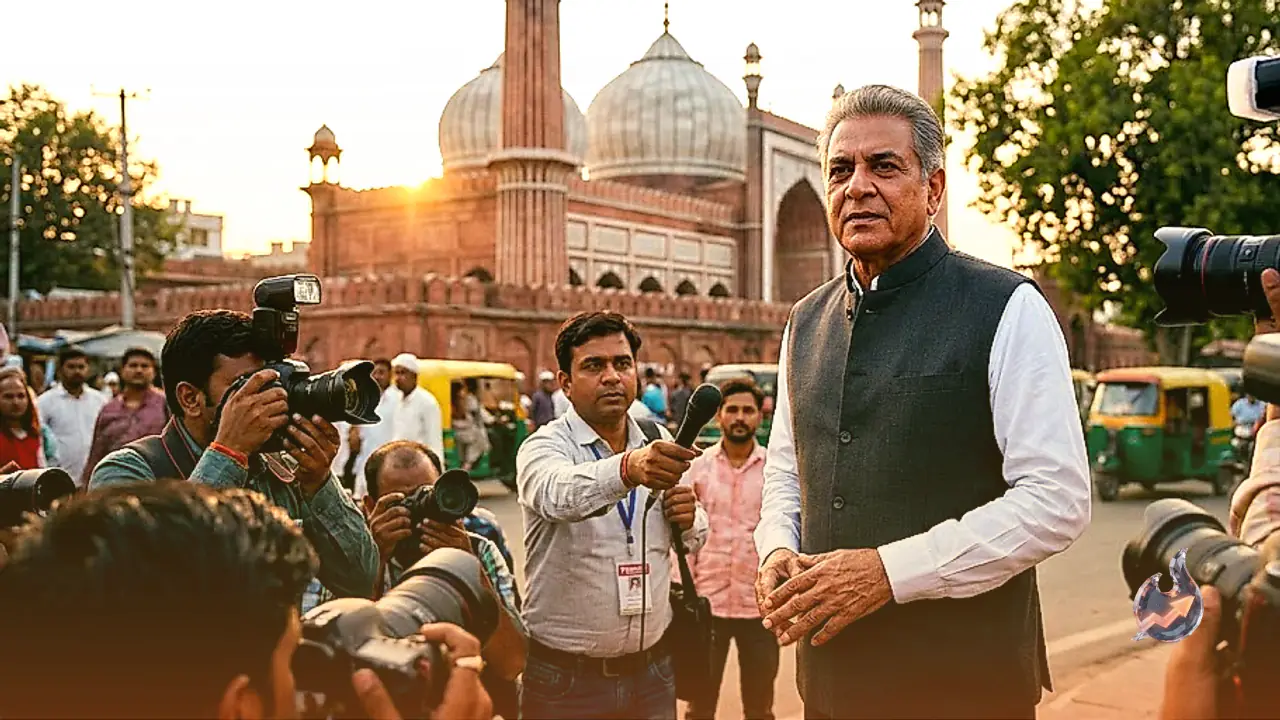
















Addressing key shifts in global power dynamics, Russian Ambassador to India Denis Alipov declared that India's emergence as an international superpower alongside China's expanding geopolitical reach represents an inevitable trend that cannot be reversed. Speaking at the inaugural session of a high-level defense conference, the envoy noted that the dominance of these two Asian powerhouses has become historically unavoidable as the global landscape undergoes fundamental transformations.
Expanding Strategic Ties Beyond Traditional Sectors
The Russian diplomat underscored the deep, decades-long strategic ties shared between New Delhi and Moscow, emphasizing the urgent need to broaden bilateral commerce and diversify financial transactions. Alipov urged both nations to look past conventional domains and actively forge cooperation in emerging industrial and economic spheres. His statements highlight the evolving direction of the India-Russia strategic partnership, which continues to adapt despite intensifying diplomatic pressures and sanctions from Western capitals.
Defense Manufacturing and India's Self-Reliance Agenda
The defense conference brought together senior policymakers, military officials, diplomats, defense manufacturing corporations, technology specialists, and strategic analysts. Deliberations centered on India's defense production targets, strategic operational readiness, and broad national security imperatives. Organized around the overarching theme of positioning India as a global defense manufacturing collaborator moving from domestic self-reliance to worldwide leadership, the sessions addressed aerospace enhancements, strategic alliances, cybersecurity measures, and responses to non-traditional warfare.
BRICS Discussions and Reducing Over-Reliance on the US Dollar
Ambassador Alipov also addressed structural vulnerabilities in the global financial architecture, arguing that the economic expansion of India and fellow BRICS members cannot stay tethered solely to the US dollar. He emphasized the necessity of establishing practical, alternative avenues for trade settlements and financial cooperation. The Russian envoy noted, “India and BRICS countries’ growth cannot be solely dependent on the US dollar. We need alternatives.”
He clarified that dialogues taking place within the BRICS framework are not aimed at actively dismantling or dismantling the US dollar. Rather, the goal is to build workable alternative pathways for daily settlements, cross-border commerce, financial resilience, and institutional collaboration. Alipov said, “We discussed within BRICS not to replace the dollar, but options for transactions, trade, cooperation, and finance.”
National Currencies Facilitate 96 Percent of Bilateral Trade
Detailing the practical mechanisms supporting bilateral trade between Moscow and New Delhi, Alipov pointed out that both governments have already implemented dedicated channels for settlement using their own domestic currencies. He revealed that nearly all bilateral commerce is now settled through these independent mechanisms. Alipov stated, “On the bilateral level, we use our respective currencies for about 96 percent of transactions.” This setup has significantly cushioned bilateral economic exchanges against external payment roadblocks.
Sanctions Will Not Alter Russian Policy, Envoy Asserts
Responding to queries regarding Lindsey O. Graham's legislative initiative titled the Russia and Iran Sanctions Act of 2026, Alipov dismissed the notion that fresh Western sanctions could change Moscow's strategic direction. He emphasized that the immense volume of existing restrictions renders additional penalties practically ineffective. The ambassador remarked, “There are over 30,000 sanctions imposed on Russia already, so having one more or not doesn't really matter, and the US knows that. These sanctions will not change our purpose in any way, and the US knows that, too.”
However, Alipov acknowledged that such regulatory pressures inevitably create operational hurdles for international partners like India. He projected that coercive legal measures and secondary sanctions from Washington would likely persist in the foreseeable future. Alipov noted, “It does matter for India. I am sure that this kind of pressure and new legislation or sanctions will continue.”
Addressing the Trade Deficit Through Diversified Indian Exports
Turning to trade imbalances, the ambassador pointed out that Moscow is keen to diversify the range of Indian merchandise imported into Russia to correct the heavily lopsided trade balance. To address the current deficit, which is heavily tilted by massive Russian energy exports, Russian authorities are looking to welcome a broader array of Indian goods. Alipov stated, “We are looking at expanding the export of mangoes, textiles, industrial equipment, and various goods from India.”
Alipov reiterated the shared objective of balancing bilateral ledger sheets, adding, “We need to increase India's export to Russia because the trade is very unbalanced and we are trying to fix it. We are now including more types of Indian exports in our economic discussions.” The push focuses on integrating Indian agricultural products, apparel, and specialized industrial equipment into Russian supply chains to establish a more stable, equitable commercial relationship.