






















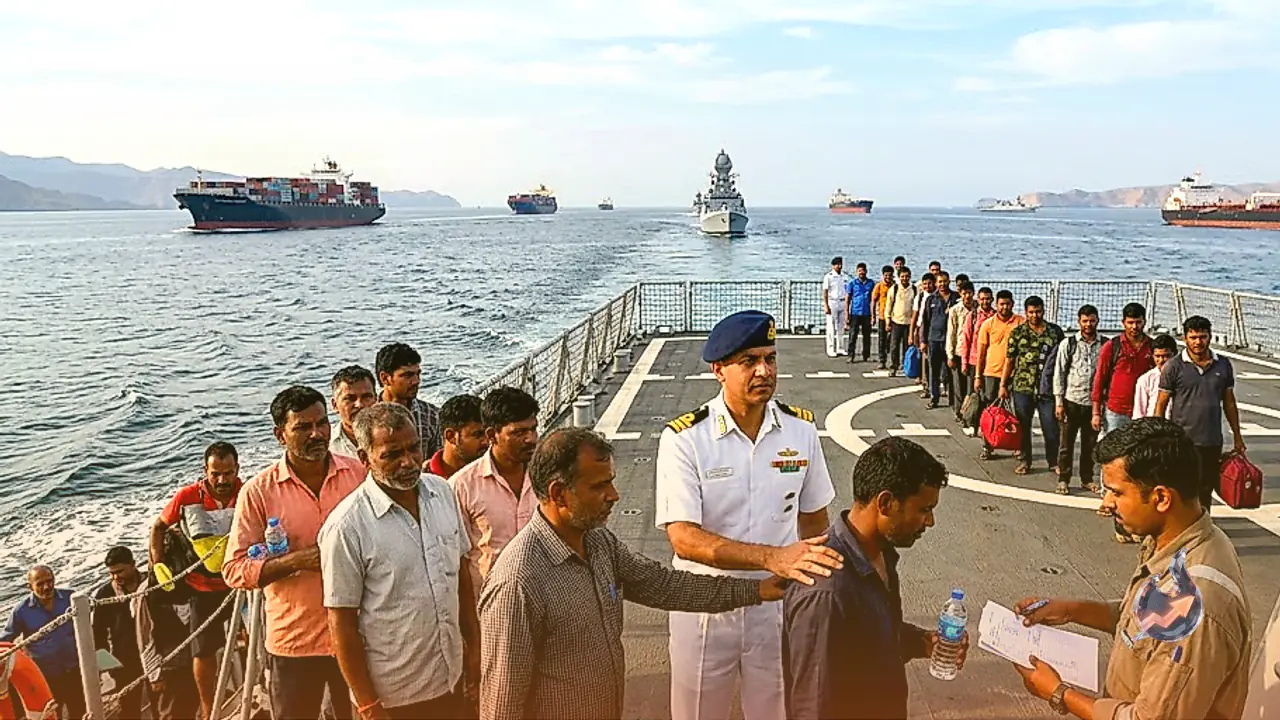

Amid escalating military fire between the United States and Iran in the Gulf region, India successfully protected its critical maritime trade routes and ensured the uninterrupted passage of its commercial shipping. In a statement presented to Parliament, the government revealed that despite severe security hazards in the area, 60 cargo vessels carrying goods for India safely navigated through the highly vulnerable Strait of Hormuz. Additionally, a total of 3,972 Indian seafarers were safely evacuated from the conflict-affected Gulf waters.
Official Figures Disclosed in Parliament
This marks the first time the government has shared official data regarding the scale and execution of this maritime security operation in Parliament. The released figures demonstrate that despite regional volatility and active combat conditions in West Asia, India successfully prevented any disruptions to its national energy security and maritime commerce. Through synchronized efforts between government agencies and naval assets, commercial cargo movement remained steady throughout the crisis.
Strategic and Economic Importance of the Strait of Hormuz
The Strait of Hormuz is globally recognized as one of the most vital chokepoints for international maritime trade. Connecting the Persian Gulf with the Arabian Sea, this narrow shipping lane accounts for approximately 20 percent of all global crude oil trade. For India, the corridor holds paramount strategic significance, as the country imports nearly 90 percent of its required crude oil via this route. A massive portion of these crude shipments originates from key Gulf nations including Iraq, Saudi Arabia, the United Arab Emirates (UAE), and Kuwait.
Any prolonged blockade or disruption along this maritime passage could have triggered severe economic ramifications for India. Shipping freight tariffs would have skyrocketed, vessel insurance premiums would have reached prohibitive levels, and domestic retail prices for petrol and diesel across the country would have experienced sharp spikes. However, proactive security measures enabled all 60 India-bound cargo vessels to reach their destination ports safely, keeping national supply lines fully functional.
Safe Evacuation of 3,972 Indian Seafarers
Beyond safeguarding trade vessels, the government prioritised the safety of maritime personnel, successfully evacuating 3,972 Indian seafarers from the high-risk zone. India ranks among the largest global suppliers of merchant navy crew operating on international vessels. During armed conflicts or geopolitical confrontations, these seafarers often find themselves exposed to direct physical peril in volatile sea lanes, despite having no involvement in military operations.
24-Hour Control Room and Emergency Security Protocols
Following the outbreak of hostilities, the government immediately activated a dedicated 24-hour special control room alongside the Director General of Shipping Communication Centre (MMDAC). Strict emergency security protocols were issued to all commercial ships operating in or transiting through the region. Vessels were instructed to establish immediate contact with nearby Indian Navy warships or partner nation naval units using VHF Channel-16 during any emergency. Furthermore, ships were mandated to report real-time operational updates to the MMDAC, the Information Fusion Centre - Indian Ocean Region (IFC-IOR), and the United Kingdom Maritime Trade Operations (UKMTO).
Over 50,000 Inquiries Handled by Emergency Taskforce
Government figures indicate that since the activation of the emergency control room, officials handled 15,771 phone calls and processed 36,499 emails. These communications were received from stranded Indian seafarers, their anxious families, and maritime sector stakeholders seeking emergency assistance and real-time updates. The volume of correspondence highlights the intense demand for state intervention during the Gulf crisis, proving how continuous monitoring and strategic coordination effectively safeguarded India's maritime interests, energy security, and overseas workforce.