
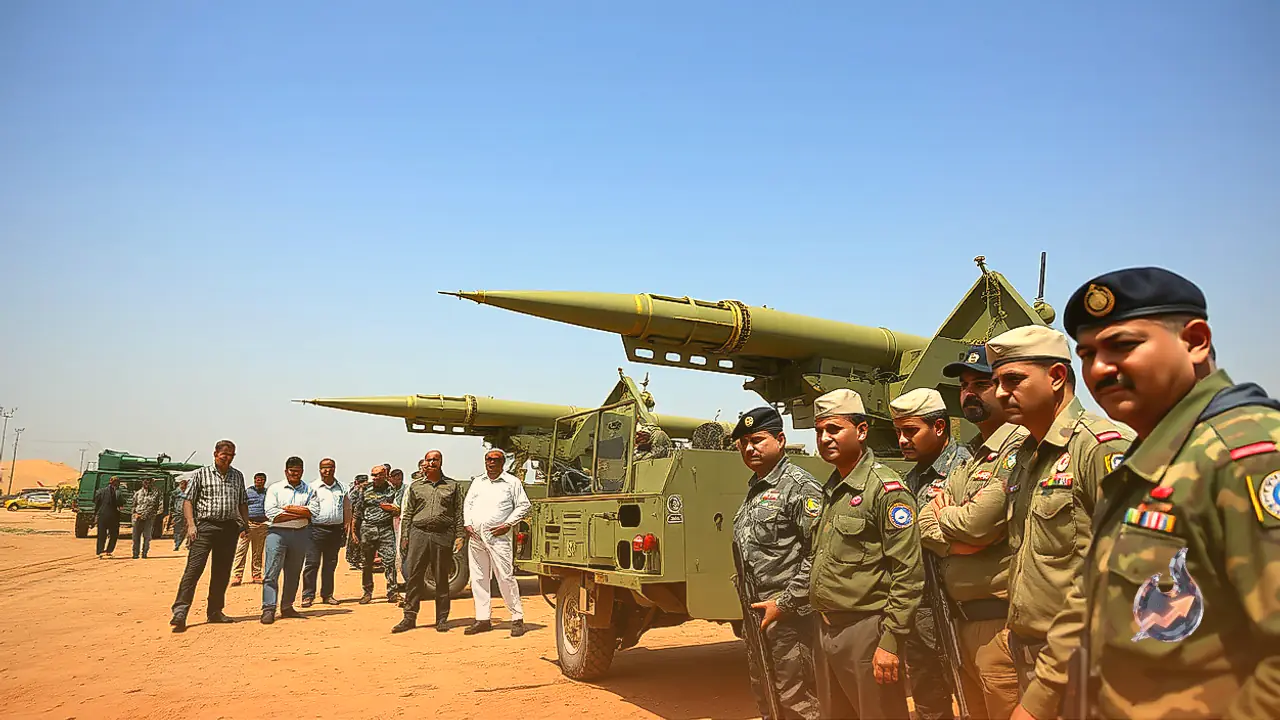






















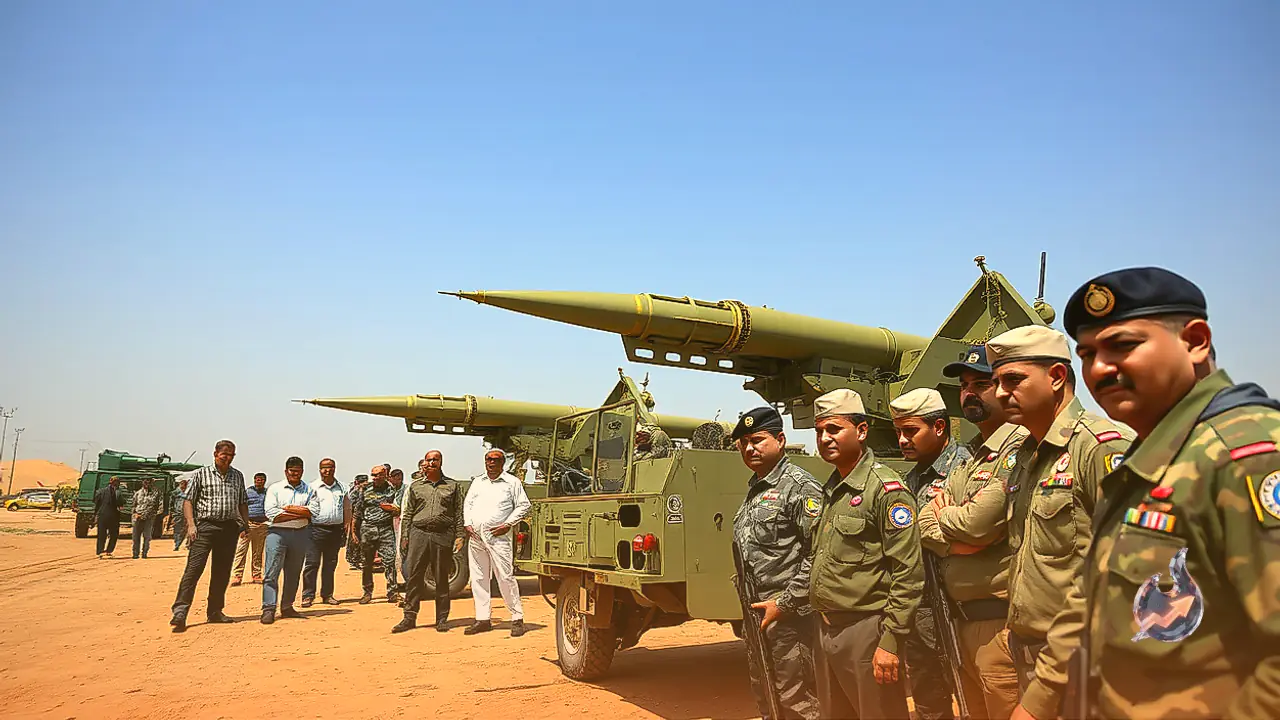

Global demand for indigenously designed Indian military hardware is witnessing sustained momentum, marking a distinct turning point in the country's transformation from an arms importer to a credible global defence supplier. Following the impressive technological demonstration of domestic defence platforms during Operation Sindoor, international interest in Indian military systems has surged considerably. Southeast Asian nations, countering regional maritime assertiveness, have actively sought Indian armaments; the Philippines successfully procured the BrahMos supersonic cruise missile, while discussions and preliminary agreements have advanced with multiple regional partners. Adding substantial weight to this outward momentum, India's domestically engineered Akash air-defence missile system has now made a decisive entry into the strategically vital Central Asian military corridor.
Building upon earlier deliveries to Armenia, both Tajikistan and Turkmenistan have formally moved to induct the indigenous surface-to-air missile system into their armed forces. The conclusion of these defence agreements has been officially verified by Indian authorities. Defence Secretary Rajesh Kumar Singh recently confirmed the transactions, describing the Akash programme as one of the standout success stories anchoring India's broader defence export drive. These sales align closely with New Delhi's comprehensive objective of positioning itself as a primary supplier in the global arms marketplace. For Beijing, which has methodically worked to entrench its commercial and military foothold across Central Asia, India's expanding defence presence presents a notable diplomatic and strategic counterweight.
Technical Architecture and Interception Range of Akash
Conceived and designed by the Defence Research and Development Organisation (DRDO), the Akash system is a mobile, short-to-medium-range surface-to-air missile platform engineered to survive and operate effectively within intense electronic countermeasure environments. Official data provided by the Ministry of Defence highlights that Akash can intercept and neutralise hostile aerial threats at altitudes ranging between 100 metres and 20 kilometres. The missile possesses an operational engagement envelope extending from 4.5 kilometres to 25 kilometres.
Structurally, each individual Akash interceptor measures roughly 5.87 metres in length and weighs approximately 710 kilograms. Navigational accuracy is achieved through a command guidance architecture that directs the missile directly toward hostile airborne assets. Continuous domestic research has resulted in more advanced iterations, notably Akash Prime and the next-generation Akash-NG, which feature superior active sensors and upgraded avionics. Alongside indigenous aviation platforms such as the Tejas fighter aircraft, the development of the Akash network underscores India's maturing defence industrial ecosystem.
Five Key Highlights Defining the Capabilities of Akash
The operational resilience and mission parameters of the Akash surface-to-air missile platform can be evaluated through five distinctive features
- Indigenous and Rapidly Deployable Architecture: Engineered to safeguard vulnerable rear-echelon infrastructure, population centres, and forward bases, Akash offers dedicated protection against a spectrum of aerial incursions, including combat jets, strike helicopters, unmanned drones, and low-flying cruise missiles.
- Effective Engagement Range up to 25 Kilometres: Operating across a tactical distance of 4.5 to 25 kilometres, with enhanced ranges integrated into recent variants, Akash reliably covers operational altitudes from 100 metres up to 20 kilometres. Its transportable, mobile launchers ensure rapid convoy movement and field deployment under shifting tactical conditions.
- Simultaneous Multi-Target Engagement: A single Akash missile battery maintains the capacity to track up to 64 airborne tracks simultaneously, with the ability to actively engage up to 12 targets concurrently. Central to this surveillance and targeting matrix is the indigenous Rajendra 3D phased-array radar, which delivers high-precision tracking and guidance commands.
- DRDO Design Backed by BDL and BEL Manufacturing: While DRDO spearheaded the design and development phases, industrial production is carried out by Bharat Dynamics Limited (BDL) and Bharat Electronics Limited (BEL). The network relies on a synchronised integration of mobile launchers, radars, battery control centres, and group command centres.
- Broadening Footprint in Export Markets: Akash has evolved into an essential component of India's overseas defence trade. With user interest extending across Armenia, Tajikistan, and Turkmenistan, variants spanning Akash-1S, Akash Prime, and Akash-NG continue to strengthen India's global competitive standing.
Strategic Implications of India's Footprint in Central Asia
The entry of Indian air defence technology into Central Asia represents a significant realignment in a geography historically dominated by external military influence. Following disruptions and supply constraints affecting Russian arms shipments in the wake of the ongoing Ukraine conflict, China moved rapidly to fill emerging procurement gaps across the region. According to documentation compiled by the Stockholm International Peace Research Institute (SIPRI), Russia remains the predominant historical weapons provider across Central Asian capitals, even as China methodically reinforces its presence in nations such as Uzbekistan and Turkmenistan.
Against this geopolitical backdrop, India's emergence provides regional states with a pragmatic alternative to balance their security partnerships and reduce absolute reliance on traditional suppliers. Defence analysts observe that for both Tajikistan and Turkmenistan, the decision to procure Akash is a deliberate step toward diversifying military hardware away from overdependence on Beijing and Moscow. Given that Turkmenistan already operates a series of Chinese air-defence networks, the integration of India's Akash system allows its military command to bridge vital medium-tier interception gaps with proven, sovereign hardware.