




















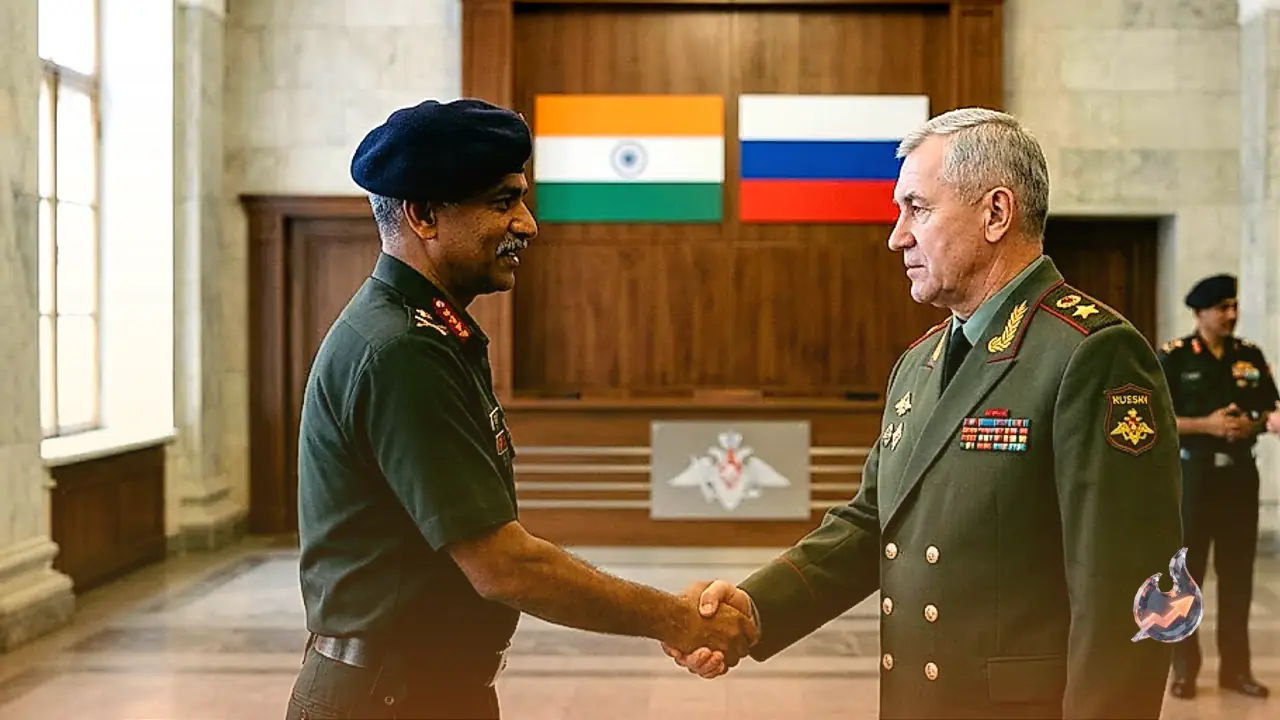

Global geopolitical dynamics are witnessing a significant realignment as India asserts its strategic autonomy against external diplomatic pressure. While the US Congress recently passed legislation aimed at imposing tariffs and economic pressure on nations purchasing crude oil from Russia, New Delhi has responded by advancing its own national security priorities. The official visit of Indian Army Chief General Dheeraj Seth to Moscow provides unequivocal evidence that India intends to steer its foreign policy independently. By laying out an ambitious bilateral defence cooperation blueprint on Russian soil, the engagement signals a clear focus on long-term preparedness that directly affects the regional balance of power.
US Tariff Measures Versus India's Strategic Autonomy
In international trade politics, Washington has frequently utilised legislative mechanisms to enforce compliance with its geopolitical objectives. The recent bills approved by the US Congress specifically target major energy consumers like India and China, seeking to restrict their commercial ties with Russia through trade penalties. However, Indian policymakers have consistently maintained that defence acquisitions and national security frameworks are governed strictly by domestic interests rather than foreign mandates. By proceeding with high-level bilateral military talks, India has reaffirmed that its foundational doctrine of strategic autonomy remains unaffected by external tariff threats.
A Milestone Moscow Visit After Eight Years
The high-level discussions between General Dheeraj Seth and senior Russian military commanders in Moscow have attracted considerable international attention. Significantly, this marks the first visit by a serving Indian Army Chief to Russia in the past 8 years, representing a key milestone in bilateral ties. The objective of this mission extends far beyond routine military diplomacy or historical equipment audits, focusing instead on establishing forward-looking defence agreements capable of meeting contemporary operational challenges.
Core Pillars of the New Bilateral Defence Strategy
During the deliberations in the Russian capital, both sides explored detailed roadmaps across several key domains of land warfare and air defence. The core technical and operational priorities addressed during the summit include
- Fleet Maintenance and Component Supply: Ensuring an uninterrupted supply chain for spare parts supporting Russian-origin tanks, air defence platforms, and armoured vehicles, thereby preserving high operational readiness across active border sectors.
- Pantsir-S1M Air Defence Acquisition: Close evaluation of Russia's upgraded mobile short-range air defence system, Pantsir-S1M. This platform is viewed as a vital capability enhancement designed to counter asymmetric aerial threats, particularly unmanned aerial vehicles and cruise missiles.
- Next-Generation Armoured Combat Platforms: Collaborative planning around India's Future Ready Combat Vehicle program alongside modern infantry combat vehicles like the BMP-3, a combination engineered to significantly increase frontline battlefield firepower.
Strategic Implications for Regional Security
The joint pursuit of advanced air defence, next-generation armour, and collaborative defense manufacturing carries immediate implications for India's neighbourhood. Security establishments in China and Pakistan are observing these developments closely, recognizing that external economic posturing from Washington will not impede India from fortifying its defence infrastructure. Ultimately, by setting aside US legislative pressures and the executive actions signed by President Donald Trump, New Delhi has reinforced its stature as an independent global power committed to advancing its core strategic interests on its own terms.