























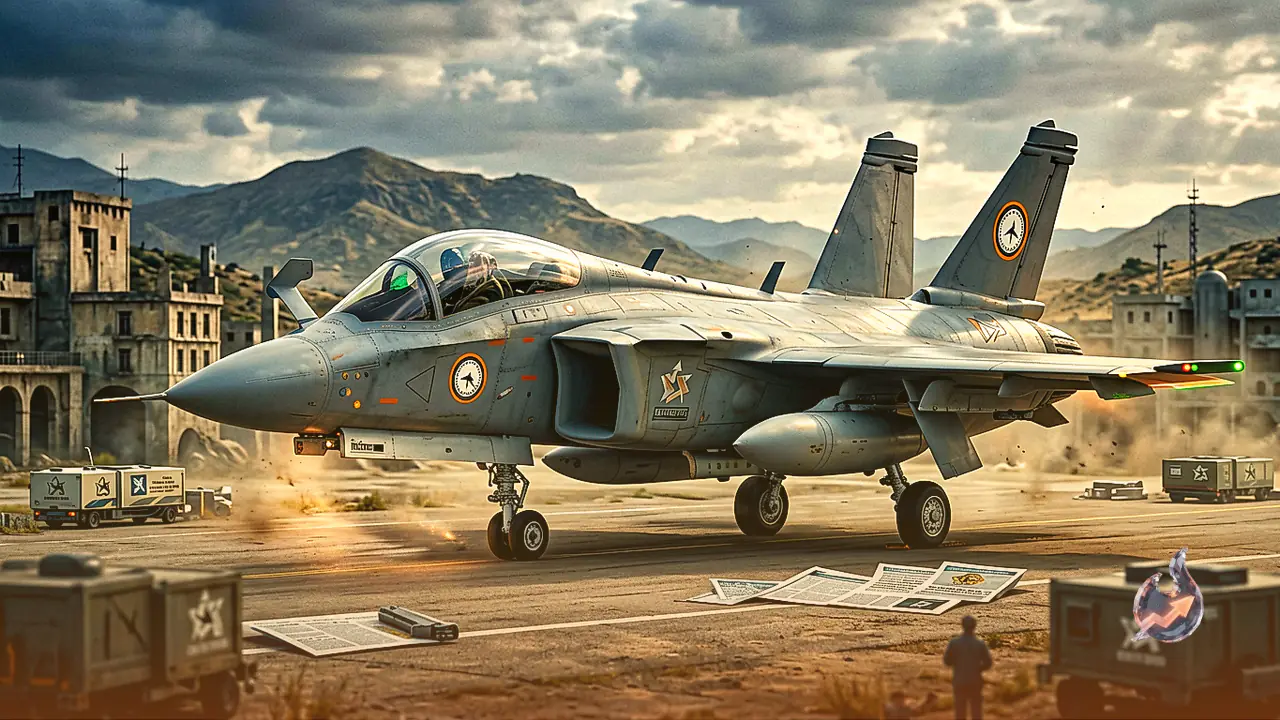

The Indian Air Force is seriously exploring plans to arm its flagship Rafale fighter aircraft with the indigenous BrahMos-NG supersonic cruise missile. Integrating this advanced missile system would dramatically enhance the Air Force's long-range precision strike firepower. However, mounting a domestic weapon on a foreign-built, cutting-edge combat aircraft is far more complex than mechanically attaching a missile to a wing hardpoint. The initiative involves intricate digital avionics, encrypted mission software, and rigorous flight safety protocols that defense engineers are currently working to resolve.
Strategic Context and the Vision for Missile Integration
India currently operates 36 Rafale fighter jets acquired from French aerospace manufacturer Dassault Aviation. In addition, negotiations are underway for a mega acquisition of 114 multi-role fighter aircraft for the Air Force, valued at approximately Rs 3.25 lakh crore. During past operational deployments, the Indian Air Force demonstrated the strike capabilities of its platforms. Su-30MKI fighters effectively delivered heavy BrahMos missiles, while Rafale jets deployed French-origin SCALP stand-off missiles during precision missions.
At present, India lacks the software authorization to independently integrate BrahMos missiles onto French fighter platforms. Achieving this requires specialized technical support, digital interface access, and formal clearance from Dassault Aviation and associated defense manufacturers. Bilateral discussions between Indian defense officials and French partners remain active. Successfully integrating the missile onto the Rafale would multiply the fighter jet's operational strike capability several times over.
BrahMos-NG Specifications and Combat Edge
Indian defense scientists engineered the BrahMos-NG (Next Generation) cruise missile specifically to meet modern air combat requirements. It represents a lighter, more compact, and highly streamlined variant of the original BrahMos missile. Its reduced dimensions and weight make it suitable for mounting across various fighter aircraft types without compromising flight dynamics.
Regarding key technical parameters, the BrahMos-NG weighs roughly 1.33 tonnes and measures about 6 meters in length. It possesses an operational strike range of 290 to 300 kilometers and reaches flight speeds exceeding Mach 2.8. This combination of supersonic velocity and reduced structural weight enables the Rafale to neutralize heavily defended target sites from standoff ranges, keeping the launch aircraft well outside enemy air defense umbrellas.
The Software Barrier: Interface Control Documents and Avionics
Modern combat aircraft rely on sophisticated digital avionics architectures controlled by a central Mission Computer. When a missile is mounted, the aircraft's computer maintains continuous two-way digital communication with the weapon system. This exchange covers electrical power management, target coordinates, missile health telemetry, status diagnostics, and launch sequence commands.
This complex data exchange requires a specialized digital blueprint known as an Interface Control Document (ICD). The ICD defines the exact communication protocols and software handshakes between the aircraft and the missile. Without full ICD access and source code clearance, the Rafale's mission computer cannot recognize, configure, or safely arm the BrahMos-NG. Contemporary fighters incorporate multi-layered software security interlocks that strictly prevent unapproved or unrecognized stores from being released.
French OEM Cooperation and Proprietary Concerns
The successful execution of this integration depends heavily on direct participation from original equipment manufacturer Dassault Aviation. However, technical cooperation faces sensitivities surrounding intellectual property and security. Because original BrahMos development involved Russian engineering expertise, French authorities remain cautious regarding software exposure. Concerns exist that sharing proprietary avionics source code or internal interface specifications could compromise sensitive French military technologies, leading to deliberate deliberation on access permissions.
Alternative Technical Approaches: WMU and HWIL Options
If full OEM software cooperation or complete ICD access remains restricted, defense engineers can evaluate alternate technical workarounds. One primary concept involves deploying an independent Weapon Management Unit (WMU). This standalone hardware unit operates externally from the Rafale's main avionics system. The unit receives basic discrete signals from the aircraft and independently manages target loading, missile health checks, and launch command distribution. Information can be presented to the pilot on a dedicated cockpit interface, minimizing modifications to the Rafale's core flight software. However, certifying such an external hardware bridge remains an extraordinarily complex engineering task.
Another potential method involves ground-based Hardware-in-the-Loop (HWIL) simulation. This process uses advanced laboratory setups to emulate the Rafale's electrical and digital outputs, attempting to establish the communication protocols necessary for missile operation. However, modern fighters employ heavily encrypted data buses and strict authentication protocols. Reverse-engineering these signals without official OEM authentication remains exceptionally difficult, making certified software integration the only fully reliable path forward.
Flight Certification and Rigorous Test Protocols
Even after resolving digital interface hurdles, declaring the BrahMos-NG operational on the Rafale requires an exhaustive series of flight test phases. Engineers must first evaluate structural loads imposed on the airframe by the missile under high-G maneuvers. Aerodynamic interactions, airframe flutter, and flow disruption at supersonic speeds must also be meticulously analyzed.
Among the most critical milestones is the safe separation test, ensuring that the heavy missile detaches cleanly from the wing pylon during launch without creating aerodynamic instability or hitting the aircraft. Additionally, electromagnetic compatibility testing is conducted to verify that radar signals and avionics transmissions do not interfere with the missile's internal guidance electronics. Only after demonstrating absolute safety across all flight regimes and achieving successful live firings can the system be declared combat ready.