






















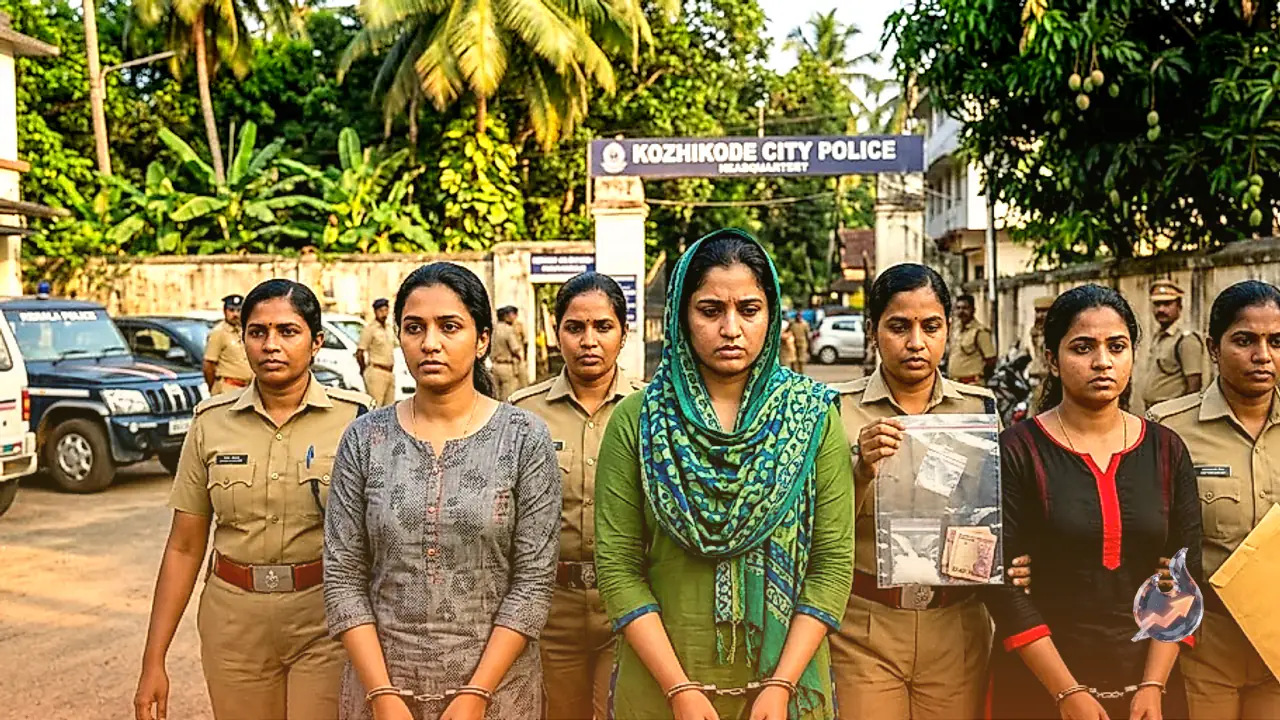

A shocking revelation in the Kozhikode district of Kerala has sent ripples through the educational system and the local community alike. Law enforcement agencies operating in Vadakara have dismantled a synthetic drug distribution ring, apprehending three female educators linked to the Block Resource Centre in the hilly eastern town of Perambra. Operating under the central government's school education umbrella, Samagra Shiksha Kerala, the teachers are accused of serving as key intermediaries for synthetic drugs, leveraging social media platforms like Instagram to find buyers and execute financial transactions.
Operation Toofan and the Chain of Five Arrests
The investigation was spearheaded by a Special Investigation Team formed under the Home Department's Operation Toofan, led by Vadakara Inspector A. V. Dinesh. Over the course of a multi-week crackdown, police have detained five individuals connected to the network. The module first unraveled on June 26 when a Vadakara resident named Safwan was caught in possession of MDMA. Interrogations and subsequent analysis of QR codes and banking records led investigators directly to the involved educators.
Physical Education Instructor K. C. Keerthana was arrested on July 11 following clear evidence of financial transfers through her account. Shortly after, on July 26, police took special educator K. Kavya into custody; she had been teaching autistic children while utilizing her bank account to channel drug money. By July 28, trainer V. P. Neeshma was apprehended, alongside Jijil Kuriakose, a delivery worker from Kannur district who handled logistics, monetary exchanges, and physical transport of contraband.
Disparity Between Modest Salaries and Lakhs in Bank Accounts
During a joint press briefing on July 29, DIG K. Karthick of the Kannur Range and Kozhikode Rural Police Chief Merin Joseph detailed the financial aspects of the case. While the contractual teachers drew a modest monthly salary ranging between 12,000 and 13,000 rupees, audit reports revealed transactions of several lakhs of rupees moving through their accounts. Authorities suspect these accounts functioned as primary financial conduits for a much larger drug syndicate.
Police investigations indicate that the teachers originally began purchasing synthetic substances for personal consumption. Unable to sustain the costly addiction on their limited earnings, they transitioned into becoming compensated agents for the supply network. Keerthana and Kavya maintained a close friendship that aroused no suspicion among colleagues. Keerthana was even actively participating in anti-drug awareness campaigns in schools and conducting Zumba sessions for students while participating in the illicit trade.
Targeting College Students Under the Cover of Zumba and Bun Sales
The involvement of education staff initially sparked severe concern among parents regarding the safety of school pupils. However, an official statement issued by the police on July 29 confirmed that preliminary findings showed no evidence of school students being targeted or recruited. Instead, the network focused its sales efforts on college students and young adults in the region. Investigators are also looking into leads suggesting attempts were made to entangle other teaching staff in the enterprise.
The accused constructed elaborate covers to disguise their operations and prevent suspicion. They utilized Zumba classes and small-scale bun sales as fronts for drug distribution. The contraband, primarily MDMA, was sourced from Bengaluru and transported to Kozhikode. The accused posted videos of their Bengaluru trips on Instagram while directing buyers to communicate through a Gulf-based contact number. Upon receiving digital payments, buyers were sent location details for a dead drop to collect the packages, with delivery worker Jijil Kuriakose facilitating the movement.
Educational Department Response and State-Wide Directives
The exposure of the racket prompted swift administrative measures across Kerala's education sector. Acting on directives from the State Project Directorate, the Education Department terminated the services of K. C. Keerthana and K. Kavya, while the termination process for V. P. Neeshma was expedited. All three educators held temporary contractual positions within the department.
To prevent similar occurrences, Samagra Shiksha Kerala instructed all District Project Coordinators to convene mandatory emergency meetings with special educators and trainers across the state. Furthermore, on July 29, the State Project Director issued a stringent circular mandating BRC coordinators to maintain continuous oversight over the daily activities and duties of special educational staff.


